The Best Sim Racing Cockpit for Home Setups in 2026
A stable sim racing cockpit transforms your entire driving experience. Discover why the Trak Racer TR5 stands out with its rigid aluminum frame, direct-drive compatibility, modular upgrades, and immersive design for serious home racing setups in 2026.
Recent Blogs
-
Best Motorcycle Fairing Kits for a Fresh, Custom Look
-
One Golden Thread Review: Which Pieces Are Worth Buying?
-
Best Streetwear Chains: Find Your Perfect Statement Piece
-
Hilo Core Review: Is This Blood Pressure Companion Right for You?
-
Best California Olive Oil Sets: Which Brightland Bundle Fits You?
-
Best TORRAS Stand Case: Which Ostand Fits Your iPhone?
-
Best Wallet Tracker Card: Is Spotminders Worth It?
By John Mike
·July 18, 2026
Your wheel jerks left. The whole rig twists with it. That flex just cost you the apex and possibly the race.
Anyone chasing the best sim racing cockpit knows this frustration. A shaky frame turns precise inputs into guesswork. The gear isn't the problem. The foundation is.
This guide cuts through the noise. You'll see why cockpit stability matters most, where the Trak Racer TR5 fits, and how to choose with confidence. Honest pros, cons, and a clear buying path included.
Why Most Home Cockpits Disappoint
Picture the typical starter setup. A wheel clamped to a desk, pedals sliding across the floor, a chair that rolls back mid-braking.
It feels fine for a week. Then reality hits during a hard braking zone. The pedals shift, the desk bows, and your lap times stall.
Flimsy frames flex under load. That flex robs you of the direct feedback that makes sim racing feel real. You fight the rig instead of the track.
So you upgrade one piece at a time. A better wheel here, stronger pedals there. Yet the weak frame drags everything down.
Before you spend another dollar, it's worth rethinking the base.
The Hidden Cost of a Weak Frame
Here's what nobody tells beginners. A cheap racing simulator frame quietly caps your entire setup.
Buy a powerful direct drive wheel, and a flimsy rig can't handle the torque. The frame twists, the immersion breaks, and that expensive wheel underperforms.
Then comes the rebuy. Many racers replace a wobbly starter rig within a year. That's money lost twice, plus the frustration of a second assembly.
You feel it every session, too. Inconsistent pedal pressure. A wheel deck that shifts. Lap times that never quite click.
A stable foundation isn't a luxury. It's the one upgrade that makes every other part perform.
The Solution: A Cockpit Built to Stay Planted
The fix is simple. Start with a rigid frame designed for real force.
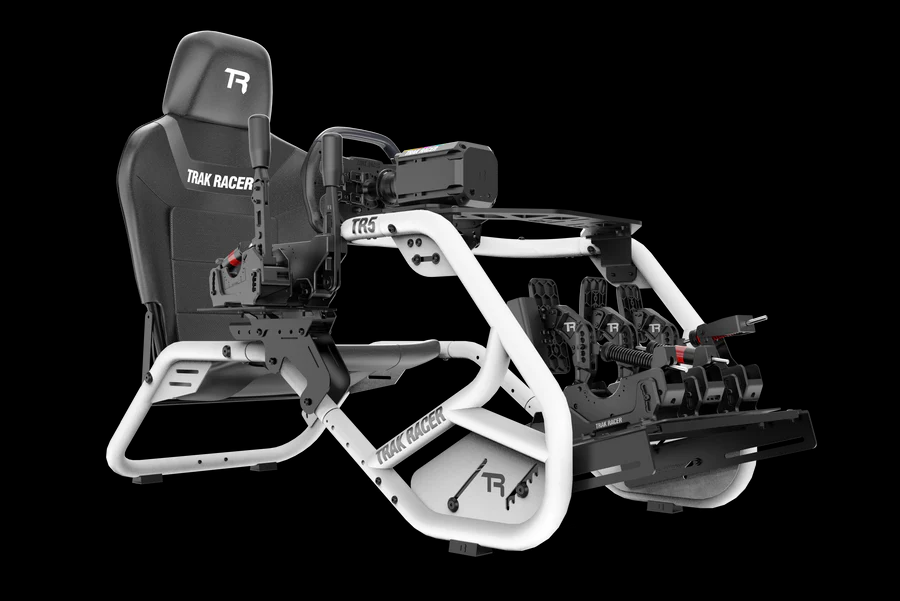
That's where the TR5 racing cockpit from Trak Racer earns attention. Built from a heavy-duty aluminium profile, it holds firm under aggressive braking and high-torque wheels.
Trak Racer has engineered sim gear since 2008. That experience shows in the details, and it's reflected in a 4.8 out of 5 rating across 5,896 reviews.
The TR5 stays planted when you push it. No twist, no creep, no fighting the rig. Just clean, direct feedback lap after lap.
What Makes the TR5 Stand Out
Let's connect features to what you actually feel.
Rigid aluminium frame. The stiff profile resists flex, so strong wheels transmit force cleanly to your hands.
Motorized seat slider. Adjust your seating position at the push of a button. Perfect fit, effortless changes, ideal for shared setups.
Integrated monitor stand support. Mount single or triple screens directly to the rig for a stable, immersive view.
Fully adjustable geometry. Dial in wheel height, pedal angle, and seat distance for a true driving position.
Upgrade-ready design. Add pedals, shifters, and mounts over time without replacing the frame.
Each feature points to one outcome: a rig that grows with you instead of holding you back.
Buy Now
Real-World Use Cases
The beginner. You want a proper start without a costly rebuy. The TR5 gives a stable base you'll keep for years.
The upgrader. You've outgrown a desk clamp. The TR5 handles a direct-drive wheel and heavy pedals with ease.
The streamer. You need a setup that looks sharp on camera and stays rock-solid on air. The rig delivers both.
The shared household. Multiple drivers, different sizes? The motorized seat slider adjusts in seconds between sessions.
Comparison: TR5 vs. Typical Starter Rigs
The pattern is clear. A starter rig saves money today and costs more tomorrow.
Buying Guide: How to Choose
Match the cockpit to your goals.
Judge stability first. A rigid racing simulator frame beats a long spec sheet. Everything else builds on it.
Plan for your wheel. Running or planning a direct-drive wheel? The frame must handle the torque without flexing.
Think about screens. Want triple monitors later? Choose a rig with integrated monitor stand support now.
Buy for the long game. A modular home sim racing setup you upgrade beats a cheap rig you replace.
Quick decision box:
-
Want a foundation you won't outgrow → TR5 Racing Cockpit
-
Prioritizing effortless fit adjustments → add the motorized seat slider
-
Planning triple screens → pair with integrated monitor stands
If a buy-once foundation appeals to you, explore the full TR5 cockpit range and compare configurations.
Pros and Cons
No rig is perfect. Here's the honest view.
Pros
-
Rigid aluminium frame with minimal flex under load
-
Fully direct-drive ready for serious wheel torque
-
Motorized seat slider for effortless position changes
-
Integrated monitor stand support for single or triple screens
-
Modular, upgrade-ready design that grows with you
-
Backed by a 4.8/5 rating from 5,896 reviews since 2008
Cons
-
Premium build costs more than a basic desk clamp
-
Assembly takes longer than a simple wheel stand
-
Full footprint needs dedicated floor space
-
Motorized slider adds cost, some casual users may skip
Frequently Asked Questions
What is the best sim racing cockpit for home use?
The best sim racing cockpit combines a rigid frame, direct-drive readiness, and easy adjustment. Trak Racer's TR5 delivers all three, with a 4.8/5 rating across 5,896 reviews.
Is the TR5 racing cockpit worth it?
For most serious racers, yes. Its stable aluminium frame prevents flex, supports strong wheels, and grows with upgrades, so you avoid a costly rebuy later.
Do I need a full cockpit or just a wheel stand?
A wheel stand suits light casual play. For direct-drive wheels and consistent lap times, a rigid cockpit like the TR5 handles force far better.
Can a sim racing rig support a direct drive wheel?
A quality rig can. The TR5's heavy-duty aluminium frame is built for high-torque direct-drive wheels without twisting under load.
How much space does a home sim racing setup need?
Plan for a footprint roughly the size of a small armchair, plus room for your seat to slide. Monitor stands add depth for screens.
Is the TR5 cockpit good for beginners?
Yes. Beginners benefit most from starting stable. The TR5 offers a beginner-friendly base that won't need replacing as skills grow.
How long does a Trak Racer cockpit take to assemble?
Most home builders finish in a couple of hours using the assembly manual. Taking time to square the frame ensures the stiffest result.
Can I add triple monitors to the TR5 later?
Yes. Its integrated monitor stand supports single or triple screens, so you can expand your view whenever you're ready.
The Bottom Line
A shaky frame quietly limits everything you bolt to it. The best sim racing cockpit starts with stability, and stability is exactly where the TR5 wins.
Rigid aluminium construction, a motorized seat slider, and integrated monitor support give you a foundation built to last. Backed by Trak Racer's engineering since 2008 and a 4.8/5 rating from nearly 6,000 racers, it's a rig you buy once.
Stop fighting your setup and start chasing lap times. Your next race deserves a cockpit that holds the line as hard as you do.