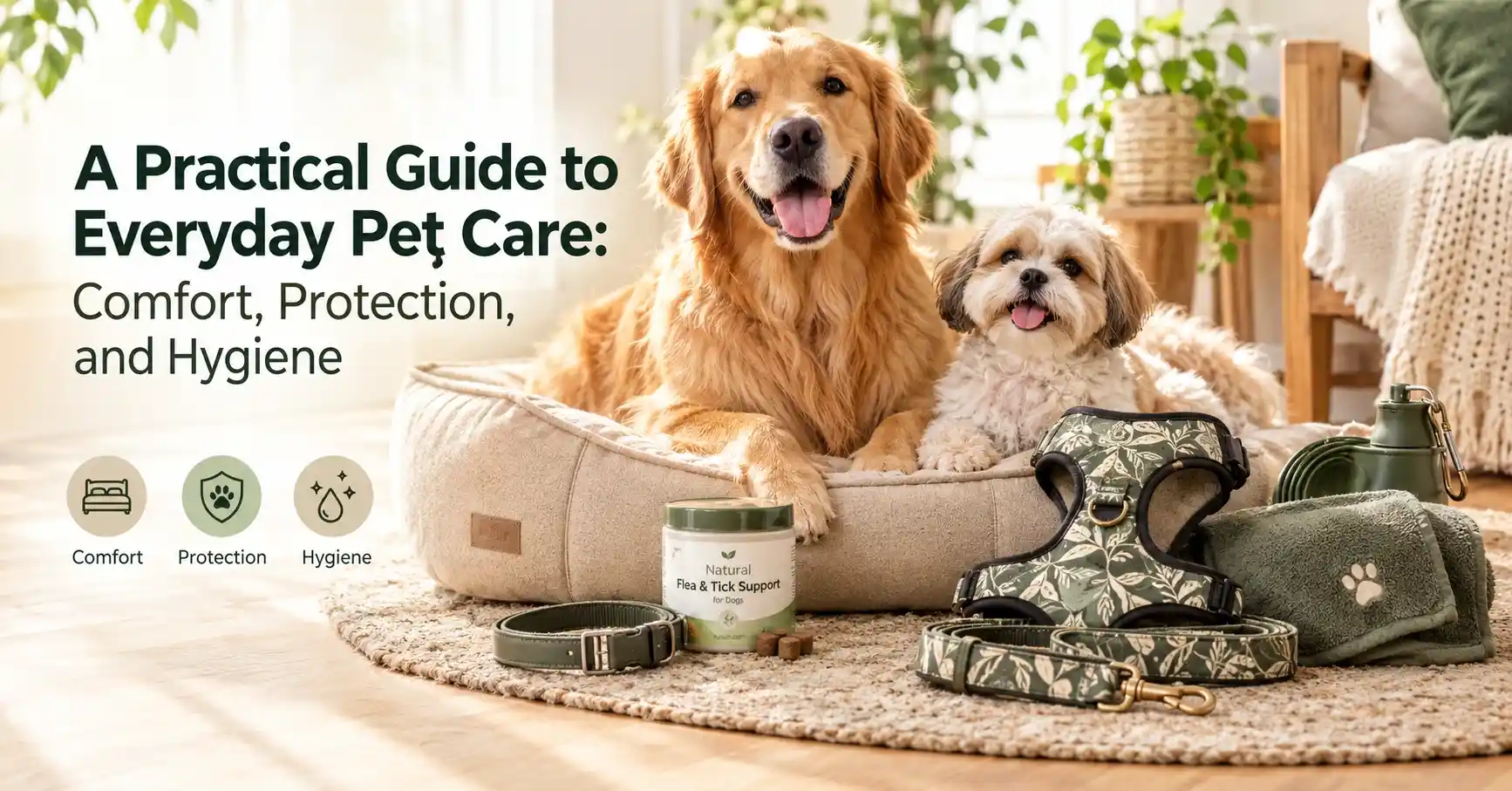
A Practical Guide to Everyday Pet Care: Comfort, Protection, and Hygiene
Build a simple pet care routine with practical tips for comfort, parasite protection, grooming, hygiene, and choosing the right everyday pet accessories.
Recent Blogs
-
Jewellery and Piercings: Expressing Your Personal Style Through Accessories
-
Small Accessories, Big Impact: Ways to Elevate Everyday Outfits
-
How to Style Bracelets, Necklaces and Piercing Jewellery Together
-
Best Everyday Jewellery and Accessories for Every Personal Style
-
The Ultimate Guide to Building a Versatile Jewellery Collection
-
A Practical Guide to Everyday Pet Care: Comfort, Protection, and Hygiene
-
How to Choose the Right Pet Walking Gear for Safety, Comfort, and Control
By William Ashby
·October 14, 2026
Most pet care advice is either a one-line checklist or a pile of conflicting opinions. What owners actually need is a routine they can follow without thinking too hard about it: where the pet sleeps, how they're protected outside, and how the home stays clean.
This guide breaks everyday pet care into three areas: comfort, protection, and hygiene. For each one, you'll find what matters, what to check, and what to look for if you decide to buy something.
What does everyday pet care include?
Everyday pet care is the set of small, repeated habits that keep a pet physically comfortable, protected from avoidable risks, and clean. It sits alongside food, exercise, training, and veterinary visits rather than replacing them.
Nutrition, vaccinations, and medical decisions belong to your veterinarian. Everything below is general guidance, and your pet's age, breed, and health will change the details.
Comfort: rest, temperature, and calm
A bed that supports rest
Pets sleep a lot, so the sleep surface matters more than most owners expect. Look at three things:
- Size: The pet should be able to stretch out or curl up fully without hanging over the edge.
- Support: Older, larger, or stiff-moving pets often do better on a supportive base than on a thin cushion.
- Washability: A bed you can't clean regularly soon becomes a hygiene problem.
If you're comparing options, Pelsbarn's range of orthopedic and sofa-style dog beds is a useful reference. The store focuses on dog beds and travel items, and its site says each purchase supports shelter dogs. Check each product's size guide and care instructions before choosing, and talk to your vet if an older pet seems stiff or reluctant to lie down, since that can have medical causes a bed won't fix.
Staying comfortable in warm and cold weather
Pets regulate heat differently from people. Thick-coated, flat-faced, older and overweight pets are generally more vulnerable in warm weather, so shade, fresh water and rest breaks matter. Never leave a pet in a parked car.
For temperature support, Hounds of Eden, a UK-based accessories brand, lists cooling vests, cooling mats and dog hoodies alongside snuggle blankets. These are comfort aids and not a substitute for shade, water and sensible timing of walks. If a pet is panting heavily, drooling, wobbly or unusually lethargic, treat it as urgent and call a vet.
Helping a stressed pet settle
Thunderstorms, fireworks, visitors and travel unsettle many pets. A predictable routine, a quiet retreat space and a familiar blanket often help more than any product.
Some owners add a calming aid. Furlife's pheromone calming collar is one example, and the brand makes versions for dogs and cats. Treat these as supportive extras. Furlife's own site notes that its statements haven't been evaluated by the FDA and that its products aren't intended to diagnose, treat, cure or prevent disease. If anxiety is severe or constant, a vet or qualified behaviourist should be involved.
Protection: parasites, identification and safe travel
Fleas and ticks
Fleas and ticks can transmit disease to animals and people, which is why flea and tick products can be appropriate for protecting pets and public health. The more useful question is which approach suits your pet and where you live.
Start with your vet. The EPA advises asking a veterinarian how best to protect your pet and whether pesticides are needed at all, and suggests a flea comb to remove adult fleas and "flea dirt". For any product you do use, follow the label: use it only on the species and size or weight listed, respect age limits, and remove a flea and tick collar immediately if your pet has an adverse reaction.
Furlife's flea and tick tags and collars are marketed as made with natural ingredients and come in dog and cat versions. The brand also sells a spray, a dog shampoo and chews. Efficacy claims here are the brand's own, and natural products vary in how well they work. If you live in a heavy tick area or your pet has had skin problems, ask your vet what they would pair with it.
Identification and walking gear
A lost pet with no ID has a much harder route home. Use two layers: a collar with an ID tag (visible to anyone) and a microchip (permanent, registered with current contact details).
For walks, a few fit checks apply:
- A collar or harness should be snug but not tight. A common rule of thumb is that you can slide two fingers underneath.
- Harnesses tend to suit pullers and small or flat-faced breeds better than neck-only collars.
- Re-check fit after growth, coat changes or weight changes.
- Choose waterproof or easy-wipe materials if you walk in wet weather.
Hounds of Eden's name tags, harnesses and leads cover personalised ID tags, harnesses (including its Supaw Strong range), leads in several materials including waterproof, and poop bag holders. It's mainly a style-led brand, so if a harness is for a strong puller, check the sizing guide and build carefully, not just the pattern.
Car journeys
Loose pets in cars are a risk for the pet and for everyone in the vehicle. A comfortable car bed and a crash-tested restraint do different jobs, so don't assume one covers the other. If safety in a collision is your main concern, look for independent crash-test evidence, such as certification from the Center for Pet Safety.
For comfort and upholstery protection, Pelsbarn's car beds and backseat protectors are designed to give pets a cosy travel spot and shield seats from fur and mud. Hounds of Eden also lists car restraints in its accessories range. Read each product's description to see exactly what it is designed to do.
Hygiene: grooming, cleaning and waste
Grooming and bath basics
Grooming frequency depends on coat type. Short-haired pets may need a weekly brush, while long or double coats often need brushing several times a week to prevent mats. Bathing needs vary. Over-bathing can dry the skin, so ask your vet or groomer for a rhythm that suits your pet's coat and skin.
Include a quick check each time you groom:
- Skin: redness, scabs, bald patches, small black specks (possible flea dirt)
- Ears: odour, discharge or head-shaking
- Paws and nails: cracks, long nails, debris between pads
- Mouth: bad breath, red gums or visible tartar
For teeth, regular brushing with pet-safe toothpaste is the usual vet recommendation. Never use human toothpaste. The Veterinary Oral Health Council lists dental products that have met its plaque and tartar standards.
If you want a flea-focused shampoo as part of the routine, Furlife's flea and tick shampoo for dogs is one option among many. As with any medicated or flea-related product, read the label and stop if skin looks irritated.
Home hygiene
The pet's things need cleaning too:
- Bedding: Wash it regularly. Many owners do this weekly, and more often if the pet is muddy, shedding, or has fleas.
- Towels: Keep a dedicated set for wet or muddy paws.
- Floors and soft furnishings: Vacuum frequently. Fleas can develop in carpets and bedding as well as on the pet.
- Waste: Pick it up on walks and wash your hands afterwards.
Some products solve specific hygiene problems. Hounds of Eden's dog towels and season pants are examples: the brand lists reusable hygiene pants with pad inserts for female dogs in season, which can help keep floors and furniture clean.
A simple weekly routine
Daily
- Fresh water and a quick check that your pet is moving and eating normally
- Walk or exercise with a well-fitted collar or harness and ID
- Wipe paws if the weather or ground calls for it
- Pick up waste
Weekly
- Brush, with a quick check of skin, ears, paws and teeth
- Wash bedding and blankets
- Vacuum soft furnishings and the pet's usual spots
- Check collar, harness and lead for wear
Monthly / as needed
- Review parasite protection with your vet
- Check size and fit of gear on growing or changing pets
- Confirm microchip and tag details are current
- Trim nails if needed
How to choose pet products
Before buying anything, ask:
- Does it fit my pet's species, size, and age? Many safety problems start with the wrong size or the wrong species.
- Can I clean it? Machine-washable or wipe-clean materials are easier to keep hygienic.
- Does it solve a problem I actually have? A calming collar won't fix an uncomfortable bed.
- What are the claims, and who is making them? Separate verified facts from marketing language.
- Has my vet seen the plan? This matters most for parasite products and calming aids.
- What are the return and warranty terms? Check these on the store's own pages.
Common mistakes to avoid
- Buying for looks without checking size or fit
- Using a dog flea product on a cat, or the reverse
- Treating a calming product as a replacement for addressing the cause of stress
- Relying on a collar tag alone with no microchip
- Letting bedding go too long between washes
- Skipping the vet conversation for parasite protection
Frequently Asked Questions
How often should I wash my pet's bed?
Many owners wash it weekly. Do it sooner if it's muddy, smelly, has fleas, or your pet has skin problems. Follow the care label.
Does a microchipped pet still need an ID tag?
Yes. A tag lets anyone contact you immediately, while a chip needs a scanner and up-to-date registration. Use both.
Are natural flea and tick collars effective?
It depends on the product, and efficacy claims come from the manufacturers. Your vet can tell you which protection suits your pet and your region.
Should my dog wear a collar or a harness?
A collar is right for ID tags. For walks, many owners prefer a harness, especially for pullers and small or flat-faced breeds. Whichever you choose, check the fit regularly.
How do I know if my pet is too hot?
Heavy panting, drooling, unsteadiness, vomiting, or unusual lethargy are warning signs. Move the pet to a cool place and contact a vet urgently.
How often should I bathe my dog?
It depends on coat, activity, and skin. Frequent bathing can dry skin, so ask your vet or groomer for a schedule.
Is a car bed enough to keep my dog safe in the car?
Not necessarily. A car bed provides comfort and protects upholstery. For collision safety, look for a restraint with independent crash-test evidence.
Conclusion
Good everyday pet care is mostly consistency: a bed that supports rest, protection that suits your region and pet, ID that works, and a home that stays clean. Build the routine first, then add products only where they solve a real need. When you're ready to compare options, the three stores above each cover a different part of the routine.