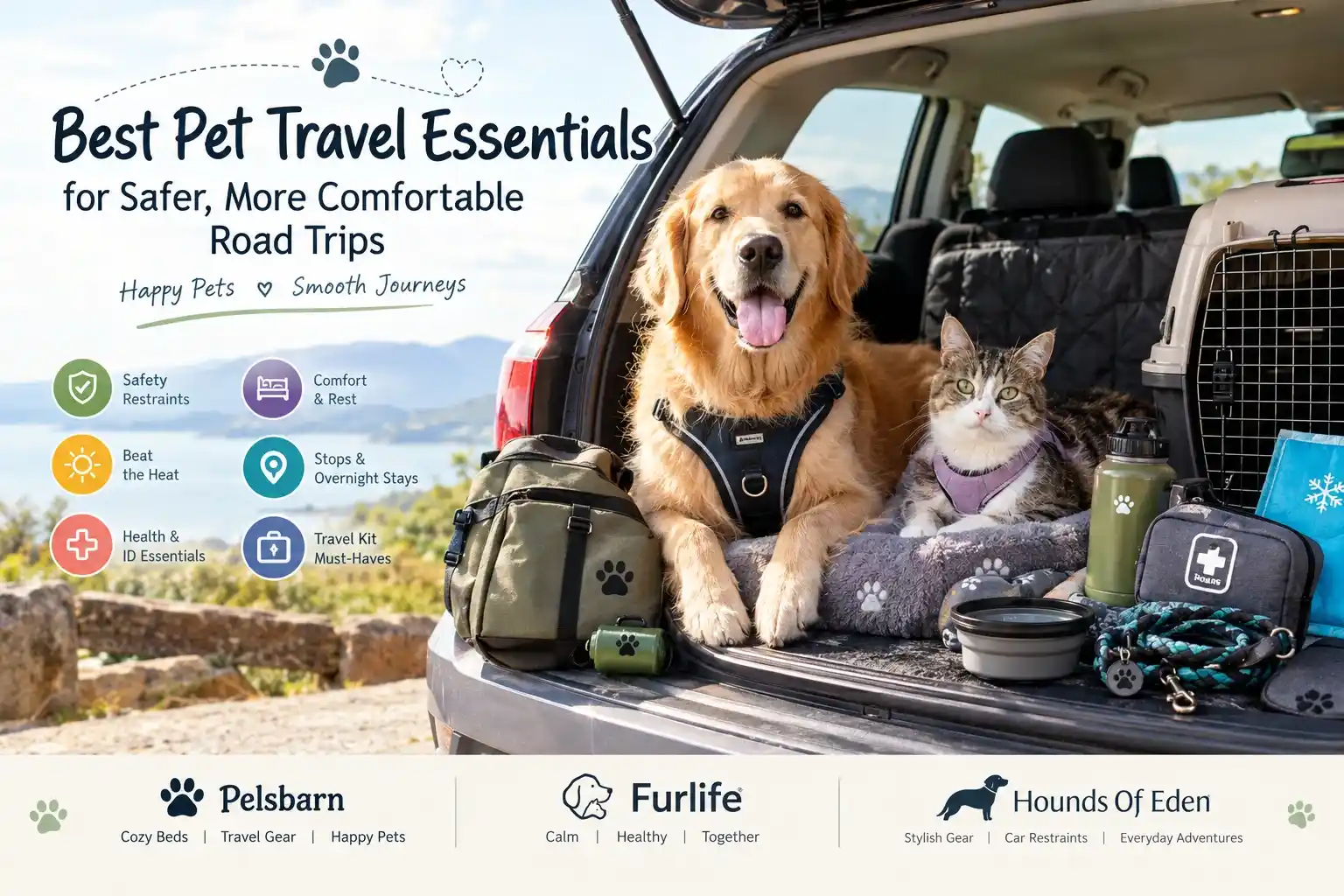
Best Pet Travel Essentials for Safer, More Comfortable Road Trips
Plan safer, more comfortable road trips with your pet using essential travel gear, car restraints, cooling accessories, calming aids, and practical packing tips.
Recent Blogs
-
Jewellery and Piercings: Expressing Your Personal Style Through Accessories
-
Small Accessories, Big Impact: Ways to Elevate Everyday Outfits
-
How to Style Bracelets, Necklaces and Piercing Jewellery Together
-
Best Everyday Jewellery and Accessories for Every Personal Style
-
The Ultimate Guide to Building a Versatile Jewellery Collection
-
A Practical Guide to Everyday Pet Care: Comfort, Protection, and Hygiene
-
How to Choose the Right Pet Walking Gear for Safety, Comfort, and Control
By William Ashby
·October 14, 2026
A road trip with your pet goes well when two things are sorted out before you leave: how your pet will be kept safe in the vehicle, and how it will stay comfortable for hours. Everything else is secondary. This guide covers both, then the extras that make stops and overnight stays easier.
It focuses on dogs, with notes for cats where they differ.
The short version: a properly restrained pet, a comfortable and secure spot, a plan for heat and stops, up-to-date ID, and a small travel kit. The sections below explain each one.
Disclosure: WriteMixPro earns a commission if you buy through some links in this article, at no extra cost to you. The advice comes first, and you can use it without buying anything.
How Should a Pet Ride in the Car?
Short answer: restrained, in the back seat or cargo area, in a crate, carrier, or a harness attached to the seat belt system. A loose pet is a risk to itself and to everyone in the car.
The ASPCA advises a well-ventilated crate or carrier that is big enough for your pet to stand, sit, lie down, and turn around, and says to secure the crate so it can't slide or shift under hard braking. ASPCA guidance on crate size and securing it If your dog rides on the seat instead, the ASPCA says to keep it in the back seat in a harness attached to the seat buckle.
Harness, Crate or Carrier?
On harnesses, "walking harness" and "car safety harness" are not the same thing. If crash performance matters to you, look for products independently tested by the Center for Pet Safety, a non-profit that publishes test results. Don't assume a harness is crash-rated unless the manufacturer says so and shows how it was tested.
If you want a stylish everyday harness and lead set that you also use at rest stops, Hounds of Eden is a UK brand that sells designer dog harnesses, collars and leads, including a "Supaw Strong" harness range. It also lists a Car Restraints collection. Check each product page for what it is designed and tested for before relying on it as a travel restraint.
What to Avoid
- The front seat. The ASPCA notes that airbags aren't designed with pets in mind, and that a pet secured in the passenger seat can be seriously injured in an accident. ASPCA on airbags and the front seat
- Head out of the window. Debris can hurt eyes, and an unrestrained dog can be thrown by a sudden stop.
- A lap dog. It distracts the driver and has nothing to protect it in a crash.
What Keeps a Pet Comfortable on a Long Drive?
Safety gets a pet to the destination. Comfort decides whether the journey is calm.
A Secure, Familiar Spot
A pet that has its own defined place in the car tends to settle better than one that shifts around. The AVMA suggests keeping a familiar blanket or toy nearby to help a pet feel comfortable. AVMA advice on familiar items
This is where a dedicated car bed or seat cover helps. It gives the dog a defined, padded place and protects your upholstery from hair and mud.
Pelsbarn sells dog beds and travel items designed around that idea. Its range includes car beds (the Protecting Car Bed and the Luxurious Cozy Car Bed) and a Luxurious Full Backseat Protector. You can browse the car bed collection to see sizes and how each model sits on a seat.
One caution: a car bed is mainly a comfort and upholstery product. Look at the product page to see how a bed is secured in the vehicle and whether it has a harness attachment point. If it doesn't, use it alongside a separate restraint rather than instead of one.
Easing Travel Stress
Some pets simply dislike cars. Gradual practice helps most. The ASPCA recommends a series of short drives first, then longer ones. ASPCA on building up trip length. The ASPCA also suggests feeding your pet three to four hours before departure rather than in a moving vehicle, which can reduce the chance of car sickness. ASPCA feeding timing, as summarised by Direct Auto
Comfort aids can sit on top of that groundwork. Two that appear in these stores' ranges:
- Calming blankets. Pelsbarn lists a Calming Relief Blanket you can use at home first, so the scent and texture are already familiar in the car.
- Pheromone collars. Furlife sells a Natural Pheromone Calming Collar for dogs and for cats. Furlife states that its products aren't intended to diagnose, treat, cure, or prevent any disease, and that its statements haven't been evaluated by the FDA. Treat it as a comfort aid, not a treatment, and talk to your vet if anxiety is severe.
Don't use sedatives unless a vet prescribes them. The FDA's pet travel guidance says to avoid giving pets any type of sedative when travelling by car or plane. FDA on sedatives during travel. For persistent motion sickness, ask your vet about options made for pets.
How Do You Keep a Pet Cool and Safe in the Heat?
Never leave a pet alone in a parked car. The ASPCA warns that the temperature inside a parked car can quickly become dangerous, even on days you don't consider hot, and that cracking a window isn't enough. ASPCA on parked-car temperatures. The AVMA estimates that on an 80°F day, the interior can reach 114°F within 30 minutes. AVMA estimate quoted by the FDA
For warm-weather trips, practical aids include:
- Good airflow and shade at the destination
- Plenty of fresh water at every stop
- Cooling accessories for rests and overnight stays
Hounds of Eden lists PolarPaw dog cooling mats and dog cooling vests in its cooling range. These can be useful at a rest stop or at your accommodation. They don't replace airflow, water, or avoiding strenuous activity in hot weather, and a dog that seems overheated needs a vet, not a gadget.
What Do You Need for Stops and Overnight Stays?
Most of a pet's riskiest moments on a road trip happen outside the car. Stops are when dogs bolt, meet unfamiliar animals or pick up pests.
- Stop regularly. The AVMA recommends stopping every two to three hours for bathroom breaks and exercise. AVMA stop frequency
- Secure ID. A frightened dog in an unfamiliar place can run. Wear a tag with your mobile number, and make sure the microchip details are current. Hounds of Eden sells personalised collar name tags.
- A reliable lead. Use a proper lead from the moment the door opens. If you travel with two dogs, a lead splitter keeps both under control, and Hounds of Eden lists lead splitters.
- Waste bags within reach. A clip-on poop bag holder on the lead saves rummaging in the boot.
- Parasite protection. Long grass at rest areas and new accommodation can mean ticks and fleas. Furlife sells flea and tick collars, tags, spray, shampoo and chews for dogs and cats. Whatever you choose, ask your vet which parasite prevention suits your pet and your destination, particularly if you are crossing regions with different tick risk.
Pet Travel Kit: What to Pack
Safety and ID
- Restraint (crate, carrier or car harness) and seat belt tether
- Collar with ID tag, plus a spare lead
- Recent photo of your pet on your phone
Comfort
- Bed or familiar blanket
- Seat cover or backseat protector
- Collapsible water bowl and enough water from home
- Usual food, plus a little extra
Health and hygiene
- Any medications, with vet instructions
- Vaccination records. The ASPCA notes some states require proof of rabies vaccination at certain interstate crossings. ASPCA on rabies records
- Waste bags, towels, and cleaning wipes
- Basic pet first aid supplies
- Vet contact details, and the ASPCA Animal Poison Control number if you want it on hand: (888) 426-4435
Quick Comparison: Which Essential Solves Which Problem?
Common Mistakes
- Treating a car bed as a crash restraint. Comfort and restraint are different jobs.
- Using a walking harness as a car harness. Read what the product is designed for.
- Skipping practice drives. A long first trip is hard on an anxious pet.
- Feeding right before departure. It can add to car sickness.
- Relying on a cracked window. It doesn't keep a parked car safe.
- Forgetting records and ID. These matter most when something goes wrong.
Frequently Asked Questions
Where is the safest place for a dog in a car?
In the back seat or cargo area, restrained in a crate or carrier, or in a car harness attached to the seat belt system. Avoid the front seat because of airbags.
Is a harness better than a collar for car travel?
A collar attached to a seat belt can put pressure on the neck in a sudden stop. A well-fitted car harness spreads force across the body. Choose one designed for car use.
How often should I stop on a road trip with a pet?
The AVMA suggests every two to three hours, so your pet can drink, relieve itself, and move around.
How do I help a dog with car sickness?
Build up gradually with short trips, feed a few hours before leaving, keep the car ventilated, and drive smoothly. If it continues, ask your vet. Don't give sedatives unless prescribed.
Can I leave my pet in the car for a few minutes?
No. Temperatures can climb quickly, even when it doesn't feel hot outside.
What should be in a pet travel kit?
ID, restraint, water and bowl, usual food, medications, records, waste bags, towels, and basic first aid supplies.
Do cats need different gear?
Yes. Cats generally travel best in a secured, ventilated carrier. Line it with something familiar, cover part of it so the cat can feel hidden, and never let a cat roam in the car.
Do I need vaccination records when traveling with a pet?
Often yes, especially across state or country lines. Requirements vary, so check your destination and speak to your vet before you go.
Conclusion
You don't need a car full of gadgets to travel well with a pet. A secure restraint, a comfortable and familiar spot, a heat and stops plan, current ID, and a small kit cover most of what matters. Add comfort or convenience products afterwards, and only the ones that fit your pet and your vehicle.
If you are still putting your basics together, our New Pet Owner Checklist covers the everyday essentials that sit behind a trip like this.