How to Create a Comfortable, Pet-Friendly Home Without Overspending
Create a comfortable, pet-friendly home on a budget with practical tips for pet safety, cozy beds, easy cleaning, walking essentials, and smart spending.
Recent Blogs
-
Jewellery and Piercings: Expressing Your Personal Style Through Accessories
-
Small Accessories, Big Impact: Ways to Elevate Everyday Outfits
-
How to Style Bracelets, Necklaces and Piercing Jewellery Together
-
Best Everyday Jewellery and Accessories for Every Personal Style
-
The Ultimate Guide to Building a Versatile Jewellery Collection
-
A Practical Guide to Everyday Pet Care: Comfort, Protection, and Hygiene
-
How to Choose the Right Pet Walking Gear for Safety, Comfort, and Control
By William Ashby
·October 14, 2026
A pet-friendly home does not need a pile of new furniture or a pet-store shopping spree. Most of the comfort your pet feels comes from a few basics done well: a safe space, a proper place to rest, a routine, and a home that is easy to keep clean. This guide ranks those basics, so your money goes where it helps most.
What makes a home pet-friendly?
A pet-friendly home is safe (no easy access to toxic plants, foods, medications, or chewable cords), comfortable (a supportive, washable resting spot away from drafts and foot traffic), and easy to live in (a simple cleaning routine and a walk-ready entry area). You can build most of that for little cost, and then add products where they solve a real problem.
Start with needs, not products
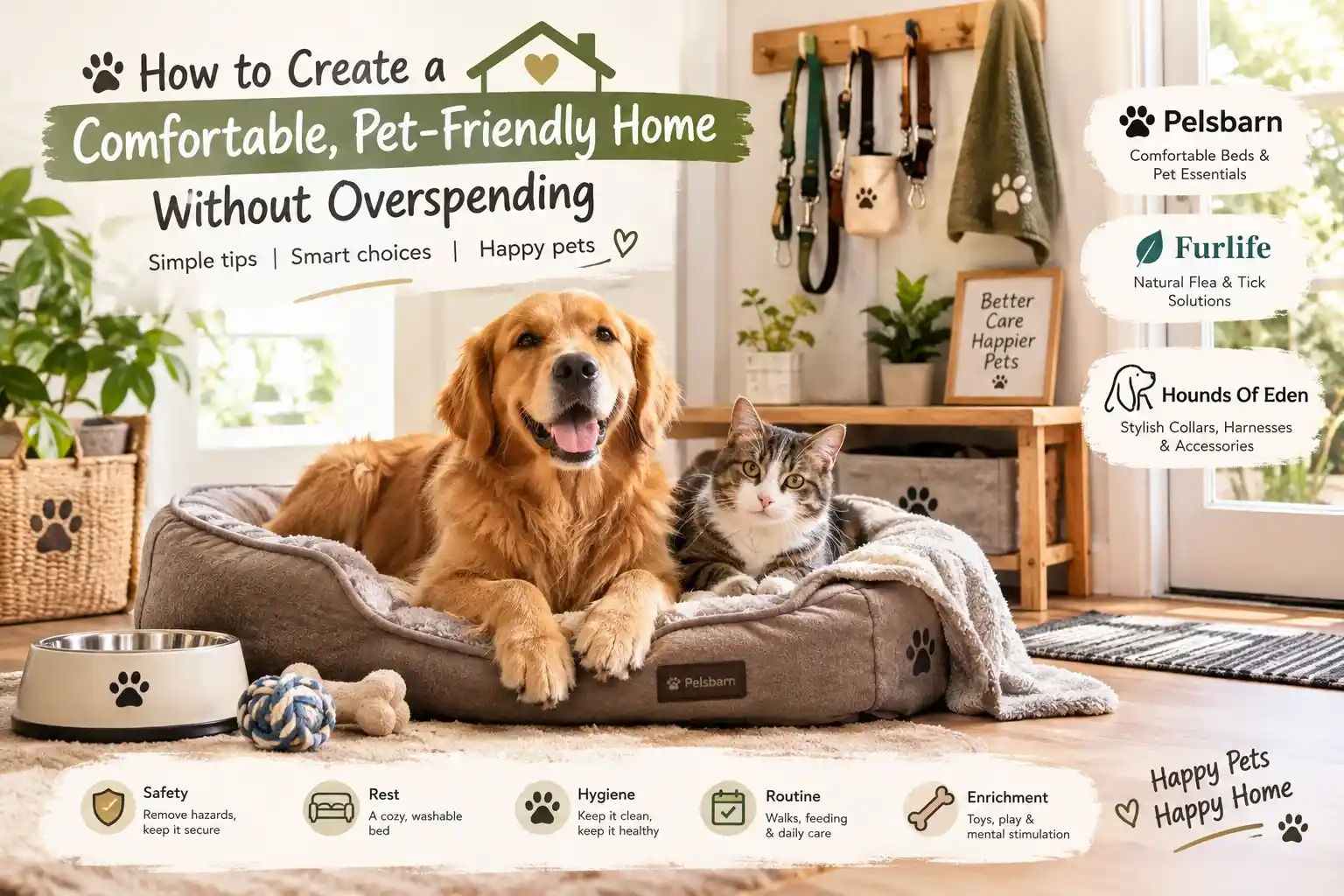
It is easy to overspend when you shop for what looks cute rather than what your pet needs. A quick way to avoid that is to sort every purchase into one of five needs:
Safety and rest come first. Almost everything else can be added gradually.
Step 1: Make the home safe first (mostly free)
Safety is the cheapest part of a pet-friendly home, because it is mainly about habits and placement.
Common hazards by room
- Kitchen: Keep chocolate, grapes and raisins, onions, and anything containing xylitol (a sweetener found in some gum and baked goods) out of reach. Use a bin with a secure lid.
- Living room: Tuck away charging cables and cords, which puppies and kittens often chew. Cord covers, or simple furniture placement, cost very little.
- Bathroom and utility areas: Store cleaning products, medications, and laundry pods in closed cabinets.
- Bedroom: Keep small items such as hair ties and socks off the floor. Pets can swallow them.
Pet-safe plants
Some common houseplants are toxic to pets. Lilies, for example, are dangerous to cats, and sago palm is toxic to both cats and dogs. The ASPCA publishes a searchable list of toxic and non-toxic plants, so check any plant before you bring it home, and keep the ASPCA Animal Poison Control Center number or your vet's emergency number saved in your phone.
Step 2: Give your pet a proper place to rest
A good resting spot is one of the few places where spending a little more can be sensible, because pets use it every day. That does not mean buying the most expensive option. It means choosing the right features.
What to look for in a bed
- Right size and support. Your pet should be able to stretch out or curl up comfortably. Older dogs, large breeds, and dogs with stiff joints may do better with firmer, supportive padding. If you suspect joint pain, talk to your vet.
- A removable, machine-washable cover. This is the feature that saves money over time, since you can wash the cover instead of replacing the bed.
- A non-slip base. Beds that slide on tile or hardwood are harder for pets to settle into.
- A calm location. A quiet corner with a view of the room usually works better than the middle of a walkway.
If you are comparing options, Pelsbarn is a pet brand that focuses on beds and comfort products. According to its product pages, its original dog bed has a removable cover that can be machine washed and a non-slip base, and the brand also lists car beds and cooling mats. It is worth reading the size and care details on each product page before choosing, especially if you have a very small, very large, or older pet.
On a tighter budget, a thick, washable blanket folded on a clean floor spot can work as a temporary bed while you decide what your pet actually prefers.
Step 3: Keep the house clean without constant replacing
Cleanliness is about routine more than gear. These steps work with almost any budget:
- Use washable layers. A throw blanket on the sofa or a washable cover on your pet's favorite chair is cheaper than replacing upholstery.
- Brush regularly. Even a few minutes a few times a week cuts down hair on furniture and floors.
- Keep an old towel near the door. Wiping paws after wet walks keeps mud off floors and beds.
- Wash bedding on a schedule. Check the care label, and wash covers regularly to reduce odor and allergens.
Parasite prevention basics
Fleas and ticks are not only a pet problem. They can end up in carpets, bedding, and furniture. The first step is to ask your vet which prevention suits your pet, your region, and the season, especially if your pet has sensitive skin, is very young or old, or already has an infestation.
Some owners prefer plant-based or natural-ingredient options as part of a prevention routine. Furlife offers natural-ingredient flea and tick products for dogs and cats, including collars, a shampoo, and a spray, according to the company's product announcements. Natural products often work more gradually than conventional ones, and results vary from pet to pet, so treat them as something to discuss with your vet rather than a replacement for veterinary advice. If you already see fleas in your home, you will also need to wash bedding and vacuum thoroughly.
Step 4: Build a simple walk and routine station
A small station by the door makes daily life easier and prevents lost gear, which is one of the quiet ways people end up buying duplicates.
A simple setup includes:
- A hook for the lead and harness
- A small basket or bag for waste bags, treats, and a spare lead
- A towel for muddy paws
- Your pet's ID tag on the collar
When it is time to replace worn gear, fit matters more than style. A well-fitted harness is more comfortable, and a collar that matches your pet's neck size is safer. Hounds Of Eden is a UK-based brand that sells dog collars, harnesses, and leads in coordinated designs, along with accessories such as walking bags, towels, and blankets. Customers often mention the matching sets in reviews, and some mention that sizing can vary between items, so measure your dog and check the size guide before ordering. Browse the current range for what is available.
Where to spend and where to save
A useful rule: spend more on items your pet uses every day (rest and walk gear) and spend less on items that get novelty-based attention (extra toys, decor).
Common mistakes that waste money
- Buying everything before the pet arrives. You learn quickly what your pet actually uses.
- Choosing a bed on looks alone. If the cover cannot be washed, it can become a replacement cost.
- Ignoring size guides. Wrong-size harnesses and beds are one of the most common return reasons.
- Skipping the vet conversation on parasites. A wrong product can be both costly and ineffective.
- Replacing instead of washing. Many pet items last longer with regular, correct care.
A simple 30-day plan
- Week 1: Do the hazard walk-through (kitchen, cords, plants, medications). Set up one resting spot.
- Week 2: Add washable layers where your pet sits. Start a brushing routine.
- Week 3: Set up the entry station. Check your pet's collar, harness, and tag fit.
- Week 4: Review what your pet actually uses. Fill only real gaps, and book a vet check if you have any concerns.
Frequently Asked Questions
How do I make my home pet friendly on a budget?
Start with free safety steps (store hazards out of reach, secure cords, check plants), then invest in a supportive, washable bed and a few basic walk items. Add everything else gradually.
What are the most important things to buy for a pet at home?
A safe, comfortable bed, well-fitted walking gear and ID, food and water bowls, and parasite prevention recommended by your vet. Toys and decor can wait.
What household items are dangerous for dogs and cats?
Chocolate, grapes and raisins, onions, xylitol, some houseplants (such as lilies for cats), medications, and cleaning products are common risks. Check the ASPCA's lists and contact a vet or poison-control service if your pet eats something unsafe.
How can I keep my house clean with a pet?
Brush regularly, use washable covers, wipe paws after walks, and wash bedding on a schedule.
Do I need an expensive dog bed?
Not always. Features matter more than price: the right size, supportive padding for your pet's needs, a washable cover, and a non-slip base. Older or large dogs often benefit from more support.
Is natural flea and tick prevention enough?
It depends on the pet, the region, and the level of risk. Ask your vet, especially if your pet has an active infestation or health conditions.
How do I create a calm space for a new pet?
Choose a quiet corner, add a bed and water nearby, keep the area free of foot traffic, and give your pet time to explore at their own pace.
Conclusion
A comfortable, pet-friendly home comes from priorities, not a big budget. Make the space safe, give your pet a good place to rest, keep cleaning simple, and buy only what solves a real problem. Over a month or two, you will see what your pet actually uses, and your spending can follow that.