Best Everyday Jewellery and Accessories for Every Personal Style
Discover everyday jewellery and accessories for every personal style, with tips on materials, sensitive skin, styling, and building a versatile jewellery capsule.
Recent Blogs
-
Jewellery and Piercings: Expressing Your Personal Style Through Accessories
-
Small Accessories, Big Impact: Ways to Elevate Everyday Outfits
-
How to Style Bracelets, Necklaces and Piercing Jewellery Together
-
Best Everyday Jewellery and Accessories for Every Personal Style
-
The Ultimate Guide to Building a Versatile Jewellery Collection
-
A Practical Guide to Everyday Pet Care: Comfort, Protection, and Hygiene
-
How to Choose the Right Pet Walking Gear for Safety, Comfort, and Control
By William Ashby
·October 15, 2026
Most jewellery boxes hold two kinds of pieces: the ones you wear daily and the ones that only come out for occasions. The gap rarely comes down to price. It comes down to whether a piece suits the way you dress, survives your routine, and doesn’t irritate your skin.
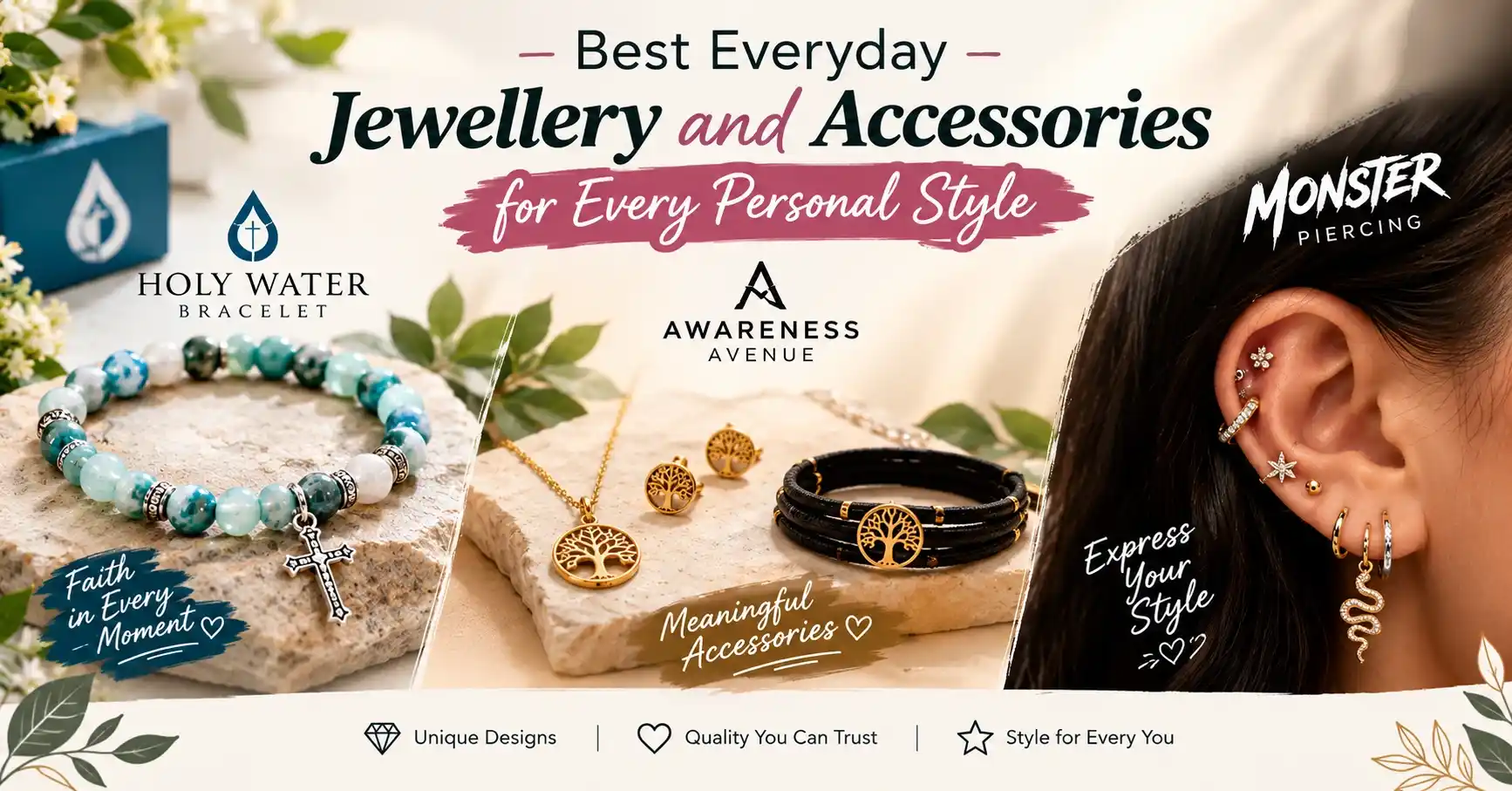
This guide helps you choose the first kind. You’ll get a quick way to identify your style, a plain-English materials guide, a simple method for building an everyday capsule, and examples of where to look, including three online stores with quite different strengths: Holy Water Bracelet, Awareness Avenue and Monster Piercing.
Here, ‘accessories’ means small wearable add-ons that sit alongside jewellery: bag charms, anklets, ear stacks and body jewellery.
Short answer: The best everyday jewellery fits your style, uses materials your skin tolerates, stays comfortable all day, and works with most of your wardrobe. Start with two or three versatile pieces, then add one that feels personal.
What makes jewellery suitable for everyday wear?
Everyday jewellery is jewellery you can wear for most of the day without thinking about it. Five simple tests separate it from occasion pieces:
The skin point is not minor. The American Academy of Pediatrics describes nickel as the leading confirmed contact allergen across age groups, and notes it is common in jewellery because it is inexpensive (AAP, HealthyChildren.org). If a piece makes your skin itchy or red, stop wearing it and speak to a doctor or dermatologist.
Which jewellery materials work best for everyday wear?
No single metal wins for everyone. This table compares the common options:
A note on piercings. For fresh piercings, material matters even more. The Association of Professional Piercers publishes guidance on jewellery for initial piercings, and titanium that meets implant standards such as ASTM F136 is among the options it recognises (APP: Jewelry for Initial Piercings). Your piercer’s advice should come before any online purchase.
How do you find your jewellery style?
Your style is the pattern in what you already reach for. Look at your favourite clothes and pieces, then match yourself to one of five directions. Most people are a blend of two.
1. Minimalist and understated
What it looks like: Thin bands, small studs, fine chains and nothing that competes with your outfit.
Start with: One band ring, one chain or small pendant, one pair of studs. Keep to one metal tone so everything layers without clashing.
Materials to look for: Stainless steel, sterling silver, or gold vermeil.
Where to look: Awareness Avenue lists stainless steel pieces such as band rings, chains, and bracelets next to sterling silver and 18K gold vermeil lines, which makes it easier to keep one tone across a capsule. Explore the stainless steel and sterling silver ranges and compare materials on each product page.
2. Classic and timeless
What it looks like: Solitaires, small gemstone pendants, birthstones, understated sparkle.
Start with: A single pendant or ring built around one stone colour. Repeating one stone family looks deliberate rather than busy.
A quick stone primer: Moissanite is a brilliant, very hard gemstone that is typically lab-created for jewellery. Cubic zirconia (CZ) is a budget-friendly sparkle but scratches more easily. Natural stones such as amethyst or garnet add colour but vary in hardness.
Awareness Avenue also carries moissanite, birthstone, and natural-stone collections. The store states that it uses simulated, ethically sourced, or lab-grown stones with recycled metals, so check the specific listing for what a piece contains.
3. Faith-inspired and meaningful
What it looks like: Crosses, saints’ medals, and prayer-inspired symbols worn as a daily reminder, not just on holidays.
Start with: A bracelet or small cross you can wear every day without removing it for work or exercise.
Holy Water Bracelet focuses on this space. According to the brand, each bracelet carries a resin charm containing water from the Grotto of Lourdes in France, sealed inside the charm. It says the beads are waterproof (stainless steel with waterproof gold plating, or crystal pearl). The listed standard bracelet size is 6.8 inches unstretched, with a 7.5-inch men’s size and a petite range for children. It also offers personalised options, anklets and bag charms, and states a one-year satisfaction guarantee. Porcelain-style bracelets were listed at around $28 at the time of research. Whether the water carries religious significance is a personal matter; practically, it is a durable, lightweight option for daily wear. See the bracelet collections and sizing.
If you prefer a necklace or ring, Awareness Avenue also lists stainless steel cross pendants and cross rings.
4. Edgy, modern and piercing-forward
What it looks like: Stacked ear piercings, hinged rings, flatback studs, and sparkle placed in unexpected spots.
Know the vocabulary:
- Hinged segment clicker: A ring that snaps shut, easy to put in and take out.
- Labret or flatback stud: A stud with a flat disc at the back for comfort, common in cartilage and lip piercings.
- Threadless top: A decorative end that pushes into the post, with no screwing.
Materials: Implant-grade titanium or solid gold are common choices for body jewellery. For a new piercing, ask your piercer which standard they require, and check that a product page states the standard, not just ‘titanium’.
Monster Piercing is a UK-based body jewellery retailer. Its listings include G23 titanium, 316L surgical steel, 925 sterling silver and 9K, 14K and 18K gold, across clickers, labrets, belly rings, nose studs and aftercare products. Steel and titanium clickers were listed from under £10 at the time of research, while 14K gold clickers started around £64. The site also lists sterilised jewellery, free shipping above £20 and 30-day returns. Browse the piercing jewellery range and use its size guide before ordering, because gauge and length matter.
5. Sentimental and gift-led
What it looks like: Birthstones, family messages, initials and pieces that mark a moment.
Start with: A bracelet or necklace. They are more forgiving than rings if you don’t know the recipient’s size.
Two of the stores above suit this style. Holy Water Bracelet offers gift sets and personalised styles, including letter beads and Bible-verse builders. Awareness Avenue lists message bracelets such as ‘To My Daughter’ styles, plus birthstone and personalised pieces. Before gifting, check the exchange policy and delivery time so the piece arrives when you need it.
What everyday accessories go beyond the basics?
- Bag charms: Holy Water Bracelet lists beaded bag charms for people who want a small personal touch on a handbag or keys.
- Anklets: Also listed by Holy Water Bracelet; lighter and less formal than a necklace.
- Men’s pieces: Holy Water Bracelet has a men’s range in a larger size, and Awareness Avenue lists men’s chains and bracelets, including stainless steel Cuban-style chains.
- Children’s pieces: Holy Water Bracelet’s petite range is sized for smaller wrists.
- Belly and nose jewellery: Monster Piercing lists belly rings, nose studs and hoops in titanium, steel and gold.
How do you build an everyday jewellery capsule?
A capsule is a small set of pieces that work together. This three-part formula keeps it simple:
- Choose a metal tone. Silver, gold, or a deliberate mix. Decide once, then shop within it.
- Pick an anchor. The piece you’ll wear almost daily: a ring, chain, or bracelet.
- Add an accent. Something that complements the anchor, like studs or a second bracelet.
- Finish with a personal piece. A birthstone, symbol, or message that means something to you.
- Wear the set for a week. Notice what snags, tarnishes, or feels heavy, then adjust.
Three stores at a glance
These stores serve different needs. This is a factual snapshot, not a ranking. Prices and offers change, so confirm details on each site.
What are the most common mistakes when buying everyday jewellery?
- Buying by photo alone. Read the material, size, and weight, not just the image.
- Ignoring fit. Stretch bracelets, ring sizes, and piercing gauges are not interchangeable.
- Mixing metals by accident. It looks intentional only when you choose it.
- Treating ‘hypoallergenic’ as a guarantee. It is a marketing term without a single universal definition; look for named materials.
- Wearing everything everywhere. Even ‘waterproof’ pieces last longer when you rinse and dry them after chlorine or salt water, and follow each brand’s care notes.
- Skipping policies. Check returns, exchanges, and delivery times before you order.
What should you check before you buy?
- Is the exact material stated on the product page?
- If you have sensitive skin, is the piece nickel-free or made from a material you already tolerate?
- Is there a size guide, and does it match how you plan to wear the piece?
- Does the store ship to your country, and what do shipping and import costs add?
- What are the return, exchange, and warranty terms?
- Does the piece suit at least three outfits you already own?
For a simple care routine, see [Internal Link: Related WriteMixPro Article About Jewellery Care and Cleaning].
Frequently Asked Questions
What jewellery is best for everyday wear?
Pieces with simple shapes, durable materials and a comfortable fit: band rings, small studs, fine chains and bracelets in stainless steel, titanium, sterling silver or gold. Choose one metal tone so they combine easily.
What metal is best for everyday jewellery if I have sensitive skin?
Dermatologists generally advise nickel-free options. Implant-grade titanium, solid gold of higher karat, and platinum are often well tolerated, and some people also do well with quality stainless steel. If you react to a piece, stop wearing it and see a doctor or dermatologist.
Can I wear jewellery in the shower?
It depends on the piece. Holy Water Bracelet states its bracelets are waterproof, but many plated, silver, or stone pieces last longer if removed. Check each brand’s care notes.
How many pieces of jewellery should I wear every day?
There is no rule. A simple starting point is three: an anchor, an accent, and one personal piece.
Is moissanite good for everyday wear?
Yes, it is among the hardest gemstones after diamond, so it resists scratches well. CZ is cheaper but softer and can dull sooner with daily wear.
Is titanium or steel better for piercings?
Both implant-standard titanium and implant-standard steel appear in professional guidance, but titanium is nickel-free, which is why many piercers favour it. Ask your piercer which they recommend for your piercing.
Are affiliate-linked stores safe to buy from?
We have not purchased from these stores, so we can’t vouch from experience. Read each store’s shipping, returns, and warranty pages, and check independent reviews before ordering.
Conclusion
Good everyday jewellery is chosen, not collected. Identify your style, check materials against your skin and routine, build a small capsule, and add a piece that carries meaning. If you want somewhere to start, the three stores above cover faith-inspired, classic, and piercing-forward looks, and you can decide which fits.