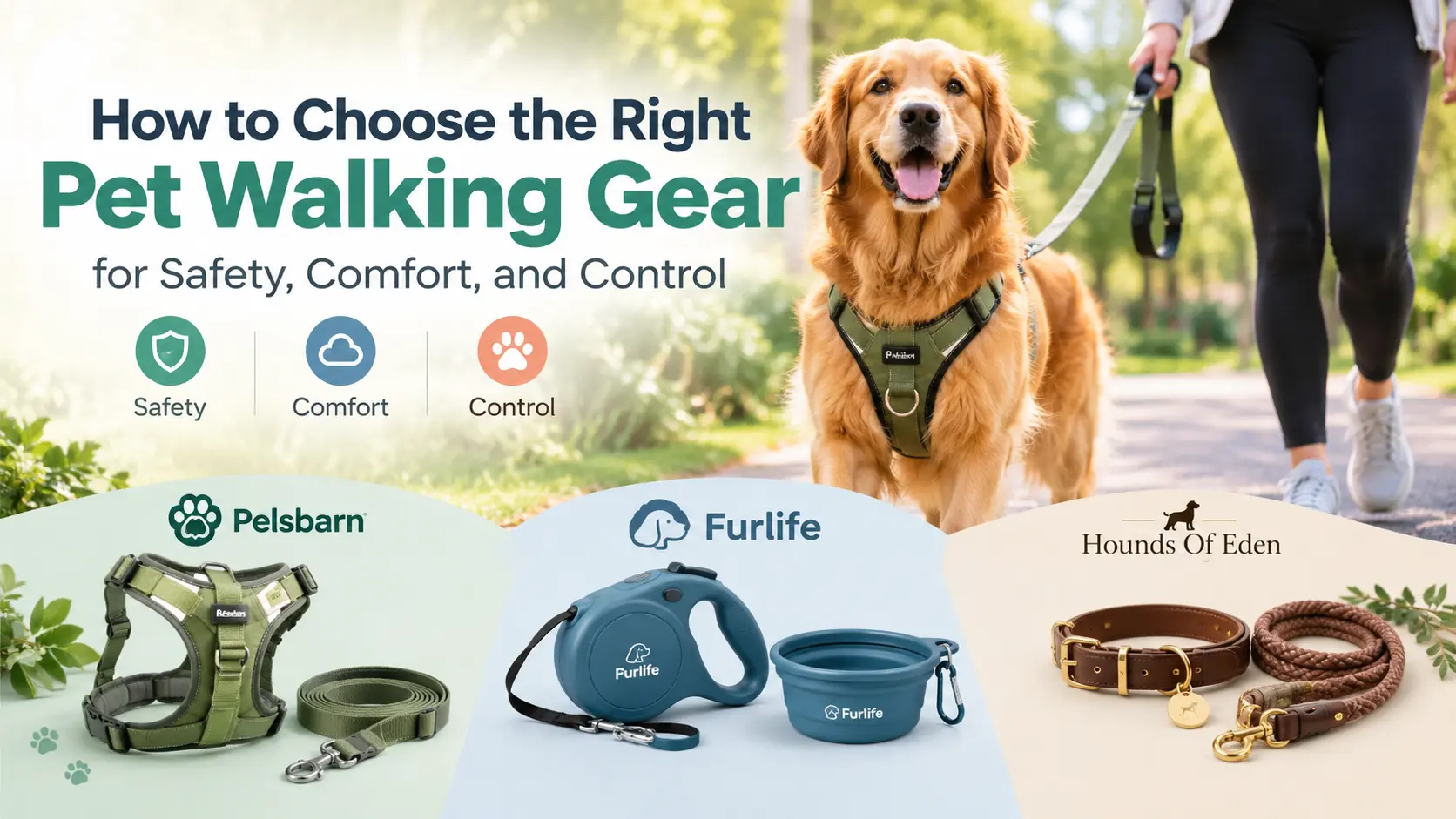
How to Choose the Right Pet Walking Gear for Safety, Comfort, and Control
Choose the right dog walking gear for safety, comfort, and control. Explore harnesses, leads, ID tags, and useful accessories for every walk.
Recent Blogs
-
Jewellery and Piercings: Expressing Your Personal Style Through Accessories
-
Small Accessories, Big Impact: Ways to Elevate Everyday Outfits
-
How to Style Bracelets, Necklaces and Piercing Jewellery Together
-
Best Everyday Jewellery and Accessories for Every Personal Style
-
The Ultimate Guide to Building a Versatile Jewellery Collection
-
A Practical Guide to Everyday Pet Care: Comfort, Protection, and Hygiene
-
How to Choose the Right Pet Walking Gear for Safety, Comfort, and Control
By William Ashby
·October 14, 2026
A walk should be the best part of your dog's day. It often isn't, because the gear is wrong. A collar that rubs, a harness that lets a dog back out of it, or a lead that's too short or too slippery can turn a simple loop around the block into a tug-of-war.
This guide covers dogs, since most walking-gear questions are about them. It explains what each piece of gear does, how to fit it, and how to match it to your dog's size, habits, and the weather. A short note on cats is at the end of the FAQs.
The Short Answer: How Do You Choose the Right Walking Gear?
Start with three questions:
- Is it safe? Can the dog slip out, and can you be seen and identified if something goes wrong?
- Is it comfortable? Does it sit without rubbing, restricting movement or pressing on the throat?
- Does it give you control? Can you steer and stop your dog without yanking?
For most dogs, the answer is a well-fitted harness or flat collar, a sturdy lead of a sensible length, and a visible ID tag. Dogs that pull, escape, or have breathing sensitivities need a bit more thought, covered below.
What Walking Gear Actually Has to Do
Every item you buy does one or more of three jobs. Thinking in jobs stops you from buying things because they look good on a shelf.
Collar or Harness? Both Have a Place
There is no single right answer. It depends on your dog and what you want from the walk.
When a collar works well
A flat collar suits calm, well-trained walkers and is the natural home for an ID tag. RSPCA Australia's guidance gives a simple fit test: you should be able to slide two fingers comfortably under the collar.
Be cautious with collar-and-lead walking for dogs with breathing difficulties or flat-faced breeds, because pressure on the neck is a concern. Ask your vet if you're unsure.
When a harness works better
A harness spreads the load across the chest and shoulders instead of the throat. For dogs that pull, that matters. RSPCA guidance describes a harness as ideal for walking and training because it prevents them from pulling on and potentially hurting their neck.
A harness is also harder to slip out of than a collar, which helps with nervous or escape-prone dogs when it's fitted properly.
A harness is not a training fix on its own. A 2021 shelter-dog study in Frontiers in Veterinary Science that compared collars and back-connection harnesses found no significant difference in potential stress-related behaviours between the two. The takeaway: choose gear for fit and safety, and treat pulling as a training question.
What about front-clip harnesses?
If your dog still pulls after consistent loose-lead training, RSPCA guidance names a front-attach harness as the most appropriate management tool for most dogs in that situation. It also recommends working with a reward-based trainer to fit and introduce one.
Some owners use a collar and harness together, clipping a double-ended lead to both. That's a sensible redundancy for dogs that bolt or slip gear.
How to Get the Fit Right
A good product in the wrong size is still the wrong product. Use this routine:
- Measure your dog. Use a soft tape around the widest part of the chest (just behind the front legs) and around the neck. Compare against the maker's size chart, not a guess based on breed.
- Choose by measurements, then by weight. If your dog falls between sizes, check the brand's adjustment range before sizing up.
- Do the two-finger check. You should fit two fingers under a collar or harness strap without forcing them.
- Watch the movement. Your dog should be able to walk, trot, and sit without the strap digging in behind the front legs.
- Look for rubbing. After the first few walks, check the armpits, neck, and chest for flattened or reddened fur.
- Re-check as your dog grows or changes. For puppies, check the fit at least a few times a week.
If your dog dislikes the harness, pairing it with treats and short, positive sessions at home helps before you use it for a full walk.
Choosing a Lead
The lead is the part you actually hold, so it deserves as much thought as the harness.
Length. A standard walking lead of roughly 1.2–1.8 m (4–6 ft) suits most dogs. Shorter gives more control in crowds. A longer training lead gives more room for recall practice in open spaces.
Material. Leather feels good in the hand but takes care. Webbing and rope are lightweight. Waterproof coated materials stay easy to wipe clean and keep their grip in rain.
Hardware. Check that the clip closes firmly and the stitching around the handle loop is neat and strong, because that's the point that takes the strain.
Retractable leads. Many trainers advise caution in busy or urban settings because the dog can reach the end of the line quickly and you have less immediate control. A fixed lead is simpler for everyday walks.
Walking two dogs. A lead splitter lets one handle clip to two dogs, which can be handy for small dogs of similar size and temperament.
If you're comparing options, Hounds of Eden is a UK-designed brand whose range covers dog collars, harnesses and leads. Its lead range includes all-weather waterproof leads, a 2 m training lead and lead splitters. It also lists collars in leather, velvet and all-weather materials, and a Supaw Strong™ harness collection, so you can browse the available harnesses and leads and see which style suits your dog. Check each product page for sizing and material details before choosing.
ID, Visibility, and the Small Items That Prevent Big Problems
These items are less exciting than a harness, but they solve real problems.
- An ID tag. A tag on the collar is the fastest way for a stranger to reach you. It complements a microchip and doesn't replace it. In the UK, dogs in public places are generally expected to wear a collar with owner details, so check the rules where you live.
- Reflective or high-visibility elements. Valuable on dark mornings and evenings.
- A poop-bag holder. One that clips to the lead or bag frees your hand.
- A treat pouch. Essential if you're doing loose-lead or recall training.
- A walking bag. Keeps water, a collapsible bowl, spare bags, and treats together.
Hounds of Eden lists name tags, poop and treat bag holders, and dog walking bags, so you can explore matching walk accessories in one place rather than assembling a mismatched kit. If you walk alone at dawn or dusk, its range also includes a rechargeable personal alarm for the human end of the lead.
Weather, Season, and Parasites
Gear choices change through the year.
Hot days. Walk in the cooler parts of the day, carry water, and check pavement temperature with the back of your hand before you set out. Flat-faced and thick-coated dogs overheat faster. Cooling vests and mats can help after exercise, though they don't replace shade, water, and common sense.
Wet days. Waterproof or quick-drying gear saves you from damp leather and smelly webbing.
Cold days. Short-haired and small dogs may appreciate a coat. Check that harness straps don't bunch under it.
Ticks and fleas. Long grass, woodland, and parks are where outdoor dogs meet parasites, so prevention belongs in your walk plan. Talk to your vet about what's recommended in your area and for your dog, since that depends on region, season, and your dog's health.
Some owners add a topical or wearable product to their routine. Furlife sells flea and tick products for dogs and cats, and its range includes collars, tags, a spray, a shampoo and defence chews, plus a pheromone calming collar for dogs. You can see the available Furlife options and read the product pages carefully. The store's own disclaimer notes that its products are not intended to diagnose, treat, cure or prevent any disease, so confirm any parasite-prevention plan with your vet.
Before and After the Walk: Car Rides and Recovery
Plenty of dog walks start with a drive to a park, beach or trail, and they end with a tired, muddy dog.
In the car. An unrestrained dog is a risk to itself and to passengers, so use a car restraint, harness-compatible seat belt attachment, or secured crate that suits your vehicle and dog size. Hounds of Eden lists car restraints among its accessories.
After the walk. Rinse or towel off muddy paws before the dog climbs onto the sofa or into the car seat. A backseat cover protects upholstery, and a supportive, washable bed gives a hard-exercised dog a proper place to rest.
Pelsbarn, a pet brand that donates to shelter dogs, focuses on exactly that side of life with a dog: its range includes car beds, a full backseat protector, orthopedic beds, sofa beds and cooling mats. If you drive to your walks or have a dog that sheds mud everywhere, you can explore Pelsbarn's car beds and backseat protectors. Pelsbarn doesn't sell harnesses or leads on its current site, so treat it as a complement to your walking kit, not a substitute for it.
Matching Gear to Your Dog
Common Mistakes to Avoid
- Buying by size label alone. Measure first.
- Using a harness as a substitute for training. It manages pulling; it doesn't teach loose-lead walking.
- Leaving a damaged item in service. Frayed stitching and bent clips fail at the worst moment.
- Ignoring rubbing. A dog that develops sore spots will start to dread the walk.
- Over-long leads in busy places. Control disappears as the line lengthens.
- Skipping the ID tag because the dog is microchipped. Tags help strangers act immediately.
- Forgetting the car. An unrestrained dog is a safety issue even on short trips.
Walk-Ready Checklist
Before you leave the door:
- Collar or harness fits (two-finger check), and clips are secure
- Lead is undamaged, suitable length, and the handle is comfortable
- ID tag is legible, and details are current
- Reflective or visible gear if it's dim
- Poop bags and a holder
- Water and a collapsible bowl
- Treats if you're training
- Parasite-prevention plan confirmed with your vet
- Car restraint ready if you're driving to the walk
- Towel or backseat cover for the return
Frequently Asked Questions
Is a harness or collar better for walking a dog?
Neither is universally better. A harness spreads pressure across the chest and suits pullers, small or flat-faced dogs, and escape artists. A flat collar suits calm walkers and carries the ID tag.
How tight should a dog collar or harness be?
You should fit two fingers under it comfortably. It should not rotate freely or let the dog back out.
Should a dog wear a collar and a harness?
Many owners use both: the collar for ID and the harness for walking. A double-ended lead clipped to both adds a safety backup.
How long should a dog lead be?
Around 1.2–1.8 m (4–6 ft) suits most everyday walks. Use a longer training lead only in safe, open areas.
What's best for a dog that pulls?
Consistent reward-based loose-lead training, plus a well-fitted front-attach harness as a management tool if needed.
Why does my dog slip out of its harness?
Usually it's the fit or the style. Check adjustment points, try a design with more attachment straps, and consider a collar-and-harness double attachment.
Can cats be walked?
Some cats can, but cat harnesses are built differently from dog harnesses and cats need a gradual, patient introduction. Ask your vet or a cat behaviourist before starting.
Conclusion
Good walking gear is mostly about fit, reliability, and matching the kit to the dog in front of you. Get the harness or collar right, pick a lead you trust, keep ID on your dog, and plan for the weather and the ride home. The rest is detail.