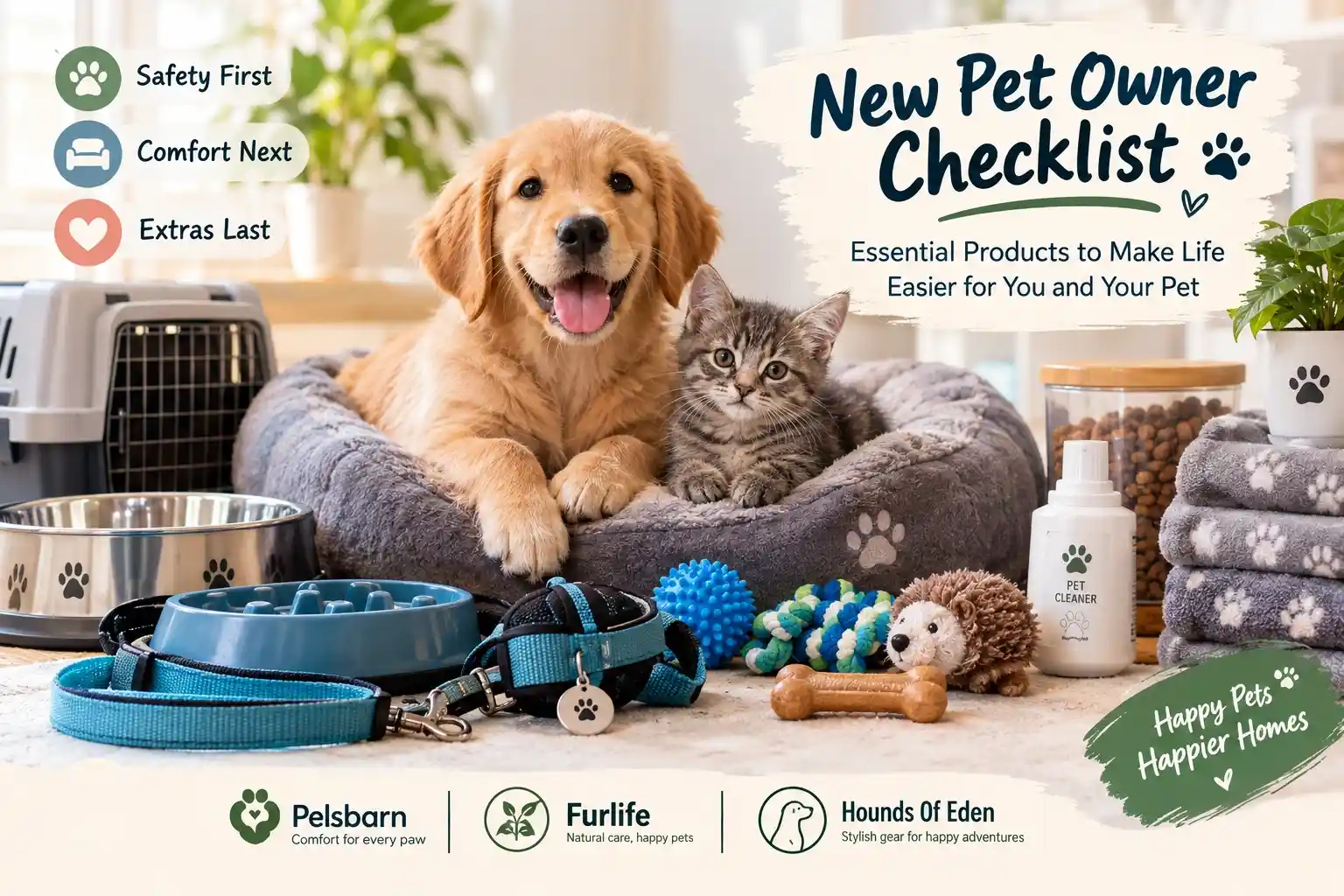
New Pet Owner Checklist: Essential Products to Make Life Easier for You and Your Pet
Prepare for your new pet with essential products for safety, comfort, feeding, travel, and health, plus practical tips to make pet ownership easier.
Recent Blogs
-
Jewellery and Piercings: Expressing Your Personal Style Through Accessories
-
Small Accessories, Big Impact: Ways to Elevate Everyday Outfits
-
How to Style Bracelets, Necklaces and Piercing Jewellery Together
-
Best Everyday Jewellery and Accessories for Every Personal Style
-
The Ultimate Guide to Building a Versatile Jewellery Collection
-
A Practical Guide to Everyday Pet Care: Comfort, Protection, and Hygiene
-
How to Choose the Right Pet Walking Gear for Safety, Comfort, and Control
By William Ashby
·October 14, 2026
Bringing a pet home is exciting, and the shopping list can feel endless. Pet stores display hundreds of products, and most "starter lists" read like a catalog. What you need is a short, prioritized list that covers safety first, comfort second, and extras last.
This checklist covers what to have ready before your pet arrives, what to add in the first weeks, and what can wait. It focuses mainly on dogs, since most of the gear overlaps with what cat owners need, and it notes where cats differ.
What Do New Pet Owners Actually Need?
At minimum, a new pet needs:
- Identification: a collar or harness with an ID tag, plus a registered microchip
- Food and water bowls: sized for your pet, with a plan for the food your pet was already eating
- A comfortable place to rest: a bed and a crate if you're crate training
- Walking gear (dogs): a fitted collar or harness and a 6-foot leash
- Cleanup supplies: poop bags and an enzymatic cleaner for accidents
- A vet appointment: for a health check and a parasite-prevention plan
- Toys and chews: for mental stimulation and safe outlets for chewing
The ASPCA's supplies list for newly adopted dogs follows the same pattern: bowls, a crate, a bed, food toys, an enzymatic cleaner, a pet gate, a fitted collar or harness, a 6-foot non-retractable leash, current ID tags, and poop bags.
The Core Checklist at a Glance
ID, Collars, Harnesses, and Leads: Get Safety Right First
A new pet doesn't know your home, your street, or your voice yet. Even a calm dog can bolt when startled, so identification and secure walking gear come before anything decorative.
A visible ID tag and a registered microchip work together. The tag lets a neighbor call you immediately. The microchip is a backup if the tag falls off. The ASPCA also stresses registering the chip and keeping your contact details current in the registry. An unregistered chip does very little.
Collar or harness? Many owners use both: a flat collar for ID tags and a harness for walks. A harness spreads pressure across the chest rather than the neck, which many owners prefer for puppies and strong pullers. Whichever you choose, fit matters more than style. Check that it's snug but allows two fingers underneath, and re-check as puppies grow.
Lead length and type. The ASPCA recommends a 6-foot, non-retractable leash for everyday walking. A longer line is useful later for recall training.
If you want gear that is both functional and a little more stylish, Hounds of Eden is a UK-based brand whose range covers collars, harnesses, leads, poop bag holders, name tags, towels, and car restraints. It also has a dedicated section for cats. Its collars come in Harris Tweed, velvet, leather, corduroy, and all-weather materials, and it lists a strength-focused harness range (Supaw Strong) alongside the designer styles. It's worth browsing if you want matching walking sets or personalized name tags in the same place as your collar. As a UK store, it's best to check delivery information for your country before ordering.
A Place to Rest: Beds, Crates, and Calming Options
Sleep is where many new-pet problems start. A pet that can't settle is usually a pet that's stressed, and stress shows up as whining, pacing, and chewing.
Start with one good bed in a quiet spot. Size matters: your dog should be able to stretch out or curl up without hanging over the edge. Older dogs and larger breeds often do better on orthopedic (supportive foam) beds, while anxious pets often prefer raised edges or a bolster to lean against.
Consider a crate. The ASPCA recommends one for most new dogs, mainly because it supports house training and gives a pet a safe retreat. If you go this route, make it comfortable with a washable bed or blanket inside.
Keep the first night simple. Put the bed near you, keep lighting low, and give the pet a familiar-smelling blanket if the shelter or breeder offers one.
Pelsbarn is a dog-bed specialist. Its catalog centers on orthopedic beds, sofa-style beds, a calming bed, and a calming blanket, along with car beds and a backseat protector. It also states that purchases support shelter dogs through donated meals and beds. If your priority is a supportive bed for a larger or older dog, its orthopedic range is worth a look. Owners of anxious dogs may want to look at the calming bed and blanket options. As with any calming product, results vary from pet to pet, so treat them as a comfort aid, not a fix for serious anxiety.
Food, Water, and Feeding Setup
This is the simplest category, and the easiest to overthink.
- Keep the current food at first. Ask the shelter or breeder what your pet has been eating and keep it the same for the first few days. Switch gradually if you want to change.
- Pick sturdy bowls. Stainless steel or ceramic bowls are easy to clean. Slow-feeder bowls are a good idea for fast eaters, and the ASPCA specifically suggests one.
- Store dry food properly. An airtight container keeps it fresh and keeps pests out.
- Stock food toys. Puzzle feeders and chew toys give dogs something to do besides your furniture.
Health Basics and Parasite Prevention
The most important health product on this list isn't a product. It's an early vet appointment. A vet can confirm vaccination status, check for parasites, discuss spay/neuter timing, and recommend a flea, tick, and heartworm plan suited to your pet's age, size, and region.
That last point matters because the right prevention depends on where you live and what your pet does. Tick risk, for example, varies a lot by region and season.
If you're exploring options to discuss with your vet, Furlife sells flea and tick products for dogs and cats, including collars, tags, a spray, a shampoo, and defense chews. It also lists pheromone calming collars. The brand positions its range as natural. Its own site carries a disclaimer that its statements haven't been evaluated by the FDA and that the products aren't intended to diagnose, treat, cure, or prevent any disease. So the sensible approach is to raise it with your vet and ask whether it suits your pet and your area, rather than treating it as a substitute for veterinary advice.
Car Rides and Travel
Your first car trips will probably be to the vet, so a calm ride is worth planning for.
- Restrain your pet. A loose dog in a moving car is a risk to everyone. Use a crash-tested harness, a secured crate, or a car restraint that clips to a harness.
- Protect the seats. Dogs shed, drool, and get carsick. A seat cover or protective bed saves cleaning time.
- Make it comfortable. A familiar blanket or soft bed can help nervous riders settle.
Two of the stores here cover this. Pelsbarn offers car beds and backseat protectors designed to cushion a dog on the seat while protecting upholstery. Hounds of Eden lists car restraints among its accessories and sells towels and snuggle blankets that are handy for muddy paws after a walk. Check that any product you choose suits your dog's size and your vehicle.
Cleanup and House Training
Accidents will happen, especially in the first weeks.
- Use an enzymatic cleaner. Regular household cleaners can leave behind odor traces that draw pets back to the same spot. The ASPCA includes enzymatic cleaner on its starter list for this reason.
- Keep poop bags everywhere. Clip a holder to the leash and keep spare bags in your coat and car. Many dog walking accessories, including designer poop bag holders from Hounds of Eden, attach directly to the lead.
- Stock paper towels and washable bedding. You'll use more than you expect.
- Add a gate. Baby gates or pet gates keep a young pet away from stairs and off-limits rooms.
Pet-Proofing Your Home
Walk through each room at pet height.
- Secure loose cords and cables.
- Move medications, chocolate, cleaning products, and small objects out of reach.
- Check houseplants. Some common ones are toxic to pets, and the ASPCA maintains a searchable toxic and non-toxic plant list.
- Close off areas you don't want explored.
- Keep trash cans covered.
What Can Wait
Don't buy everything on day one. Items that can usually wait until you know your pet's habits:
- Specialty clothing or costumes
- A second or third bed
- Grooming tools beyond a basic brush
- Large toy collections (start with a few and rotate)
- Fashion accessories, such as bow ties or bandanas
Common New Pet Owner Mistakes
- Buying the wrong size. Puppies grow fast, and adjustable gear helps. Check weight and breed guidance before ordering.
- Skipping microchip registration. A chip that isn't registered, or has outdated contact details, doesn't help much.
- Changing food suddenly. Abrupt switches can upset a pet's stomach.
- Overbuying before you know the pet. Needs vary by age, size, and temperament.
- Assuming "natural" means "vet-approved." Ask your vet about any parasite or calming product before relying on it.
- Leaving the vet visit for later. Book it early, even if your pet seems healthy.
Frequently Asked Questions
What do I need before bringing a new dog home?
At minimum: food and water bowls, a bed, a collar or harness with an ID tag, a 6-foot leash, poop bags, an enzymatic cleaner, and a vet appointment. A crate and gate are strongly recommended for puppies.
Do I need a collar, a harness, or both?
Many owners use both: a collar for ID tags and a harness for walking. A harness reduces pressure on the neck and is popular for puppies and dogs that pull.
Is a microchip enough, or do I still need a tag?
Use both. A tag lets anyone contact you right away. A microchip is the backup if the tag is lost, but only if it's registered with current details.
Should I buy a crate?
It's helpful for most new dogs. It supports house training and gives them a safe retreat. Cats usually need a carrier rather than a crate.
How much should a first pet setup cost?
It depends on the pet's size and the quality of products you choose. Prioritize safety items first (ID, a secure leash and harness or collar, a vet visit) and add comfort items as you learn what your pet prefers.
When should I start flea and tick prevention?
Ask your vet at the first visit. Timing and product choice depend on your pet's age, weight, and your region.
Is this checklist suitable for cats?
Many items overlap: ID, bowls, a bed, a vet visit, and parasite prevention. Cats also need a litter box and litter, a scratching post, and a secure carrier. Check that any product you buy is labeled for cats.
Conclusion
A good start comes down to safety, rest, and routine. Get identification and walking gear sorted first, set up a quiet resting spot, and book a vet visit early. Then add comfort and convenience items as you learn your pet's habits. If you want to explore products, Hounds of Eden covers walking and ID gear, Pelsbarn focuses on beds and car comfort, and Furlife offers parasite-prevention and calming products to discuss with your vet.