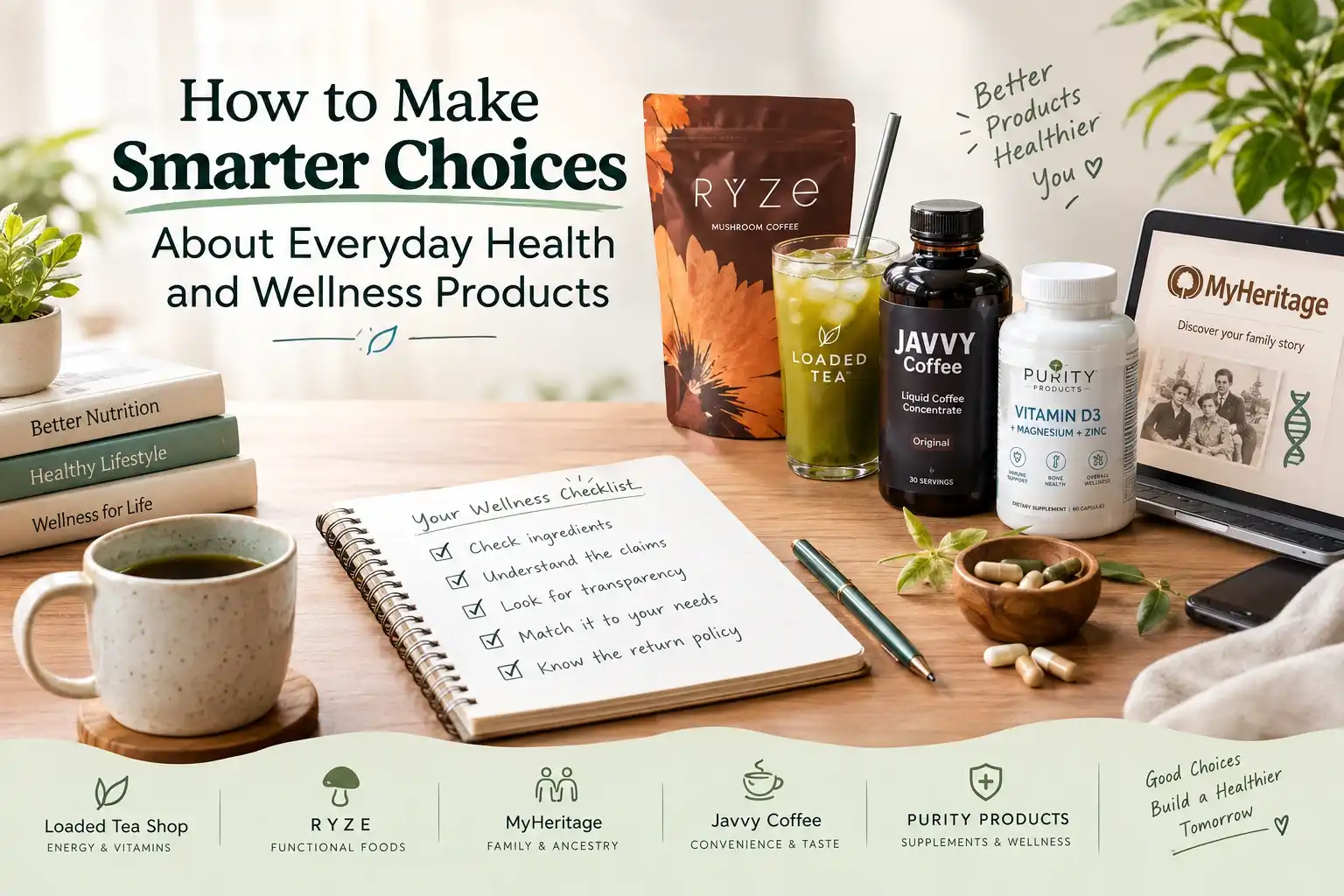
How to Make Smarter Choices About Everyday Health and Wellness Products
Learn how to evaluate wellness products by checking ingredients, claims, testing, transparency, and whether they truly fit your needs.
Recent Blogs
-
Jewellery and Piercings: Expressing Your Personal Style Through Accessories
-
Small Accessories, Big Impact: Ways to Elevate Everyday Outfits
-
How to Style Bracelets, Necklaces and Piercing Jewellery Together
-
Best Everyday Jewellery and Accessories for Every Personal Style
-
The Ultimate Guide to Building a Versatile Jewellery Collection
-
A Practical Guide to Everyday Pet Care: Comfort, Protection, and Hygiene
-
How to Choose the Right Pet Walking Gear for Safety, Comfort, and Control
By William Ashby
·October 02, 2026
Scroll through any wellness category online, and you'll find dozens of products claiming to boost energy, support immunity, or improve focus, often with almost identical language and completely different ingredients. It's not that shoppers don't care about making good choices. It's that most wellness marketing isn't built to make evaluation easy.
This article isn't about which specific product to buy. It's about a reusable way to evaluate any wellness product so the next supplement, beverage, or health tool you consider is easier to judge on its own merits, not just its marketing.
Why Evaluating Wellness Products Is Harder Than It Should Be
A few structural reasons make this category genuinely confusing:
- Supplements aren't regulated the same way medications are. In the U.S., companies can make "structure/function" claims (like "supports energy" or "supports immune health") without FDA pre-approval, as long as they don't claim to treat or cure a disease. That's legal, but it means claims can vary widely in how well they're supported.
- Marketing language is optimized for persuasion, not clarity. Words like "clinically inspired," "premium," or "powerful blend" sound meaningful but often carry no specific, checkable information.
- Reviews can be genuine and still not tell you much. A five-star review usually reflects someone's experience and satisfaction, which matters, but it doesn't verify ingredient quality, dosage, or manufacturing standards.
None of this means the wellness product category is untrustworthy. It means shoppers benefit from their own evaluation habits instead of relying entirely on packaging and reviews.
A Simple Framework for Evaluating Any Wellness Product
This framework works whether you're looking at a supplement, a beverage mix, or another everyday wellness product.
Start With the Ingredient List, Not the Marketing Copy
The front of the package is written to persuade. The ingredient list is written to disclose. Before reading any claims, look at what's actually in the product: the specific ingredients, their form, and, when listed, the amount per serving.
Understand What the Claims Actually Mean
"Supports energy" and "boosts energy" sound similar but aren't verified the same way. Watch for the difference between:
- Descriptive claims about what an ingredient is known for (e.g., caffeine content, a specific mushroom or nutrient)
- Vague benefit language with no specific mechanism attached
A claim tied to a named, checkable ingredient is easier to evaluate than a claim that only exists in adjectives.
Check for Transparency and Testing
Look for whether a brand discloses sourcing, manufacturing standards, or third-party testing (independent labs verifying that a product contains what the label says). Not every brand publishes this prominently, but when it's available, it's one of the more concrete signals of quality control than star ratings alone.
Match the Product to Your Actual Need, Not the Trend
A product can be well-made and still be the wrong fit. Someone sensitive to caffeine doesn't need a "more caffeine" energy product, no matter how well-reviewed it is. The most useful question isn't "is this a good product" in the abstract; it's "is this a good fit for what I'm actually trying to solve?"
Applying the Framework to Common Everyday Categories
Here's what that evaluation process looks like applied to a few categories people commonly shop in.
Functional Coffee and Energy Alternatives
Energy products are one of the most crowded wellness categories, which makes the framework especially useful here. RYZE, for example, is transparent about its specific formulation: a blend of six named functional mushrooms (including cordyceps and lion's mane) combined with organic Arabica coffee, disclosing that it contains roughly 48mg of caffeine per serving, about half of a standard cup of coffee. That kind of specificity named ingredients and a stated caffeine amount is exactly the sort of detail the framework above asks you to look for, rather than a vague "clean energy" claim alone.
For a non-coffee energy option, Loaded Tea Shop offers sugar-free, vitamin-added flavored drink mixes as an alternative to soda or traditional energy drinks. When evaluating a product like this, the same questions apply: what's the caffeine content, what sweeteners or vitamins are actually listed, and does the format (a mixable powder) fit how you'd realistically use it?
Convenience-Focused Products
Some wellness products aren't differentiated by exotic ingredients; they're differentiated by solving a friction problem. Javvy Coffee's liquid coffee concentrate is a useful example: the product itself is a straightforward concentrated Arabica coffee, and its main value proposition is format and convenience (mixing with hot or cold water or milk in seconds) rather than a health claim. That's worth recognizing on its own terms: a convenience product should be judged on convenience and taste, not evaluated as if it were making a supplement-style health claim it never made.
Targeted Supplements
Supplements are where the evaluation framework matters most, because the category is broad and claims vary widely in specificity. Purity Products publishes ingredient lists and active-ingredient amounts for individual formulas; for example, a vitamin D-focused capsule that names its core ingredients (such as vitamin D3, magnesium, and zinc) and their per-serving amounts. Review the available formulas with that same lens: check what's named, in what amount, and whether it addresses a gap you've actually identified, ideally with input from a healthcare provider, particularly if you take medication or manage an existing condition.
Wellness Tools Beyond Physical Products
Not every wellness-adjacent purchase is something you consume. Tools that support emotional wellbeing or self-understanding are part of the same decision-making category, just evaluated on different criteria. MyHeritage, for instance, is a family history and DNA-testing platform; the "ingredient list" equivalent here is understanding what the service actually includes (family tree building, historical record access, DNA-based ethnicity and relative matching) and being clear about what it is and isn't: a tool for exploring ancestry and family connections, not a medical diagnostic service.
Common Mistakes People Make When Buying Wellness Products
- Judging a product by its packaging language instead of its ingredient list
- Assuming more expensive automatically means higher quality, without checking what's actually different
- Buying based on a trend rather than a specific, identified need
- Ignoring dosage and serving size, which can make two similar-sounding products very different in practice
- Treating anecdotal reviews as equivalent to independent testing, when they answer a different question (satisfaction, not verification)
A Quick Pre-Purchase Checklist
Frequently Asked Questions
How do I know if a wellness product is actually good quality?
Look for specific, named ingredients with disclosed amounts, transparency about sourcing or testing, and claims that are specific rather than purely descriptive marketing language. No single signal guarantees quality, but the more of these a brand discloses, the easier it is to evaluate.
What should I check on a supplement label before buying?
The active ingredients, their form (e.g., which specific compound), the amount per serving, and whether the label uses a proprietary blend that doesn't disclose individual ingredient amounts.
Are wellness product reviews trustworthy?
Reviews generally reflect real user satisfaction, which is useful information, but they don't verify ingredient accuracy or manufacturing quality. Treat reviews as one input, not a substitute for checking the label.
What does "third-party tested" actually mean?
It typically means an independent lab, not the manufacturer, has verified that the product contains what the label claims (and doesn't contain undisclosed substances). Not all wellness products disclose this, but when available, it's a meaningful transparency signal.
What's a proprietary blend, and should I be cautious of it?
A proprietary blend lists the ingredients in a formula but not the individual amount of each one, only a combined total. It's not automatically a red flag, but it does make it harder to evaluate dosage, so it's worth factoring into your decision.
Is it safe to buy supplements or wellness products online?
Buying from a brand's official site or an authorized retailer, checking ingredient transparency, and consulting a healthcare provider for anything you'll take regularly are all reasonable precautions; this applies whether you're buying in person or online.
How is a convenience product like a coffee concentrate different from a supplement?
A convenience product is typically evaluated on format, taste, and usability rather than a specific health claim. It's worth recognizing which category a product falls into so you're judging it by the right standard.
Conclusion
Smarter wellness shopping isn't about memorizing every ingredient or becoming a research scientist. It's about building a habit: check the ingredient list before the marketing copy, understand what a claim actually says, look for transparency, and match the product to a need you've actually identified. That one habit carries over to every future purchase in this category, long after any single product decision.