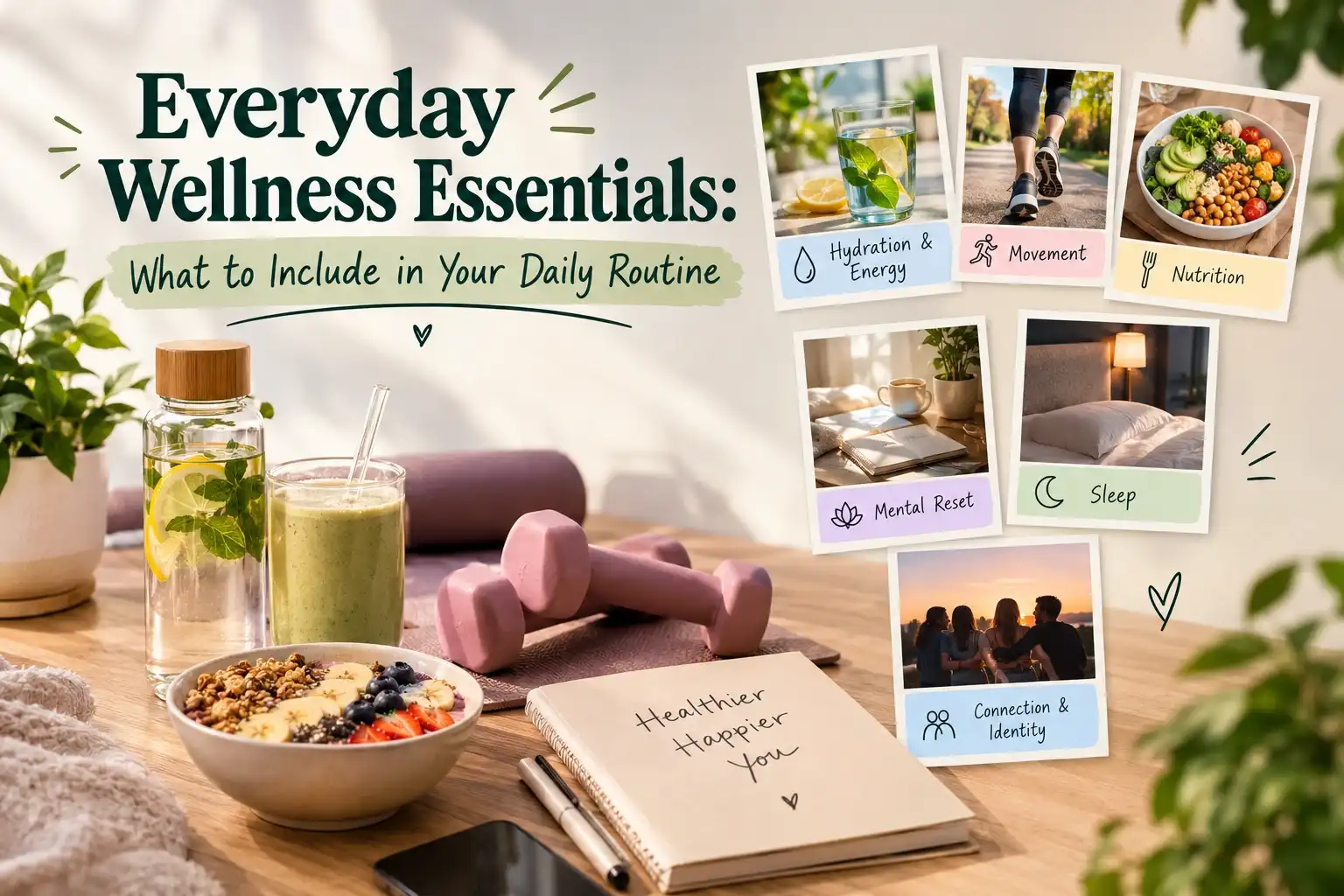
Everyday Wellness Essentials: What to Include in Your Daily Routine
A practical guide to daily wellness essentials, covering hydration, movement, nutrition, sleep, mental reset, and connection for a balanced routine.
Recent Blogs
-
Jewellery and Piercings: Expressing Your Personal Style Through Accessories
-
Small Accessories, Big Impact: Ways to Elevate Everyday Outfits
-
How to Style Bracelets, Necklaces and Piercing Jewellery Together
-
Best Everyday Jewellery and Accessories for Every Personal Style
-
The Ultimate Guide to Building a Versatile Jewellery Collection
-
A Practical Guide to Everyday Pet Care: Comfort, Protection, and Hygiene
-
How to Choose the Right Pet Walking Gear for Safety, Comfort, and Control
By William Ashby
·October 01, 2026
Open any wellness app, blog, or social feed, and the list of things you're supposedly missing keeps growing: cold plunges, gratitude journals, seed oils to avoid, seventeen-step skincare, a specific brand of everything. Somewhere in that noise, the actual essentials get buried under trends.
This article strips that down. Instead of a wish list, it's a working inventory of the categories that genuinely belong in a daily wellness routine, what each one covers, why it matters, and where a specific product might reasonably support it. Not everything here will apply to you, and that's the point: essentials are the few things worth prioritizing, not everything worth trying.
What Makes Something a Wellness "Essential"
Before listing categories, it helps to filter what counts. A genuine wellness essential usually meets a few criteria:
- It addresses a basic physiological or psychological need (not a niche optimization)
- Skipping it consistently has a noticeable, negative effect on how you feel or function
- It doesn't require special equipment, expensive products, or extreme effort to include in some form
- It applies broadly, even if the specific method varies from person to person
By that filter, hydration is essential; a specific $60 water bottle is not. Sleep is essential; a particular sleep-tracking ring is optional. This distinction matters because a lot of wellness marketing blurs the line between the category (essential) and one specific product in that category (optional, situational).
The Six Categories a Daily Routine Should Cover
Most people already have partial coverage in most categories. The goal isn't to add all six from scratch; it's to notice which ones are consistently missing.
Hydration and a Mindful Morning Ritual
Hydration is one of the most repeated pieces of wellness advice, and for good reason: even mild dehydration is linked to reduced concentration and increased fatigue. But hydration isn't just about water intake; it's also about what else you drink, especially first thing in the morning.
For many people, mornings start with caffeine, and how that caffeine is delivered matters more than it might seem. A routine caffeine crash, jitters, and a mid-morning slump often come down to how much caffeine hits your system at once. Lower-caffeine alternatives, like RYZE, which blends organic Arabica coffee with functional mushrooms and contains roughly half the caffeine of a standard cup, are worth considering if a steadier morning is the goal rather than a sharp jolt.
This isn't a claim that any beverage is required; plain water and regular coffee cover this essential just fine for most people. It's simply one option for readers whose current caffeine habit is working against them rather than for them.
Movement, in Whatever Form Fits Your Day
Movement is essential, but it doesn't require a gym membership or a structured workout plan to count. Walking, stretching, gardening, taking the stairs, or a short at-home routine all serve the same underlying purpose: keeping your body from being sedentary for the entire day.
The threshold that matters most is consistency, not intensity. A 10-minute walk most days does more for a routine than an intense workout done twice a month. If movement is the category most often skipped in your day, it's usually more effective to lower the bar (a short walk) than to raise the ambition (an elaborate plan you won't keep up with).
Nutrition and Filling Real Gaps
Nutrition as a wellness essential isn't about following a specific diet; it's about consistent, balanced eating that keeps energy levels steady throughout the day. Skipped meals, low protein intake, and inconsistent eating patterns are more common culprits behind low energy than most people assume.
Even a reasonably balanced diet can leave specific gaps: vitamin D for people who spend most of the day indoors, magnesium, or omega-3s for those who don't eat much fish. Rather than a generic multivitamin, it's usually more useful to identify the specific gap and address it directly. Purity Products organizes its formulas around named needs: vitamin D, magnesium, joint support, and cardiovascular formulas, among others, which makes it easier to explore options for a specific nutrient gap rather than guessing. As with any supplement, it's worth checking with a healthcare provider first, particularly if you take medication or manage an existing condition.
An Afternoon Reset Without the Sugar Spike
Energy dips in the early-to-mid afternoon are common, and the usual response a sugary drink, another regular coffee, or a candy bar often makes the next dip worse. This is a category that gets overlooked in most "essentials" lists, but having a plan for it matters, since it's one of the most common points where a day's momentum breaks down.
Sugar-free flavored options, like the ones from Loaded Tea Shop, are built specifically for this slot a lower-calorie alternative to soda or energy drinks for readers who want a change of pace without adding more sugar to their afternoon. This isn't a requirement for a wellness routine, but for people who default to less healthy afternoon options out of habit, it's a reasonable substitution to have on hand.
Consistency Tools That Keep Essentials From Slipping
An overlooked truth about wellness essentials: the ones that get dropped first are usually the ones with the most friction, not the ones that matter least. A morning routine that requires grinding coffee, brewing, and cleanup is more likely to be skipped on a rushed day than one that takes under a minute.
This is where convenience becomes a legitimate wellness consideration rather than a shortcut. Javvy Coffee's liquid concentrate is a practical example: mix a small amount with hot or cold water or milk, and see the available options if a faster version of your existing coffee routine would help it survive busier mornings. The category that matters here isn't "coffee" specifically; it's reducing friction on whichever habit you're most likely to skip when time is tight.
Mental Reset and Downtime
A daily routine that's entirely physical movement, food, and hydration but has no space for mental recovery is incomplete. This doesn't need to mean meditation specifically, though that's one option. It can be five minutes of quiet, a walk without a phone, journaling, or simply sitting without a task attached to it.
The essential piece isn't the specific technique; it's having at least one point in the day that isn't productive, scheduled, or screen-based. Without it, stress tends to accumulate rather than resolve, which shows up over time as irritability, poor sleep, or burnout.
Connection and a Sense of Identity
Wellness content tends to focus heavily on the physical and rarely mentions identity and connection, even though both play a real role in overall wellbeing. Feeling grounded in who you are, including where you come from, is part of that picture for many people.
For some, that means genealogy or family history: understanding family patterns, tracing where you come from, or simply feeling connected to a bigger story than the day's to-do list. Tools like MyHeritage, which combine family tree building with DNA testing, are one way to explore that. It's not a substitute for therapy, community, or close relationships, but for readers looking to round out the "connection" essential with something reflective, it's a relevant option.
How to Personalize Your Essentials List
Not every category needs equal attention every day. A useful way to personalize:
- Identify which category is weakest right now. Usually it's obvious the one you'd list first if asked what's missing.
- Pick one small addition in that category, not a full overhaul.
- Leave the categories that are already working alone. If your sleep is solid, don't add complexity there just because a list says to.
- Revisit the list seasonally, since needs shift with schedule changes, stress levels, and life circumstances.
A Daily Wellness Essentials Checklist
Mistakes People Make With "Essentials" Lists
- Treating every trending product as essential, rather than checking it against a real, named need
- Trying to cover all six categories perfectly at once, which usually leads to abandoning all of them
- Ignoring the categories that don't involve buying anything: movement, mental reset, and connection are free
- Assuming what's essential for someone else is essential for you, without checking against your actual routine
Frequently Asked Questions
What are the true essentials of a daily wellness routine?
At a minimum: hydration, some form of regular movement, consistent nutrition, a plan for stress recovery, adequate sleep,and some form of social or personal connection. Everything else is a variation or enhancement within those categories.
Do I need supplements to have a complete wellness routine?
No. Supplements can help close specific, identified nutrient gaps, but a complete routine can be built entirely from food, movement, sleep, and downtime without any supplements at all.
How is a wellness essential different from a wellness trend?
An essential addresses a basic, broadly applicable need (hydration, movement, sleep). A trend is usually a specific method or product promoted as the only way to meet that need, when in reality many methods work.
How many of these categories should I focus on at once?
Start with whichever one is weakest. Trying to overhaul all six simultaneously is one of the most common reasons routines don't last.
Is it normal to skip a category some days?
Yes. The goal is general consistency across the week, not a perfect daily record. Missing one category occasionally doesn't undo the routine.
What's the most commonly overlooked essential?
Mental reset and downtime tend to get skipped most often, since they don't produce a visible result the way movement or nutrition do, but their absence shows up over time through stress and burnout.
Conclusion
A genuinely useful wellness routine doesn't need to include everything that's trending it needs to cover a handful of real categories: hydration, movement, nutrition, stress recovery, sleep, and connection. Start by identifying which of these is weakest in your current day, address that one directly, and leave the rest alone until it needs attention. That's what separates an essentials list from an endless one.