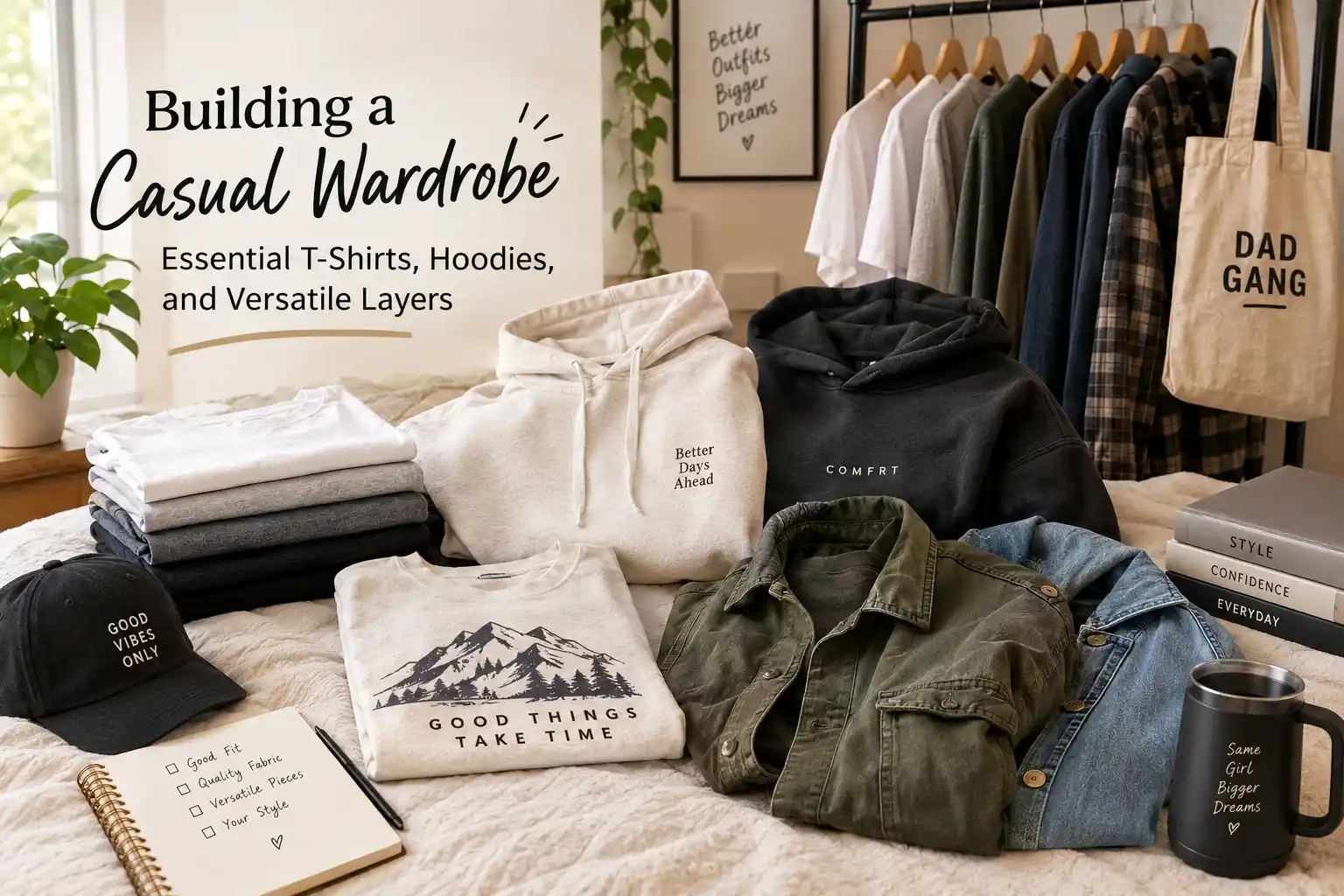
Building a Casual Wardrobe: Essential T-Shirts, Hoodies, and Versatile Layers
Build a versatile casual wardrobe with essential T-shirts, comfortable hoodies, and easy layers that balance style, comfort, quality, and personal expression.
Recent Blogs
-
Jewellery and Piercings: Expressing Your Personal Style Through Accessories
-
Small Accessories, Big Impact: Ways to Elevate Everyday Outfits
-
How to Style Bracelets, Necklaces and Piercing Jewellery Together
-
Best Everyday Jewellery and Accessories for Every Personal Style
-
The Ultimate Guide to Building a Versatile Jewellery Collection
-
A Practical Guide to Everyday Pet Care: Comfort, Protection, and Hygiene
-
How to Choose the Right Pet Walking Gear for Safety, Comfort, and Control
By William Ashby
·October 07, 2026
A closet full of clothes and still nothing to wear is one of the most common wardrobe complaints, and it's rarely a shortage problem. It's usually a mismatch problem: too many pieces that don't go with anything else, not enough that actually work together.
A casual wardrobe built around a handful of solid T-shirts, a couple of go-to hoodies, and a few versatile layers solves that. This guide walks through how to choose those pieces with intention, what actually makes a T-shirt or hoodie worth keeping, and where a graphic tee or statement hoodie can do double duty as something that reflects who you are.
What "Building a Casual Wardrobe" Actually Means
Building a casual wardrobe isn't the same as chasing trends, and it's not the same as a strict minimalist capsule either. It's closer to building a small, functional system: a set of pieces that fit well, hold up to regular wear, and combine with each other easily.
That means prioritizing:
- Fit and fabric over logos and trends
- Pieces that work across more than one setting (errands, hanging out, travel, casual work-from-home days)
- A color palette that actually coordinates, rather than one-off pieces bought in isolation
- A small number of pieces you reach for often, instead of a large number you rarely touch
The goal isn't owning fewer clothes for its own sake; it's owning clothes that actually get worn.
The Three Building Blocks of a Casual Wardrobe
Almost every casual outfit comes down to three categories working together:
- T-shirts the base layer for most casual outfits, in both plain and graphic forms
- Hoodies the go-to piece for comfort, mild weather, and low-effort styling
- Versatile layers sweatshirts, overshirts, and other pieces that bridge temperature changes and dress an outfit up or down slightly
Getting each of these right matters more than owning a large volume of clothing in any one category.
Choosing T-Shirts That Actually Earn Their Place
A good T-shirt comes down to three things: fit, fabric weight, and how well it holds its shape after washing. A heavier cotton blend generally resists pilling and shape loss better than ultra-thin fabric, even if the thinner version feels softer on the hanger. Fit matters just as much as fabric: a T-shirt that's slightly too tight or too boxy tends to get passed over in favor of the two or three shirts that actually fit right, regardless of how many are in the drawer.
Neutral, solid-color tees are the foundation for a reason: they layer easily, go with almost anything, and don't compete with other pieces in an outfit. But graphic tees still earn a place in a casual wardrobe when they reflect something real about the person wearing them, rather than being chosen for a passing trend.
When a Graphic Tee Is Worth It
A graphic tee works best in a casual wardrobe when it says something true, not just something trendy. Faith-based apparel is a clear example for someone whose faith is part of their everyday; a well-made, hand-screened design carries more long-term value than a shirt bought because it was popular for a season. Love in Faith is one option in this category, offering Christian-themed T-shirts and sweatshirts built from a cotton-poly blend with hand silk-screened designs the kind of graphic tee that still feels relevant years after it was bought, because the message behind it doesn't go out of style.
The same logic applies to other identity-driven tees. For readers, a shirt that quietly signals "I'm a reader" works the same way a faith-based tee does for someone grounded in their beliefs; it's a small, wearable version of something that matters to the person wearing it. Pagewings builds its apparel specifically around that idea, making it a fitting choice for anyone who wants their casual wardrobe to reflect a genuine interest rather than a passing graphic trend.
Choosing a Hoodie That Works for Real Life
A hoodie is probably the single most-worn piece in most casual wardrobes, which makes it worth choosing carefully. A few factors matter more than style alone:
- Fit: oversized hoodies trade a close fit for comfort and layering room; fitted hoodies layer more cleanly under jackets
- Fabric weight: heavier fleece holds warmth better but can feel bulky; lighter fabric is easier to wear year-round
- Function: some hoodies are built purely for comfort, while others are designed around a specific feel or message
Comfort-First Hoodies
For people who want a hoodie to feel less like clothing and more like a wearable blanket, a slightly weighted, oversized construction changes the experience noticeably. COMFRT builds its hoodies and sweat sets around that idea: a deliberately oversized fit with a slightly weighted fabric, designed to feel grounding rather than just warm. It's a relevant option for anyone prioritizing comfort and a relaxed fit over a slim, tailored silhouette.
Message-Driven Hoodies
Some hoodies are chosen less for fit and more for what they communicate: a reminder, an affirmation, or a quiet message meant for the wearer or whoever reads it. DearpersonCo works in that space, offering hoodies built around supportive, affirming messaging. For someone who wants their everyday hoodie to double as a small, personal reminder, this kind of message-driven piece fills a different role than a purely comfort-focused one.
Versatile Layers That Bridge Seasons and Settings
Beyond t-shirts and hoodies, a casual wardrobe benefits from a few pieces that bridge temperature changes and settings something to throw on over a tee when the weather shifts, or to wear to something slightly more put-together than lounging at home.
For some people, those layering pieces also double as a way to represent an identity or community they're part of. DAD GANG is a clear example of this: a brand built specifically around modern fatherhood, offering hats, sweatshirts, hoodies, and t-shirts designed to let dads represent that role without leaning on tired, cliché dad-merch tropes. For someone who wants their casual layers to say something about who they are in this case, a parent proud of that identity it's a relevant option worth exploring alongside more neutral layering pieces.
How to Build the Wardrobe, Step by Step
- Audit what you already own. Separate what you actually reach for from what sits unworn; that's usually the clearest signal of what fits and feels right.
- Pick a core color palette. Two or three neutrals (black, white, gray, navy, olive) make every piece easier to mix and match.
- Start with t-shirts. Prioritize fit and fabric weight first; add one or two graphic tees that reflect something genuinely yours, rather than a trend.
- Add one or two hoodies that serve different purposes. One built purely for comfort, and optionally one that carries a message or identity that matters to you.
- Fill in versatile layers last. A sweatshirt or layering piece that can be worn over a tee or under a jacket extends the usefulness of everything else in the rotation.
- Resist buying in bulk at once. Add pieces gradually and notice what actually gets worn before buying more in the same category.
- Revisit the wardrobe each season. What works in summer heat may not work for layering in colder months, and that's a normal reason to adjust, not a sign the first choices were wrong.
Common Mistakes When Building a Casual Wardrobe
- Buying based on trend alone, without considering whether the piece will still feel relevant in a year
- Ignoring fit in favor of fabric softness or price, which often means the piece goes unworn
- Building entirely around neutrals with no personality, or entirely around graphics with no foundation pieces
- Skipping layering pieces, which limits how many outfits the core wardrobe can actually produce
- Buying many similar pieces at once instead of testing a few and building from what works
A Simple Casual Wardrobe Checklist
Use this as a starting framework, not a rulebook; adjust quantities to match your climate, lifestyle, and how often you do laundry.
Frequently Asked Questions
How many t-shirts and hoodies does a casual wardrobe actually need?
There's no universal number, but a workable starting point is four to six solid t-shirts, one or two hoodies, and a couple of versatile layering pieces. The goal is coverage for a week of mixing and matching, not a specific count.
What makes a t-shirt good quality?
A heavier, well-constructed cotton or cotton-blend fabric that holds its shape after multiple washes, combined with a fit that works for your body and how you like to wear it. Price alone isn't a reliable indicator; fabric weight and stitching quality matter more.
Are graphic tees still considered a wardrobe staple?
Yes, as long as the graphic reflects something the wearer actually connects with a belief, an interest, an identity rather than being bought purely because it was trending. A tee tied to something genuine tends to stay in rotation far longer than a passing trend piece.
What's the difference between a capsule wardrobe and a casual wardrobe?
A capsule wardrobe usually refers to a strict, limited number of pieces designed to maximize outfit combinations. A casual wardrobe is broader; it's about building a functional, everyday collection of comfortable pieces, which may or may not follow strict capsule rules.
How do I layer casual clothes without looking bulky?
Stick to one heavier layer at a time (a hoodie or sweatshirt, not both), and keep the base T-shirt relatively fitted so it doesn't add extra bulk under a looser outer layer.
Should I buy oversized or fitted hoodies?
It depends on personal preference and purpose. Oversized hoodies prioritize comfort and layering room; fitted hoodies layer more cleanly under jackets and tend to look less bulky in warmer weather.
How often should I update my casual wardrobe?
There's no fixed timeline: replace pieces as they wear out or stop fitting your lifestyle, and reassess once or twice a year as seasons and routines change.
Conclusion
A casual wardrobe doesn't need to be large to work well; it needs to be intentional. A handful of well-fitted T-shirts, one or two hoodies chosen for comfort or meaning, and a few versatile layers will outperform a closet full of one-off pieces that don't go together. Start with fit and fabric, add pieces that genuinely reflect who you are, and build the rest around what you actually wear.