How to Build a Personal Style That Reflects Your Personality and Interests
Build a personal style that reflects your values, interests, comfort, and lifestyle with intentional wardrobe choices that truly feel like you.
Recent Blogs
-
Jewellery and Piercings: Expressing Your Personal Style Through Accessories
-
Small Accessories, Big Impact: Ways to Elevate Everyday Outfits
-
How to Style Bracelets, Necklaces and Piercing Jewellery Together
-
Best Everyday Jewellery and Accessories for Every Personal Style
-
The Ultimate Guide to Building a Versatile Jewellery Collection
-
A Practical Guide to Everyday Pet Care: Comfort, Protection, and Hygiene
-
How to Choose the Right Pet Walking Gear for Safety, Comfort, and Control
By William Ashby
·October 07, 2026
Most closets are full of clothes that technically fit but don't actually feel like the person wearing them; pieces bought because they were trending, on sale, or because someone else made them look good. If you've ever stood in front of a full closet and felt like you had nothing to wear, that's usually not a shopping problem. It's a style-identity problem.
Personal style isn't about owning more clothes or keeping up with what's current. It's about building a wardrobe that reflects who you actually are, your values, your interests, how you want to feel day to day. This guide walks through how to figure that out and turn it into real, wearable choices.
What Personal Style Actually Means (and What It Isn't)
Personal style is the consistent, recognizable way someone dresses that reflects their personality, values, and lifestyle not a single trend, outfit, or aesthetic label.
It's different from fashion trends in a few key ways:
- Trends are seasonal and external; personal style is consistent and internal.
- Trends ask "what's popular right now?" Personal style asks "what feels like me?"
- A trend can be adopted overnight. Personal style tends to develop and shift gradually, as you do.
That doesn't mean personal style is static; it evolves as your interests, values, and life circumstances change. But it evolves on your timeline, not a trend cycle's.
Why Personal Style Should Start With Identity, Not Trends
Chasing trends often leads to a wardrobe that looks fine on paper but never quite feels right. That's because trends are built around what's selling broadly, not around any one person's actual life, values, or interests.
Starting from identity instead means asking different questions:
- What do I actually care about: my beliefs, my hobbies, my relationships, my role in my family?
- What makes me physically comfortable versus what do I just tolerate?
- What do I want people to understand about me without saying a word?
Clothing is one of the few everyday tools that can answer all three of those questions at once.
The Four Building Blocks of a Personal Style
A personal style that actually reflects you usually draws from four areas:
- Values: faith, causes, beliefs, or principles that matter to you
- Interests: hobbies, communities, or identities you're part of (reading, parenting, sports, creative work)
- Comfort: how your clothing needs to feel, not just look, including sensory preferences
- Lifestyle: your actual day-to-day: work, activity level, climate, routine
Most wardrobes lean heavily on one of these (usually "what looks acceptable for my lifestyle") while ignoring the other three. A stronger personal style pulls from all four.
How to Build Your Personal Style, Step by Step
- Audit what you already own. Separate pieces you reach for often from ones that sit unused. The pattern in what you actually wear says more than any style quiz.
- Name your values and interests explicitly. Write down three to five things that matter to you or define how you spend your time. This becomes the filter for future purchases.
- Identify your non-negotiable comfort needs. Fabric weight, fit, texture, and how "put-together" you need to feel these are personal, not universal, and ignoring them is one of the most common reasons clothes go unworn.
- Build around a consistent color and shape palette, not a specific trend, so new pieces naturally mix with what you already own.
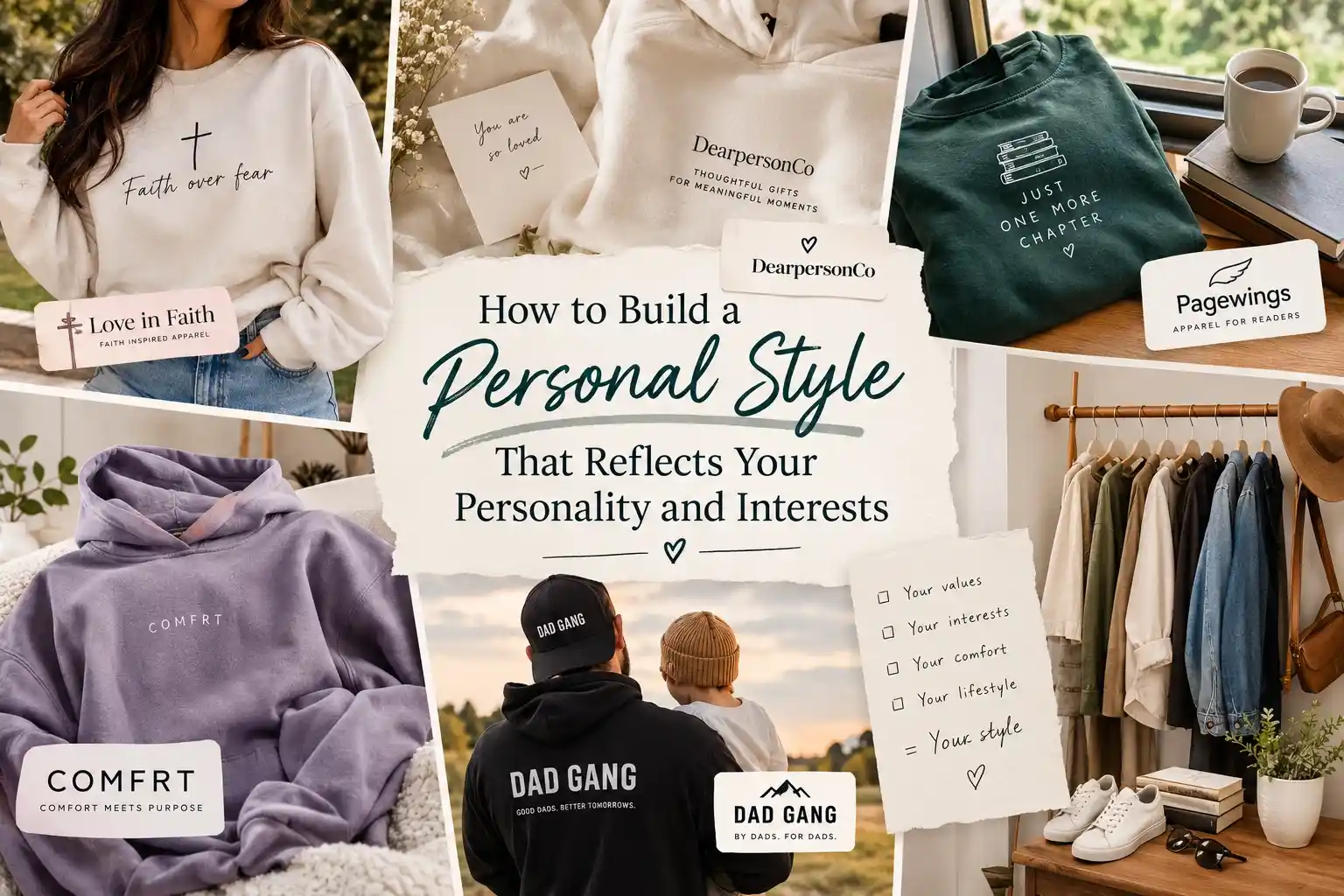
- Add pieces that speak to a specific interest or identity, rather than generic basics alone. This is where style stops being "neutral" and starts being yours: a shirt tied to your faith, a hoodie built for comfort, a hat tied to your role as a parent, apparel that signals a hobby you're genuinely part of.
- Edit over time, not all at once. Personal style is built gradually through small, intentional additions, not a single overhaul.
- Revisit your values and interests every so often. As life changes, your style should be allowed to change with it.
Letting Specific Interests and Values Show Up in What You Wear
Once the basics are in place, the most distinctive part of a personal style usually comes from pieces tied to something specific: a belief, a hobby, a role, or a comfort need that matters more to you than it does to most people.
Style Built Around Faith and Values
For people whose faith is central to how they see themselves, clothing can be a quiet, everyday way to carry that identity. Love in Faith is a Christian apparel brand built specifically around that idea: tees, sweatshirts, and accessories featuring faith-based graphics and scripture-inspired messaging, designed for people who want their beliefs reflected in what they wear without it needing to be a statement piece reserved for church.
Style That Carries a Personal Message
Some people's style is less about a single interest and more about sentiment clothing and accessories that carry a message, a feeling, or something meaningful to give or wear. If that resonates with how you think about getting dressed or gifting, DearpersonCo is worth exploring as a sentiment-driven apparel and gifting option for pieces built around a heartfelt message rather than a logo or trend.
Style Built Around a Hobby or Identity Being a Reader
For people who identify strongly as readers, that interest doesn't always show up in a wardrobe; most "book lover" merchandise skews toward mugs and tote bags rather than everyday clothing. Pagewings is built around exactly that gap: apparel designed for people who want wearing it to be a quiet declaration of "I am a reader," without needing to explain the reference to anyone who doesn't already get it.
Style Built Around Comfort as a Core Value
For some people, comfort isn't a secondary consideration; it's the defining value their style is built around, especially if certain fabrics, fits, or sensory experiences genuinely affect how they feel day to day. COMFRT specializes in slightly weighted hoodies and loungewear designed to feel grounding rather than just soft, an approach inspired by the calming effect of gentle, even pressure. The brand has also partnered with mental health organizations including the Anxiety and Depression Association of America and NAMI, which fits naturally if your personal style is less about how clothing looks and more about how it makes you feel.
Style Built Around a Life Role Fatherhood
For many people, a major life role becomes part of their identity, and fatherhood is one of the clearest examples of that showing up in everyday style. DAD GANG is a community-driven apparel and headwear brand built specifically around modern fatherhood, offering hats and apparel designed by dads for dads who want their role to be part of how they present themselves day to day, not something separate from their personal style.
Common Mistakes When Building a Personal Style
-
Shopping trend-first instead of identity-first, which leads to a wardrobe that looks current but doesn't feel personal
-
Ignoring comfort in favor of appearance, which quietly leads to unworn clothes
-
Trying to overhaul an entire wardrobe at once instead of editing gradually
-
Copying someone else's exact style rather than translating your own values and interests into clothing
-
Treating personal style as permanent instead of something that's allowed to shift as you do
A Simple Personal Style Audit
Use this as a starting point before adding anything new to your wardrobe; it's a faster filter than browsing for "what's trending."
Frequently Asked Questions
What's the real difference between personal style and fashion trends?
Fashion trends are external and seasonal, driven by what's widely popular at a given time. Personal style is internal and consistent, driven by your values, interests, comfort needs, and lifestyle. Trends can inform personal style, but they shouldn't define it.
How do I figure out what my personal style actually is?
Start by auditing what you already wear most often and what sits unused, then name the values and interests you want your clothing to reflect. Personal style usually becomes clear through this kind of honest pattern recognition rather than a single quiz or inspiration board.
Can personal style change over time?
Yes, and it usually should. As your interests, values, and life circumstances shift, your style can shift with them. The difference between that and trend-chasing is that personal style changes on your own timeline, for your own reasons.
Do I need an expensive wardrobe to have a strong personal style?
No. Personal style is about intentionality and fit with your actual identity, not price point. A smaller wardrobe of pieces that genuinely reflect you is more effective than a large one built around trends.
How many pieces does a personal style actually require?
There's no fixed number. What matters more is that the pieces you do own consistently reflect your values, interests, comfort needs, and lifestyle, rather than hitting an arbitrary wardrobe size.
How do I express a specific interest or identity, like faith or parenthood, through what I wear?
Look for pieces designed around that specific identity rather than generic items with a loosely related graphic. Brands built specifically around a value or community faith-based apparel, hobby-specific designs, or identity-driven collections tend to feel more authentic than a generic item retrofitted to "represent" something.
Is it okay if my personal style doesn't fit neatly into one aesthetic label?
Yes. Most authentic personal styles pull from more than one value or interest at once, which is exactly why they don't always match a single trend label, and that's a sign your style is identity-driven rather than copied.
Conclusion
A personal style that actually feels like you doesn't come from chasing what's trending; it comes from paying attention to what you value, what you're genuinely interested in, how you need to feel in your clothes, and how you actually live day to day. Build from there, edit gradually, and let specific pieces carry the parts of your identity that matter most to you. That's what makes a wardrobe feel like yours instead of a collection of things that were simply available.