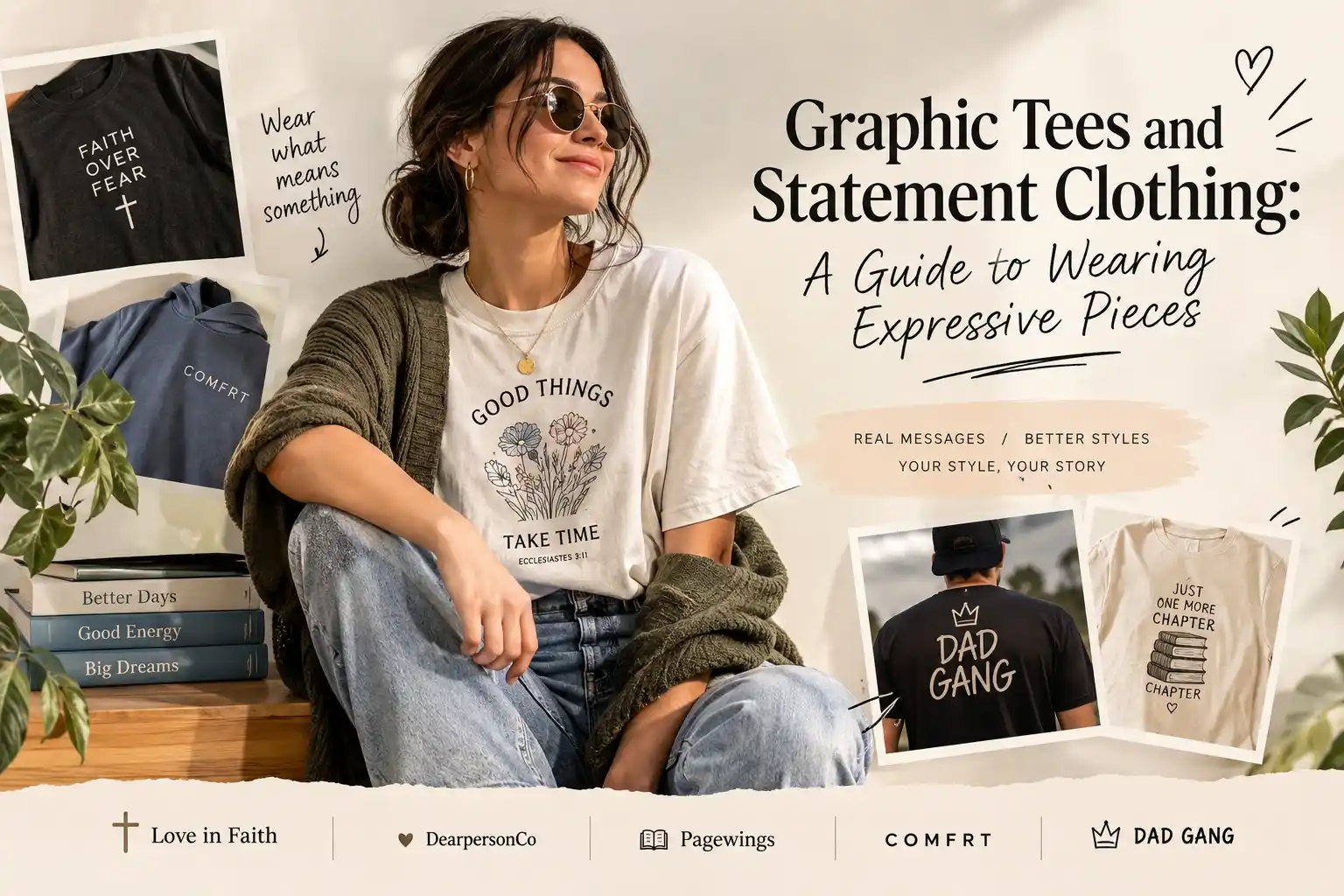
Graphic Tees and Statement Clothing: A Guide to Wearing Expressive Pieces
Learn how to wear graphic tees and statement clothing with confidence, choose meaningful pieces, style them intentionally, and balance comfort with personal expression.
Recent Blogs
-
Jewellery and Piercings: Expressing Your Personal Style Through Accessories
-
Small Accessories, Big Impact: Ways to Elevate Everyday Outfits
-
How to Style Bracelets, Necklaces and Piercing Jewellery Together
-
Best Everyday Jewellery and Accessories for Every Personal Style
-
The Ultimate Guide to Building a Versatile Jewellery Collection
-
A Practical Guide to Everyday Pet Care: Comfort, Protection, and Hygiene
-
How to Choose the Right Pet Walking Gear for Safety, Comfort, and Control
By William Ashby
·October 07, 2026
There's a specific kind of hesitation that comes with wearing something that actually says something. A plain tee is safe. A shirt with a message, a graphic, or an identity attached to it is a small risk what if it reads as try-hard, or doesn't land the way you meant it to?
That hesitation is usually a styling problem, not a taste problem. Graphic tees and statement clothing work when the piece feels true to the person wearing it and the rest of the outfit is built to support it, not compete with it. This guide covers how to choose a message worth wearing, how to style it so it looks deliberate, and what's actually worth buying.
What Counts as "Statement Clothing"
Statement clothing is anything that communicates something about the wearer at a glance: a belief, an identity, a mood, a sense of humor, or even just a commitment to comfort over performance. That includes:
- Graphic tees with artwork, slogans, or typography
- Faith-based or values-driven apparel
- Sentimental or affirming message pieces
- Identity and hobby-based designs (fandoms, interests, communities)
- Even minimal, comfort-first pieces that signal "I'm not dressing for anyone else today"
The common thread isn't boldness; it's intention. A quiet piece worn on purpose is just as much a statement as a loud graphic.
Why People Wear Expressive Pieces in the First Place
Clothing with a message does something basic apparel doesn't: it starts a conversation before a word is spoken. People reach for statement pieces for a few consistent reasons:
- To signal identity or belonging: faith, fandom, parenthood, a hobby that matters to them
- To express a feeling or mindset in a low-effort, visible way
- To connect with like-minded people who recognize the reference or message
- To feel like themselves in an outfit, rather than dressed for an occasion
None of this requires a closet full of bold graphics. It requires choosing pieces that are actually true to something, rather than whatever's trending that week.
Finding a Message That's Actually Yours
The easiest way for statement clothing to look off is wearing a message that isn't genuinely yours: borrowed humor, a phrase you don't quite mean, a design chosen because it was popular rather than because it fit. The fix is to start from what you'd actually want to say, then find the category that matches it.
Faith and Values-Based Statements
For people who want their clothing to reflect a spiritual or values-driven identity, faith-based graphic tees are one of the most established categories of statement apparel. Love in Faith designs Christian-themed graphic tees with scripture references, faith-based phrases, and cross and symbol graphics on soft, vintage-style cotton-blend shirts, built for everyday wear rather than church-only occasions. For someone whose faith is a core part of their identity, this kind of tee functions less like a trend piece and more like a quiet, consistent statement.
Sentiment and Emotional Statements
Not every statement needs to be bold or declarative; some of the most resonant graphic tees carry a softer, more affirming message. Brands in this space, including DearpersonCo, lean into heartfelt or encouraging phrases rather than humor or slogans aimed at a crowd. These pieces tend to work best as a personal reminder worn for yourself, or a thoughtful gift for someone going through something. See the available designs to find a message that fits the moment.
Identity and Hobby-Based Statements
Some of the clearest statement pieces aren't about a cause at all; they're about an interest the wearer genuinely has. Pagewings is built around exactly one identity: being a reader. Wearing it is less about fashion trend-chasing and more about quietly declaring a specific interest to anyone who recognizes it a good example of how a niche, specific statement often lands better than a broad, generic one. Browse the collection if reading is genuinely part of how you'd describe yourself.
Role and Community-Based Statements
Some statement apparel isn't about a belief or a hobby; it's about a role. DAD GANG built an entire brand around fatherhood as an identity worth wearing, starting with hats and growing into a broader community-driven lifestyle brand recognized well beyond its original product. For someone whose identity as a parent is something they want to wear rather than just live quietly, exploring the available options is a way to represent that role the way Pagewings represents being a reader.
How to Style a Graphic Tee So It Looks Intentional
- Let the graphic be the loudest thing in the outfit. Pair a statement tee with neutral, simple bottoms and minimal accessories so the message doesn't have to compete for attention.
- Pay attention to fit before anything else. An oversized, boxy fit reads as intentional streetwear; an accidentally-too-big tee reads as unintentional. Choose one on purpose.
- Layer for structure, not just warmth. An open flannel, a structured jacket, or a cardigan over a graphic tee adds shape and makes the piece look styled rather than thrown on.
- Balance busy graphics with clean lines elsewhere. A detailed or colorful design pairs better with simple denim or solid trousers than with another patterned piece.
- Don't let the shirt fight your other style signals. A faith-based tee styled with aggressive streetwear accessories, or a bold streetwear graphic styled like business casual, usually looks like two different outfits layered on top of each other.
- Repeat colors from the graphic elsewhere in the outfit. Pulling one color from the print into shoes, a cap, or a jacket ties the look together without extra effort.
When the Statement Is Comfort, Not Graphics
Not every expressive piece needs a print at all. Sometimes the statement is simply choosing comfort and ease over performance, and that's its own kind of intentional dressing. COMFRT built its identity around slightly weighted hoodies and sweatsuits designed to feel grounding rather than just soft, inspired by the calming effect of gentle, even pressure. For days when the outfit is meant to say "I'm prioritizing how this feels over how it performs," a well-made, intentionally comfort-first piece like this is just as much a statement as a bold graphic; it's simply making a different one. See the current styles if that's the kind of statement you're after.
What to Look For Before You Buy
A graphic tee or statement piece is only worth wearing repeatedly if it holds up. A few things worth checking before buying:
Common Mistakes With Statement Clothing
- Wearing a message that isn't actually true to you, just because it was popular or funny in the moment
- Pairing multiple loud statement pieces together, which usually cancels out the impact of both
- Ignoring fit, which can undercut even a great graphic or message
- Buying cheap, low-quality prints that crack or fade within a few washes
- Treating comfort-first pieces as "lazy" dressing instead of a deliberate choice
A Simple Statement-Piece Styling Checklist
- Does this piece say something true about me, not just something trendy?
- Have I chosen a fit on purpose, rather than by accident?
- Does the rest of the outfit support the graphic instead of competing with it?
- Would I still want to wear this in a year?
- Is the print quality (screen print, embroidery) built to last?
Frequently Asked Questions
What's the difference between a basic graphic tee and statement clothing?
A basic graphic tee simply has a print on it. Statement clothing is chosen specifically because it communicates something about the wearer an identity, belief, feeling, or value rather than being decorative.
Are graphic tees still in style, or are they a passing trend?
Graphic and slogan tees have moved in and out of trend cycles for decades, but they function as a wardrobe staple rather than a pure trend because they're tied to personal identity, which doesn't go out of style the way a specific print does.
How do I style a graphic tee without looking like I'm trying too hard?
Keep the rest of the outfit simple, choose your fit intentionally, and let the graphic be the one loud element rather than one of several competing details.
Can statement clothing be subtle instead of bold?
Yes. A quiet, meaningful message or a comfort-first piece chosen on purpose is just as much a statement as a bold graphic; intention matters more than volume.
How many graphic or statement tees should I actually own?
There's no fixed number, but a few pieces that genuinely represent something about you will get more wear and feel more "you" than a large collection of trend-driven pieces bought on impulse.
What should I look for in a well-made graphic tee?
Check the fabric weight, the print method (screen print and embroidery generally outlast heat-transfer prints), and whether the fit is intentional for the style you want.
Does comfort-focused clothing count as a style statement?
Yes. Choosing ease and comfort over a performative outfit is itself a statement, especially when the piece is well-made and chosen deliberately rather than as a fallback.
Conclusion
Graphic tees and statement clothing work best when the message is genuinely yours and the rest of the outfit is built to support it, not when the piece is louder than your actual intention behind wearing it. Start with what you'd actually want to say, choose a well-made piece that reflects it, and style around it with restraint. That's what makes expressive clothing look deliberate instead of accidental.