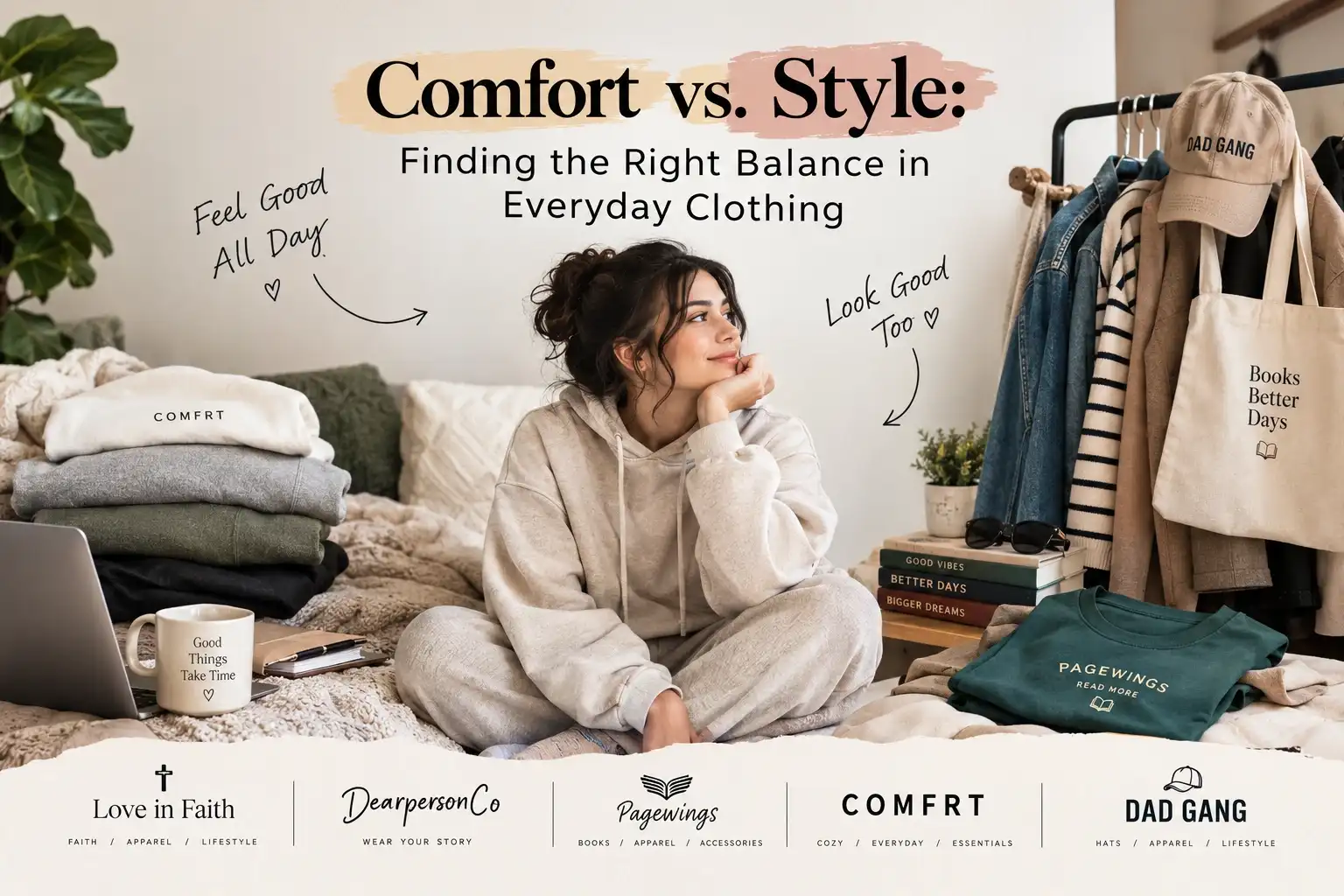
Comfort vs. Style: Finding the Right Balance in Everyday Clothing
Discover how to balance comfort and style with smart choices in fit, fabric, layering, and accessories for effortless everyday outfits.
Recent Blogs
-
Jewellery and Piercings: Expressing Your Personal Style Through Accessories
-
Small Accessories, Big Impact: Ways to Elevate Everyday Outfits
-
How to Style Bracelets, Necklaces and Piercing Jewellery Together
-
Best Everyday Jewellery and Accessories for Every Personal Style
-
The Ultimate Guide to Building a Versatile Jewellery Collection
-
A Practical Guide to Everyday Pet Care: Comfort, Protection, and Hygiene
-
How to Choose the Right Pet Walking Gear for Safety, Comfort, and Control
By William Ashby
·October 07, 2026
There's a specific kind of wardrobe frustration that doesn't get talked about enough: owning clothes you either feel good in or feel comfortable in, but rarely both at the same time. The "stylish" pieces sit in the back of the closet because they pinch or itch by noon. The comfortable pieces get worn constantly but leave you feeling like you didn't try.
That's not actually a wardrobe problem. It's a framing problem. Comfort and style aren't on opposite ends of a seesaw; they're two separate qualities a piece of clothing can have at the same time, and most of the frustration comes from treating them like a trade-off instead of two boxes to check.
Why Comfort and Style Aren't Actually Opposites
The idea that you have to choose between looking good and feeling good is mostly inherited from two extremes: formalwear that prioritizes appearance over comfort, and loungewear that prioritizes comfort with little thought to how it reads visually. Most everyday dressing happens in the wide space between those two extremes, where both things are achievable.
Fabric technology, cut, and design details have also changed what's possible. A soft, breathable hoodie and a going-nowhere sweatpant used to be the only "comfortable" option. Now, fit, fabric weight, and small design choices can make comfortable clothing look intentional rather than like an afterthought.
What "Comfort" Really Means in Clothing
Comfort isn't just "loose" or "soft." A few specific factors determine whether something actually feels good to wear for hours:
- Fabric composition: breathable, soft-touch materials that move with the body
- Fit: enough room to move without the garment feeling shapeless
- Weight: heavier fabrics can feel grounding and cozy; lighter ones feel breathable and easy
- Seams and construction: flat seams and tagless designs reduce irritation over a full day
- Temperature regulation: comfortable clothing adapts to activity level instead of trapping heat
A piece can be technically "comfortable" and still feel sloppy if the fit is wrong for the person wearing it. Comfort is a feeling in the body, not the absence of effort in the design.
What "Style" Really Means Day to Day
For everyday dressing, "style" rarely means following runway trends. It usually means a few simpler things:
- Clothes that fit the body well, regardless of trend
- Pieces that say something about personal taste or identity
- A sense of intention: the outfit looks chosen, not grabbed at random
- Small details (an accessory, a layering piece, a graphic) that add personality
Style, at the everyday level, is really about finishing touches and personal expression, not about discomfort as a requirement.
The Comfort-Style Spectrum
Instead of thinking in absolutes, it helps to picture a spectrum:
Pure Comfort ← → Elevated Style
Most people's everyday wardrobe should include pieces from several points along this spectrum, chosen based on the day ahead:
- Comfort-anchored days (working from home, errands, travel) lean toward soft, oversized, weighted pieces
- Balanced days (casual outings, lunch with friends, school pickup) call for comfortable pieces with one or two style details added
- Style-forward days (events, dinners, meetings) shift the ratio the other way, prioritizing fit and polish while keeping fabric comfort in mind
Knowing which end of the spectrum a day calls for makes getting dressed faster and less stressful and makes it obvious which wardrobe pieces are actually doing their job.
How to Build an Everyday Wardrobe That Balances Both
Start With a Comfortable Foundation
Every wardrobe benefits from a few true comfort anchor pieces that are the default on low-key days and still look intentional rather than thrown on. Oversized, heavier-fabric hoodies are a common choice here, since the weight and cut read as a style decision rather than just "giving up." COMFRT is built specifically around this idea: its hoodies use a heavier, slightly weighted fabric construction designed for a cozy, grounding feel, in an oversized fit that still looks deliberate rather than baggy. For anyone whose wardrobe currently skips straight from "formal" to "pajamas," a foundation piece like this fills the comfort-anchored end of the spectrum properly.
Let a Few Pieces Say Something About You
Graphic and statement pieces are one of the easiest ways to add style without sacrificing comfort, because a well-made tee or sweatshirt can be just as soft and breathable as a plain one; the personality comes from the print, not the fit. For readers who want their clothing to reflect a specific interest or identity, niche design-driven brands do this well. Pagewings designs washed, relaxed-fit tees, hoodies, and accessories around literary and bookish themes, which works as a conversation-starting layer for anyone whose personal style includes "reader" as part of their identity. For readers whose personal expression leans toward faith, Love in Faith takes a similar approach: soft, everyday tees, long sleeves, and sweatshirts designed around faith-based messaging, giving a comfortable staple a clear point of view.
Use Comfort Pieces That Carry Meaning
Comfort clothing doesn't have to be neutral; some of the most meaningful comfort pieces are the ones that say something true about how you're feeling or what you value. DearpersonCo builds its hoodies and sweatshirts around encouraging, mental-health-focused messaging, which turns a comfort piece into something with a little more intention behind it. It's a useful example of how "comfort-first" doesn't have to mean "style-last"; the softness and the message can both be the point.
Let Accessories Do the Style Work
One of the fastest ways to shift an outfit toward the style end of the spectrum without changing the comfort level of what's underneath is through accessories. A well-made hat, for example, can change the entire read of a casual outfit in seconds. DAD GANG is built around exactly this: a hat and apparel brand designed around fatherhood and everyday identity, with a focus on quality construction that holds up to daily wear. For anyone building a comfort-first wardrobe who still wants a quick way to add polish, a reliable accessory layer like this is often more efficient than rethinking an entire outfit.
Common Mistakes People Make When Balancing Comfort and Style
- Treating "comfortable" as a style in itself, rather than a baseline every piece should meet
- Buying oversized pieces without considering fit, which can read as sloppy rather than intentional
- Ignoring fabric quality, which affects both comfort and how a piece holds its shape over time
- Skipping finishing touches like accessories, assuming style requires an entirely different outfit
- Over-committing to one end of the spectrum, leaving no comfortable options for low-key days or no polished options for occasions that call for it
A Quick Decision Checklist for Any Outfit
Frequently Asked Questions
Can clothing really be both comfortable and stylish at the same time?
Yes. Comfort and style are separate qualities: one is about how a garment feels (fabric, fit, construction) and the other is about how it reads visually and reflects personal taste. A piece can meet both standards at once.
What makes clothing feel comfortable beyond just being loose?
Fabric composition, breathability, seam construction, and fit relative to the body all affect comfort more than looseness alone. An oversized piece can still feel uncomfortable if the fabric is stiff or the construction is poor.
How do I add style to an outfit without giving up comfort?
Small, intentional additions a graphic or message piece, a well-made accessory, or a deliberate fit choice usually do more for style than switching to a less comfortable garment altogether.
What's the difference between loungewear and elevated casual wear?
Loungewear is designed primarily for comfort with little attention to how it reads outside the house. Elevated casual wear keeps comfort as a priority but adds fit, fabric quality, or design details that make it work beyond the living room.
How many comfort-first pieces should be in a wardrobe?
There's no fixed number; it depends on lifestyle. Someone who works from home most days will lean more heavily on comfort anchors than someone whose week includes more client-facing or social time.
Do accessories really change how an outfit looks?
Yes. A hat, layering piece, or other accessory can shift the same base outfit noticeably toward the "style" end of the spectrum without requiring a full outfit change.
How do I know if my wardrobe leans too far toward comfort or too far toward style?
If you regularly feel underdressed in comfortable clothes, or you own "stylish" pieces you avoid because they're uncomfortable, that's a sign to rebalance toward the middle of the spectrum.
Conclusion
Comfort and style were never actually opposites; they just got treated that way by wardrobes built entirely around one or the other. A wardrobe that mixes a genuinely comfortable foundation with a few pieces that reflect personal taste, meaning, or identity, finished off with the right accessories, covers both ends of the spectrum without forcing a daily trade-off. The goal isn't choosing a side. It's knowing which point on the spectrum each day actually calls for.