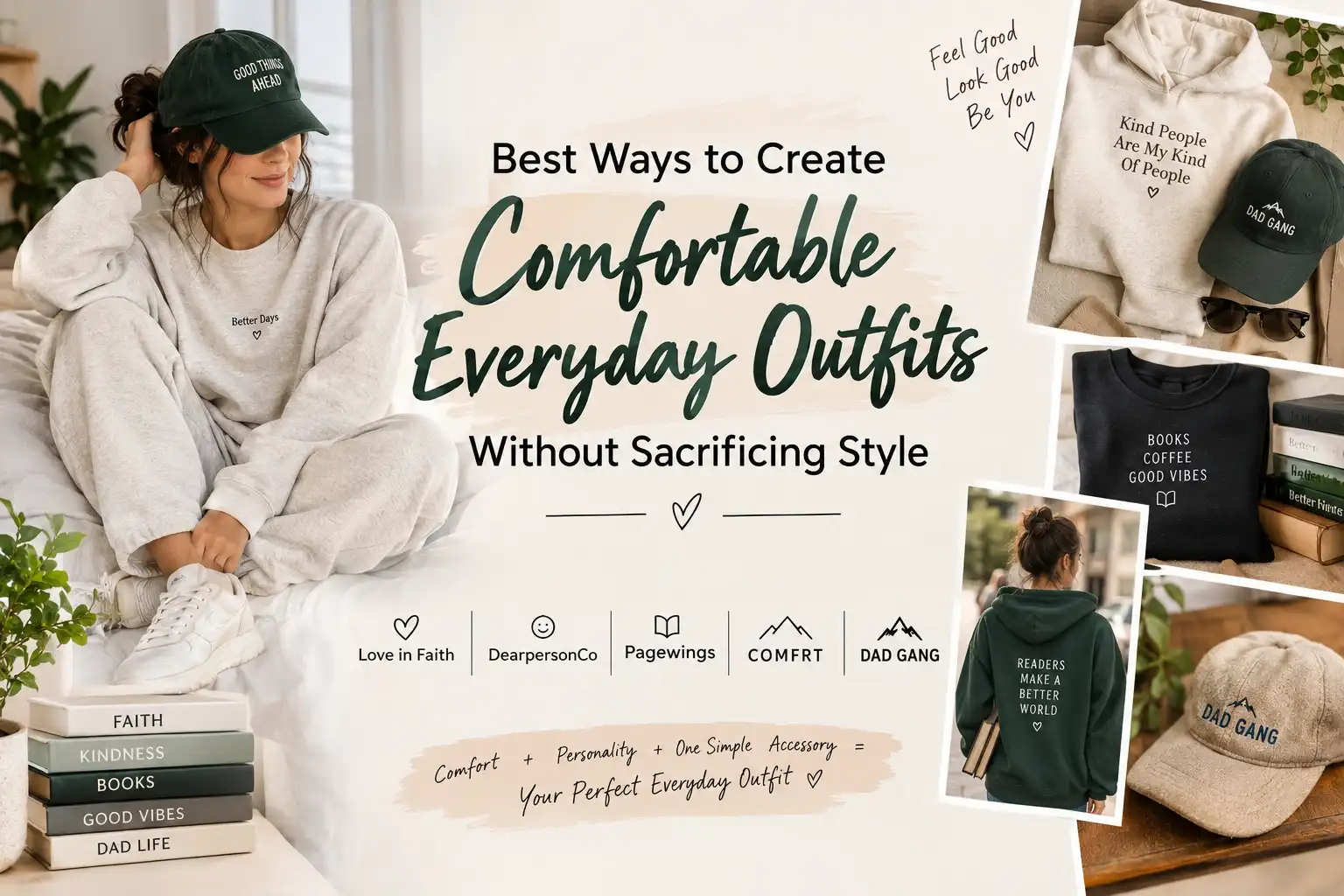
Best Ways to Create Comfortable Everyday Outfits Without Sacrificing Style
Comfortable and stylish can coexist. Discover simple outfit formulas using fit, fabric, layers, and accessories to look put-together effortlessly.
Recent Blogs
-
Jewellery and Piercings: Expressing Your Personal Style Through Accessories
-
Small Accessories, Big Impact: Ways to Elevate Everyday Outfits
-
How to Style Bracelets, Necklaces and Piercing Jewellery Together
-
Best Everyday Jewellery and Accessories for Every Personal Style
-
The Ultimate Guide to Building a Versatile Jewellery Collection
-
A Practical Guide to Everyday Pet Care: Comfort, Protection, and Hygiene
-
How to Choose the Right Pet Walking Gear for Safety, Comfort, and Control
By William Ashby
·October 07, 2026
There's a version of "comfortable" that means giving up an old T-shirt, whatever sweatpants are closest, shoes you can slide into without looking. And there's a version of "stylish" that assumes discomfort is the price of looking put together. Neither has to be true.
Comfortable and stylish aren't opposing categories. They're both the result of a handful of specific choices fit, fabric, layering, and a few finishing details that work whether you're running errands, working from home, or heading out for the day. This guide breaks those choices down so you can build outfits that actually feel good to wear, without looking like you gave up.
Why "Comfortable" and "Stylish" Aren't Actually Opposites
The outfits that read as effortlessly put-together are usually just comfortable clothes worn with intention. The difference between a hoodie that looks sloppy and one that looks deliberate often comes down to fit and what it's paired with, not the hoodie itself.
Comfort affects style more than people give it credit for, too. Clothes that pinch, ride up, or need constant adjusting show on your face and in how you carry yourself. Genuinely comfortable clothing tends to look better precisely because you're not fighting it all day.
What Makes an Outfit Feel Sloppy vs. Intentional
A few specific things separate "I didn't try" from "I didn't have to try":
- Fit: oversized and baggy read differently; one looks relaxed, the other can look unfinished
- Fabric quality: a worn-out, pilled, or overly thin fabric signals neglect even if the outfit is otherwise fine
- Structure: at least one piece with some shape (a collar, a structured hem, a fitted layer) anchors a soft outfit
- Intentional pairing: two very casual pieces together can look unplanned; one casual piece plus one slightly more considered piece usually reads as a choice
None of this requires more effort. It just means being specific about which comfortable pieces you reach for.
The Four Building Blocks of a Comfortable, Stylish Outfit
- Fit: relaxed, not shapeless; there's a difference between "oversized on purpose" and "too big by accident"
- Fabric: soft, breathable materials that hold their shape wash after wash
- Layering: a base layer plus one piece that adds shape or contrast
- Finishing details: one accessory, color choice, or texture that signals the outfit was put together, not thrown on
Most comfortable-but-stylish outfits use all four without the wearer thinking about it consciously. Building that instinct starts with having the right foundational pieces.
Start With a Comfortable Foundation
Before layering or accessorizing, the foundation piece matters most; it's what you'll actually be wearing against your skin for hours. Fit and fabric weight do a lot of the work here: a hoodie and sweatpant set that holds its shape looks far more intentional than one that stretches out and sags by midday.
This is where a slightly more considered loungewear set earns its place over a generic sweatshirt. COMFRT makes slightly weighted hoodies and sweatpants designed around that idea; the added weight is meant to create a calming, grounded feeling similar to the concept behind weighted blankets, while the fit stays relaxed rather than baggy. For anyone who spends a lot of the day in loungewear, whether working from home or just transitioning between errands, browse the available sets to see a foundation piece that's built to be worn often rather than only lounged in.
Add Personality Without Losing Comfort
A plain, well-fitted hoodie or tee is a solid base, but personality is what makes an outfit feel like yours. Graphic and message-driven pieces are one of the easiest ways to add that without sacrificing any comfort; the garment underneath is still soft, casual, and easy to wear.
Faith and Identity-Based Pieces
For readers who want their clothing to reflect their faith, graphic tees and sweatshirts built specifically around that are a straightforward option. Love in Faith designs Christian-themed apparel tees, sweatshirts, and related pieces with faith-based phrases and imagery that function as everyday casualwear while also saying something about what the wearer values.
Everyday Kindness and Message Pieces
Not every statement piece needs to be faith-specific. Some readers prefer clothing built around general encouragement or kindness themes the kind of hoodie that sparks a small, positive interaction without saying anything overtly personal. DearpersonCo leans into that territory with cozy, message-driven hoodies and sweatshirts carrying uplifting phrases, which fit naturally into a comfortable everyday rotation for anyone who likes their loungewear to carry a little meaning.
Dressing Around Your Interests
Clothing can also reflect a hobby or identity that has nothing to do with a message, simply a shared interest. Pagewings designs apparel built around being a reader, aimed at people who want their casual wardrobe to quietly signal "I am a reader" the way a band T-shirt signals a music taste. For anyone whose downtime revolves around books, it's a low-effort way to make an everyday outfit feel personal.
Finish the Outfit With One Intentional Accessory
The fastest way to make a comfortable outfit look finished is a single accessory that adds shape or contrast most often, a hat. A plain tee and joggers can look like "didn't try," but the same outfit with a well-fitted cap often reads as deliberately casual instead.
DAD GANG is built around exactly this kind of finishing piece: hats designed for everyday wear rather than a single occasion, with a style that leans into simple, well-made basics over busy logos. For parents especially, it's a practical example of how one accessory can turn "comfortable" into "put together" without adding any extra effort to getting dressed. See the available styles if a hat is the one piece missing from your everyday rotation.
Common Mistakes That Make Comfortable Outfits Look Sloppy
-
Wearing everything oversized at once: one relaxed piece paired with something fitted usually looks better than an outfit that's loose everywhere
-
Ignoring fabric wear: pilled, stretched-out, or faded pieces read as neglect, even if the outfit concept is right
-
Skipping the finishing detail: no accessory, no contrast, nothing that signals intention
-
Treating comfort and style as separate wardrobes: keeping "real clothes" and "lounge clothes" completely apart means missing the overlap where most everyday outfits actually live
A Simple Comfortable-Outfit Formula Checklist
Use this as a quick mental checklist before heading out, rather than a strict formula; the goal is consistency, not a uniform.
Frequently Asked Questions
Can sweatpants and a hoodie actually look put together?
Yes, fit and fabric quality do most of the work. A hoodie and sweatpants set that holds its shape, paired with one finishing detail like a hat or a more fitted layer, reads very differently than a stretched-out set thrown on without thought.
What's the single fastest way to make a casual outfit look more intentional?
Add one accessory with structure, most commonly a hat or bag. It gives the eye something to focus on and signals the outfit was chosen, not defaulted to.
Do I need to spend more money to dress comfortably and stylishly?
Not necessarily. It's more about choosing pieces with good fit and fabric quality, and being deliberate about pairing a relaxed piece with a more structured one, than about spending more overall.
How many comfortable-but-stylish outfits do I actually need in rotation?
A handful of reliable combinations, a few base layers, two or three personality pieces, and one or two finishing accessories usually cover most weeks without requiring a large wardrobe.
Is there a difference between "oversized" and "baggy" in a good way?
Generally yes. Oversized pieces are typically cut intentionally larger with a specific silhouette in mind, while "baggy" often describes clothing that's simply too big in a way that looks unintentional.
Can graphic or message clothing still look stylish, or does it read as too casual?
It depends on styling more than the graphic itself. A well-fitted graphic hoodie paired with a structured accessory or cleaner bottoms tends to look intentional; the same piece paired with equally loose, worn pieces throughout can look thrown together.
Conclusion
Comfortable and stylish were never really in conflict; they just require paying attention to the same few things: fit, fabric, a layer that reflects your personality, and one finishing detail that ties it together. Start with a solid, well-made foundation, add pieces that feel like you, and finish with something simple and intentional. That combination works far more often than chasing trends that aren't comfortable enough to actually wear.