Face Scrubs vs. Body Scrubs: Choosing the Right Exfoliation Routine
Learn the key differences between face scrubs and body scrubs, how to exfoliate safely, choose the right products, and keep your skin smooth and hydrated.
Recent Blogs
-
Jewellery and Piercings: Expressing Your Personal Style Through Accessories
-
Small Accessories, Big Impact: Ways to Elevate Everyday Outfits
-
How to Style Bracelets, Necklaces and Piercing Jewellery Together
-
Best Everyday Jewellery and Accessories for Every Personal Style
-
The Ultimate Guide to Building a Versatile Jewellery Collection
-
A Practical Guide to Everyday Pet Care: Comfort, Protection, and Hygiene
-
How to Choose the Right Pet Walking Gear for Safety, Comfort, and Control
By William Ashby
·October 09, 2026
A face scrub and a body scrub can look like twins on the shelf, but they aren't interchangeable. Facial skin is generally more delicate and reactive than the skin on your legs, back, or feet, so a gritty formula that smooths a rough heel can leave your cheeks red and sore. Going the other way, a gentle face scrub often does little for rough elbows.
This guide explains how the two differ, how to choose and use each one, how to fit both into a single routine, and where a few specific products from four brands may help.
Face scrub vs. body scrub: the short answer
A face scrub is made for thinner, more reactive facial skin and is usually finer in texture and used in small amounts. A body scrub uses coarser or more plentiful exfoliating particles, or a textured mitt, to work on tougher areas like knees, elbows, legs, and feet. Swapping them, especially using a body scrub on the face, is where most irritation starts.
*Dermatologists say the right schedule depends on your skin type and method, so treat this as a cautious starting point, not a rule.
What exfoliation actually does
Exfoliation removes dead skin cells from the outer layer of your skin. The American Academy of Dermatology (AAD) describes two at-home approaches: mechanical exfoliation, which uses a scrub, brush, sponge, or mitt to physically remove dead cells, and chemical exfoliation, which uses ingredients such as alpha and beta hydroxy acids to dissolve them. Scrubs are mechanical.
The AAD also stresses that exfoliation isn't for everyone. For some people, it increases redness or acne breakouts, and over-exfoliating can leave skin red and irritated. If you choose to exfoliate, the AAD's guide to safe at-home exfoliation is a good place to start.
Why face skin and body skin need different treatment
- Sensitivity. Your face is exposed daily to sun, wind, makeup, and active skincare ingredients, so it tends to react faster than most of the body.
- Thickness. Heels, elbows, and knees are generally tougher and can handle firmer exfoliation than cheeks or the area around the eyes.
- Oil and sweat. Facial skin often deals with oil, sweat, and product residue together, while body concerns range from dry flaking on shins to clogged-feeling skin on the back and shoulders.
- Daily friction. Shaving, tight clothing, and sports gear affect different areas of skin differently, which changes what each area needs.
The practical takeaway: pick exfoliants by area and by your own skin type (the AAD lists sensitive, normal, dry, oily, and combination), not by whatever is already in the shower.
How to choose a face scrub
- Match it to your skin type. Sensitive skin may sting or burn after product use, so start with the gentlest option and a small amount.
- Check the texture. If you have to press hard to feel it working, it's too coarse for your face. Light pressure should be enough.
- Read the ingredients. Fragrance, essential oils, and certain botanicals can bother sensitive skin. Patch test on a small area first.
- Plan the follow-up. Choose a moisturizer you already tolerate to use afterward.
Face scrubs for sweaty, active routines
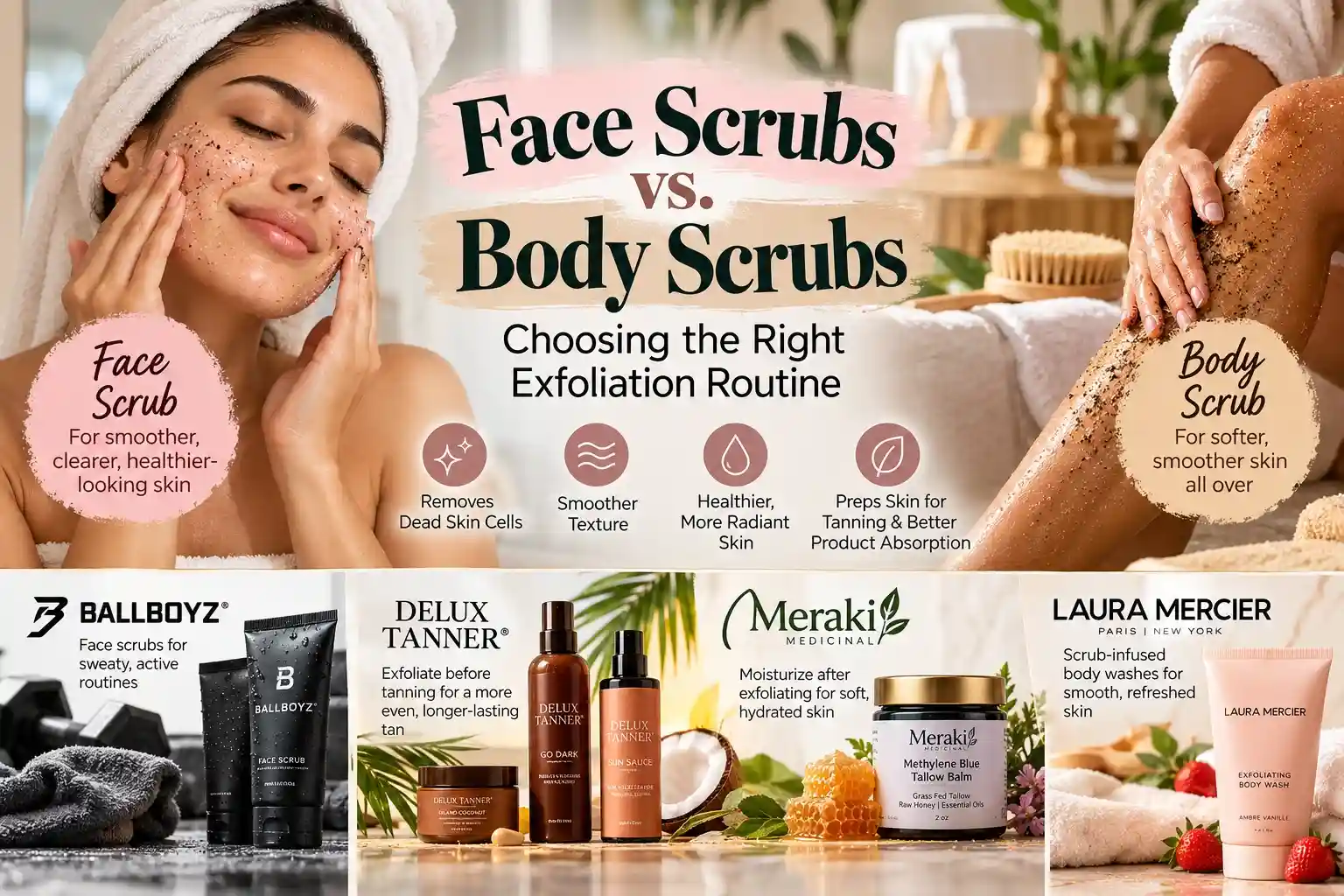
If your days involve training, sports gear, or a lot of sweat, face care often comes down to rinsing away sweat and grime without stripping your skin. Ballboyz makes face scrubs aimed at athletes; the brand describes its range as an athlete-focused face wash regimen designed to remove dirt and sweat without drying the skin. If that sounds like your routine, you can explore the Ballboyz face scrubs and compare ingredients against your own sensitivities before buying. Skin type matters more than gender here, so the same selection rules apply.
How to use a face scrub
- Check your skin first. Skip it if you have cuts, active irritation, or a sunburn.
- Wet your face with lukewarm water.
- Use a small amount and massage in small circles with light pressure for about 30 seconds.
- Avoid your eyes and lips.
- Rinse thoroughly and pat dry.
- Moisturize, and wear sunscreen the next time you're outdoors.
How to choose a body scrub
- Think in zones. Rough areas (knees, elbows, feet) can take more than the chest, neck, or inner arms.
- Pick a format you'll use. Standalone scrubs, scrub-infused body washes, and exfoliating mitts all do the same basic job. A wash is the lowest-effort option; a mitt gives you the most control.
- Consider scent. Many body products are fragranced. If you react to fragrance, look for unscented formulas.
- Avoid grinding in the same spot. More pressure doesn't mean better results.
Folding exfoliation into your shower
If you'd rather not add a separate step, a scrub-infused body wash does the work during a normal shower. Laura Mercier is best known for makeup, but its site includes a Skin & Body section with bath and body products, and retailer listings have described its exfoliating body washes as pairing a sugar-based scrub and strawberry seeds with a lathering formula. Availability changes, so browse the Laura Mercier skin and body range to see what is currently offered. These products are typically scented, so check the fragrance if you're sensitive.
How to use a body scrub
- Start with warm, damp skin.
- Apply the scrub and use gentle circular motions with light to moderate pressure.
- Spend extra time on rough zones and go lighter on thinner or more sensitive areas.
- Skip skin that's cut, sunburned, or irritated. The AAD advises never exfoliating open cuts, wounds, or sunburn.
- Rinse and pat dry, then moisturize while skin is still slightly damp.
Exfoliating before self-tanning or tan accelerating
Many self-tan instructions begin with exfoliated skin, because removing dead skin cells helps color go on more evenly. If tanning is part of your routine, a body scrub or mitt is the usual prep step, and it belongs on the body, not the face, unless the product says otherwise.
Delux Tanners sells tan accelerator creams and tanning sprays (including Go Dark, Sun Sauce and Island Coconut), plus tanning gummies. The brand is clear that its products are tan accelerators and intensifiers, not fake tan, so they work differently from a streak-prone self-tanner. If that fits your plans, you can see the Delux Tanners creams and sprays and follow the brand's usage directions.
One honest caution: anything designed to enhance a tan from sun exposure sits alongside real skin-cancer risk. Sun protection still matters, and so does skipping exfoliation on sunburned skin.
After you exfoliate: why moisturizer matters
Dermatologists advise following exfoliation with a moisturizer, since scrubbing can leave skin feeling dry. Lotion, cream, and balm all work; the right one depends on your skin and the area.
Meraki Medicinal is best known for methylene blue drops and supplements, which are outside the scope of this article. Its catalog also includes a Methylene Blue Tallow Balm marketed for skin hydration, and the product listing mentions raw honey and essential oils. A rich, balm-style product like this may suit dry body areas better than the face. If you're curious, learn more about the Meraki tallow balm, check the ingredients and usage notes carefully (especially if you're sensitive to honey, essential oils, or animal-derived ingredients), and patch test first. The brand states its products have not been evaluated by the U.S. FDA.
Build your routine: three examples
These are starting frameworks, not prescriptions. Adjust based on how your skin responds.
Common mistakes to avoid
- Using a body scrub on your face. The most common cause of irritation.
- Scrubbing hard. Pressure isn't a substitute for the right product.
- Exfoliating daily by default. Over-exfoliation can leave skin red and irritated.
- Exfoliating broken or sunburned skin.
- Stacking several exfoliating products in one day. A scrub plus another exfoliant raises the risk of irritation.
- Skipping moisturizer.
Quick buying checklist
- Is it made for the area where I'll use it (face or body)?
- Does the texture feel gentle enough at light pressure?
- Have I checked ingredients and fragrance against my sensitivities?
- Do I have a moisturizer ready for afterward?
- Have I patch tested on a small area?
When to talk to a dermatologist
If your skin stays red, stings, or breaks out after exfoliating, or you have a skin condition, stop and ask a dermatologist. The AAD notes that a dermatologist can evaluate your skin and help you decide whether exfoliating makes sense for you.
Frequently asked questions
Can I use a face scrub on my body?
Generally yes, since face scrubs are gentler. It's usually just less cost-effective for large areas, and it may not do much on rough spots.
Can I use a body scrub on my face?
It's generally not recommended. Body scrubs are designed for tougher skin and can irritate facial skin.
How often should I exfoliate?
It depends on your skin type and method. Many people start with once or twice a week and adjust. Stop or cut back if your skin turns red or irritated.
Do I need to exfoliate at all?
No. Skin sheds dead cells naturally, and the AAD says exfoliation isn't for everyone.
Should I exfoliate in the morning or at night?
Either works. If you exfoliate in the morning, follow with moisturizer and sunscreen before going outside.
What if my skin stings after exfoliating?
Rinse with lukewarm water, apply a gentle moisturizer, and pause exfoliation. If irritation persists, see a dermatologist.
Do men and women need different scrubs?
No. Skin type and sensitivity matter more than gender.
Conclusion
Use a finer, gentler scrub on your face and a more robust one on tougher body areas; start slowly, and always follow with moisturizer. If your skin tells you it's too much, believe it.