How to Achieve a Smooth Makeup Base With the Right Skincare Products
Learn how to create a smooth makeup base with the right skincare routine, hydration, sunscreen, and primers for a flawless, long-lasting finish.
Recent Blogs
-
Jewellery and Piercings: Expressing Your Personal Style Through Accessories
-
Small Accessories, Big Impact: Ways to Elevate Everyday Outfits
-
How to Style Bracelets, Necklaces and Piercing Jewellery Together
-
Best Everyday Jewellery and Accessories for Every Personal Style
-
The Ultimate Guide to Building a Versatile Jewellery Collection
-
A Practical Guide to Everyday Pet Care: Comfort, Protection, and Hygiene
-
How to Choose the Right Pet Walking Gear for Safety, Comfort, and Control
By William Ashby
·October 09, 2026
If your foundation looks patchy by lunchtime, clings to dry flakes, or rolls into little crumbs when you blend it, the foundation is rarely the whole problem. A smooth makeup base is mostly a skin-prep result: how clean, hydrated, and protected your skin is, and how well your products layer.
This guide shows you how to build that base step by step, how to adjust it for your skin type, why makeup pills, and how to choose base products that suit prepped skin.
Quick answer
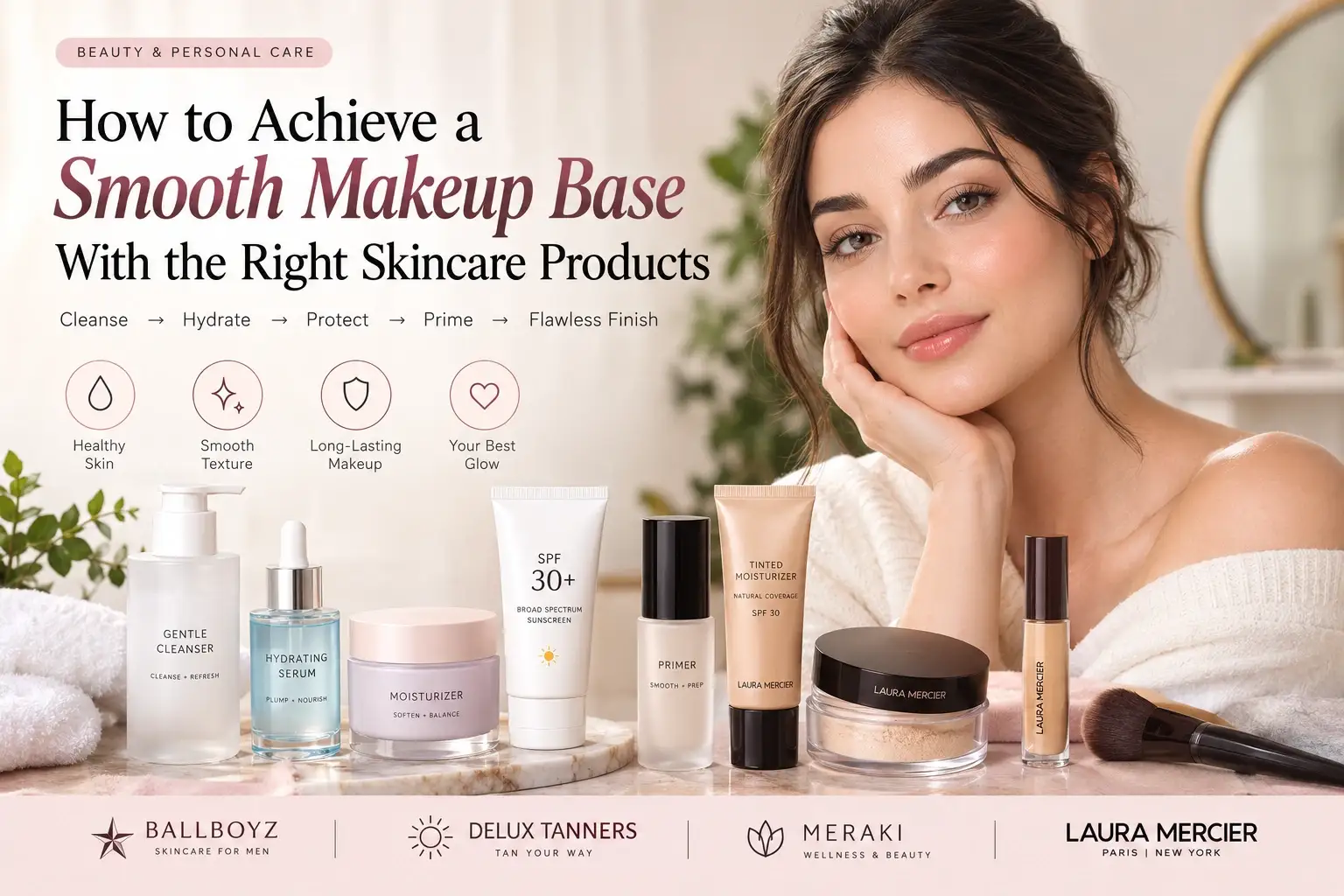
For a smooth makeup base: (1) cleanse gently, (2) exfoliate only as often as your skin tolerates, (3) hydrate with a serum or moisturizer suited to your skin type, (4) apply a thin, even layer of broad-spectrum SPF 30 or higher, (5) wait a few minutes so each layer settles, then (6) apply a primer or a tinted base in light layers.
Why does makeup look uneven in the first place?
Most uneven-looking makeup comes down to one of these causes:
- Dehydrated or flaky skin. Foundation grabs onto loose, dry skin and highlights it.
- Excess oil. Shine breaks through the base, and some formulas slide or separate on oily areas.
- Visible texture or pores. Makeup sits in uneven areas. It can soften them but not erase them.
- Products that do not layer well. Heavy sunscreen, thick moisturizer, or too many serums can leave a film that makeup rolls off.
- Too much product, too soon. Skipping the wait between steps is the most common cause of pilling.
- Application technique. Dragging a sponge or brush over product that has not set lifts the layers beneath.
If your skin has persistent texture, breakouts, or irritation that prep does not improve, a dermatologist can look at the underlying cause. Makeup is not meant to treat it.
The skincare routine for a smooth makeup base
Step 1: Cleanse without stripping
Start with a gentle cleanser that leaves skin comfortable, not tight. If your face feels squeaky or tight afterward, the cleanser is probably too harsh, and skin that is stripped often looks rougher under makeup. At night, remove makeup and sunscreen thoroughly so the next morning starts on a clean surface.
Step 2: Exfoliate on a schedule, not every morning
Loose dead skin cells are what make foundation look flaky. Gentle exfoliation a few times a week suits many people, while sensitive or reactive skin may need much less. Follow the product directions, and stop if skin stings or looks red.
Timing matters: exfoliate the night before an event rather than right before makeup, so skin has time to settle. If you use prescription or other strong active products, follow your prescriber's instructions and avoid adding a new active the night before something important.
Step 3: Hydrate in the right order
Hydrated skin takes makeup more evenly. Use a lightweight, water-based serum first (humectants such as hyaluronic acid or glycerin are common ingredients), then a moisturizer that matches your skin type. Pat or press products in rather than rubbing, and use a small amount. Dry skin that is dehydrated can still be oily, so oily skin still benefits from a light moisturizer.
Step 4: Apply sunscreen as the last skincare step
Sunscreen belongs before makeup. Dermatology guidance commonly cited by cancer centers is to use a broad-spectrum sunscreen with SPF 30 or higher and to apply roughly two finger lengths for the face and neck. One practical point: SPF in foundation is not additive. An SPF 30 sunscreen under an SPF 15 foundation gives you about SPF 30, not 45, and most people apply too little foundation to get the labeled SPF.
If your sunscreen pills under makeup, try a gel or fluid texture, use a bit less, and let it set. Moffitt Cancer Center recommends applying sunscreen first and allowing roughly 10 to 15 minutes before sun exposure.
Step 5: Wait for each layer to settle
Give the surface a few minutes to feel set, not tacky. Use the wait to do something else, like brushing your teeth or choosing an outfit. If you are heading outdoors, the 10 to 15 minutes for sunscreen applies.
Step 6: Choose a primer or a lightweight tinted base
Primer is optional. A good moisturizer and sunscreen combination may already give you the smoothness you want. If you add one, use a thin layer and keep the formula family consistent with your other products (more on that below).
Match your prep to your skin type
This is a general guide, not medical advice. If a product stings or causes a rash, stop using it.
Why makeup pills, and how to fix it
Pilling means product rolls into small flakes or crumbs as you blend. The usual causes and fixes:
- Too many layers. Cut the routine down to cleanser, moisturizer, sunscreen, and base on days that matter.
- Not enough waiting time. Let each product settle before the next.
- Too much of any one product. Use thin layers and build only where needed.
- Texture clash. A rich cream under a thin base, or very different formula types stacked together, can separate. If one combination pills repeatedly, change one product at a time to find the cause.
- Rubbing or dragging. Press or stipple instead of dragging.
Do you need a primer?
Not always. Primer can help in specific cases: visible pores, shine in the T-zone, or makeup that slips by midday. If your base already looks smooth after moisturizer and sunscreen, you probably do not need one. A tinted moisturizer or a base product that is designed to smooth texture can do part of the same job in one step.
Choosing base products for prepped skin
Once your skin is prepped, the base product should match your skin type and the finish you want. Laura Mercier is a makeup and skincare brand with a range that fits this step. Its official site lists foundations, tinted moisturizers, primers, concealers, and setting powders, plus a Find My Shade tool for shade matching.
Based on the brand's own product descriptions, these are the items most relevant to a smooth base:
- Tinted Moisturizer Blurred Matte Oil Free Broad Spectrum SPF 30. Described by the brand as offering shine control that improves the appearance of pores. Likely a fit for oily or combination skin, with the usual reminder that SPF in tinted products should not replace a proper sunscreen layer.
- Tinted Blur Balm. Described as a lightweight tinted balm that blurs pores, smooths texture, and sets to a breathable matte.
- Translucent Loose Setting Powder Ultra-Blur. A talc-free loose powder described as giving a natural finish. Useful for setting only the areas that need it.
- Secret Camouflage Complexion Perfector. A concealer offered in three adjustable shades, described by the brand as full coverage.
These are brand claims, and results depend on your skin, your prep, and your shade. If you want to compare formulas and use the shade tool, you can explore the Laura Mercier range. Check current pricing, shipping thresholds, and shade availability on the site, as these change.
A note on matte formulas: if your skin runs dry or flaky, a matte base can emphasize dry patches. In that case, put more of your effort into hydration (Step 3) and choose a formula described as hydrating or creamy rather than relying on powder to hide texture.
Setting and applying for a smoother finish
- Use less than you think. Start with a pea-sized amount for a tinted base and build only where needed.
- Press with a damp sponge or stipple with a brush. Dragging can disturb the layers below.
- Set only where you need to, such as the T-zone, rather than powdering the whole face.
- Add concealer after the base so you use less overall.
- Check your result in daylight before leaving the house.
When your skin tone shifts during the year
A base that matched in winter can look off after months of sun exposure, and the reverse is also true. Re-check your shade each season using a shade tool or by testing along the jawline in daylight.
Some people tan deliberately, and tan accelerators are a product category for them. Delux Tanners, according to its official site, sells tan accelerators (creams, a jelly, a spray, and gummies) that it says contain no DHA and no bronzer, meaning the product does not add colour itself and instead supports the skin's own response to UV exposure. The brand is UK-based and lists free UK shipping above a stated threshold. If this applies to you, you can see Delux Tanners' available formulas.
Important: UV exposure, whether from the sun or from sunbeds, raises skin-cancer risk, and sunscreen is still essential on your face. A tanning product does not change that. If you tan, plan to re-match your base shade afterward.
Common mistakes to avoid
- Exfoliating every day or right before makeup
- Skipping moisturizer because skin is oily
- Relying on SPF makeup instead of sunscreen
- Applying the next layer before the previous one has settled
- Using a heavy cream under a thin base
- Matching shade in artificial light only
- Trying several new products on the day of an event
Quick checklist
- Gentle cleanse
- Exfoliate only if it is an exfoliation day
- Serum and moisturizer, pressed in
- Thin, even broad-spectrum SPF 30+
- Wait a few minutes
- Thin layers of base, stippled or pressed
- Set only where needed
Frequently Asked Questions
What should I put on my face before foundation?
Cleanse, then apply a serum if you use one, a moisturizer suited to your skin type, and broad-spectrum SPF 30 or higher. Primer is optional.
Why does my makeup pill?
Usually because there are too many layers, too much product, not enough settling time, or textures that do not mix well, simplify your routine, use thinner layers, and wait between steps.
How long should I wait between skincare and makeup?
A few minutes is usually enough for moisturizer. For sunscreen, wait about 10 to 15 minutes if you will be outdoors, and wait until it feels set before applying makeup.
Do I apply sunscreen before or after moisturizer?
Common dermatology advice is moisturizer first, then sunscreen as the last skincare step before makeup. Some sources note there is no single universally agreed order, so choose what feels good and does not pill.
Do I need a primer?
Not necessarily. It can help with visible pores, shine, or slipping makeup, but a good moisturizer and sunscreen may be enough.
How do I make foundation look smooth on dry skin?
Focus on hydration, exfoliate gently and not too often, use thin layers of a creamy or hydrating base, and set only where needed.
Can makeup with SPF replace sunscreen?
No. Most people do not apply enough makeup to reach the labeled SPF, and SPF values do not add together. Use sunscreen first.
How often should I exfoliate before wearing makeup?
It depends on your skin and the product. Many people use gentle exfoliation a few times a week at most. Do it the night before an event, not right before makeup, and stop if your skin is irritated.
Conclusion
A smooth makeup base is built in layers, in the right order, with enough patience between them. Start with the routine, adjust for your skin type, and troubleshoot one variable at a time. Then pick base products that match your skin and your preferred finish.