Everyday Beauty Essentials for a Fresh, Natural-Looking Appearance
Discover everyday beauty essentials for fresh, natural-looking skin, simple skincare, lightweight makeup, safe tanning choices, and easy grooming tips for your daily routine.
Recent Blogs
-
Jewellery and Piercings: Expressing Your Personal Style Through Accessories
-
Small Accessories, Big Impact: Ways to Elevate Everyday Outfits
-
How to Style Bracelets, Necklaces and Piercing Jewellery Together
-
Best Everyday Jewellery and Accessories for Every Personal Style
-
The Ultimate Guide to Building a Versatile Jewellery Collection
-
A Practical Guide to Everyday Pet Care: Comfort, Protection, and Hygiene
-
How to Choose the Right Pet Walking Gear for Safety, Comfort, and Control
By William Ashby
·October 09, 2026
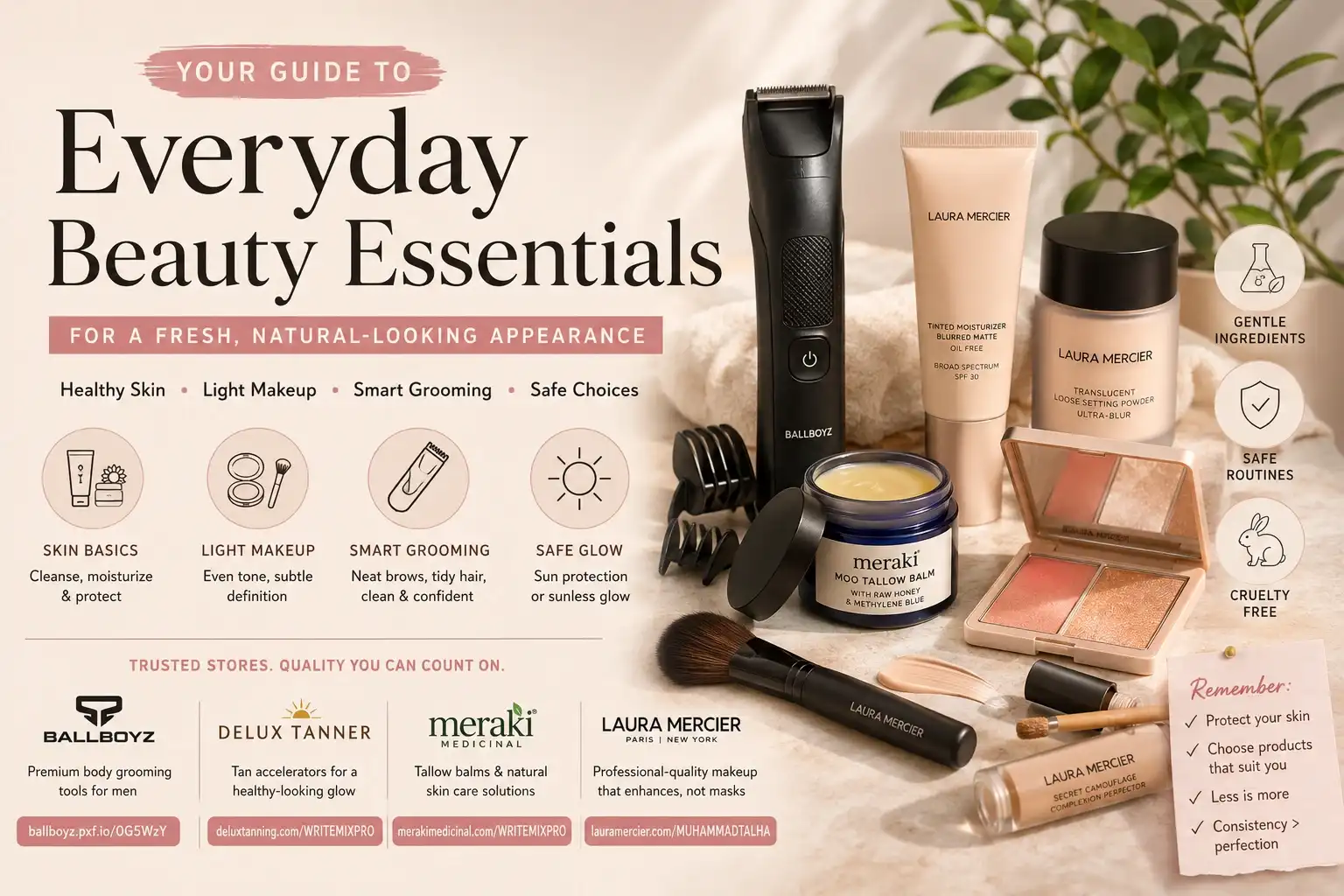
Most people don't need a 12-step routine to look fresh. They need a handful of habits and products that work together, so skin looks healthy, features look defined, and nothing looks overdone.
This guide breaks down what "everyday beauty essentials" really means: the skin basics, the few makeup products that earn their place, the grooming steps with the most visible payoff, and the safety points worth knowing. You can use it as a checklist, whatever your gender or budget.
What does a "natural-looking" appearance actually mean?
A natural-looking appearance is one where your skin looks even and healthy, your hair and grooming look intentional, and any product you use blends in rather than sitting on top of your skin. It is about balance and texture, not the absence of products.
Laura Mercier's brand philosophy puts it neatly: "Makeup should enhance your own beauty, not mask it." You don't need to adopt any brand's view, but it describes the goal well.
In practice, that comes down to four things:
- Skin condition: hydrated, calm, protected from the sun
- Evenness: redness, dark circles, and blemishes softened, not covered completely
- Definition: brows, lashes, and lips subtly emphasized
- Grooming: hair, nails, and body hair tidy
The everyday beauty essentials at a glance
If you only change one thing, make it the first three rows. Makeup looks better on healthy skin, and unprotected sun exposure is the main preventable cause of visible skin ageing and skin cancer.
Start with skin: cleanse, moisturize, protect
A reliable basic order is cleanse, moisturize, then sunscreen in the morning, and cleanse and moisturize at night. You can add targeted products later, but this core handles most everyday needs.
A few practical points:
- Choose gentle over strong. Harsh cleansing can leave skin tight and irritated, which makes makeup look patchy.
- Moisturize even if you have oily skin. A light, oil-free formula is fine, but skipping it can leave skin feeling dehydrated.
- Patch test new products, especially anything with fragrance, essential oils, or botanical ingredients. Apply a small amount to your inner forearm and wait 24 hours.
Extra care for dry patches
Hands, elbows, lips, and heels often need something richer than your face moisturizer. Occlusive balms (rich, waxy products that sit on the skin) are a common choice for these areas.
One option is Meraki Medicinal's Meraki Moo tallow balm. Its product page lists tallow, USP-grade methylene blue, and raw honey among the ingredients. Three cautions apply:
- Methylene blue is a dye, so try a small area first and be careful with light-coloured fabrics.
- Avoid it if you react to honey or essential oils.
- The brand's products are not evaluated by the FDA, and I'd treat its skin-benefit claims as marketing rather than established fact. Use it as a moisturizing balm, not as a treatment.
If your dryness is persistent, painful, or inflamed, see a dermatologist rather than adding more products.
Sunscreen is the essential most people skip
The American Academy of Dermatology recommends a broad-spectrum, water-resistant sunscreen with an SPF of 30 or higher. Apply it to all exposed skin, not just your face.
Two things worth knowing:
- Tinted moisturizers with SPF are convenient, but most people apply less than the amount needed to reach the labelled SPF. If you'll be outside for long periods, use a dedicated sunscreen underneath or reapply.
- Sunscreen needs reapplying, roughly every two hours outdoors and after swimming or sweating.
Light complexion makeup: what earns a place in a natural routine
If you want some evenness without a "full face" look, three product types do most of the work: a sheer base, a targeted concealer, and an optional light powder.
Sheer base: tinted moisturizer or balm
A tinted moisturizer or tinted balm evens out tone while letting skin texture show through, which is why it reads as natural. Laura Mercier's site lists two relevant options:
-
Tinted Moisturizer Blurred Matte, Oil Free, Broad Spectrum SPF 30, described as giving shine control and improving the appearance of pores, in 15+ shades
-
Tinted Blur Balm, described as a lightweight balm that blurs pores, smooths texture, and sets to a breathable matte
The first suits people who want built-in SPF and a matte finish. The second suits those who want a lighter, balm-style feel. If you want to compare them or browse the rest of the complexion range, you can explore Laura Mercier's face products here.
Concealer: use less than you think
Apply concealer only where you need it: the inner corners of the eyes, around the nose, and over blemishes. Pat it in rather than rubbing. The brand's Secret Camouflage Complexion Perfector is described as a full-coverage, 16-hour-wear concealer in three adjustable shades, which may suit people who prefer to mix a shade rather than match one.
Setting powder: optional, and best used sparingly
A light powder reduces shine in the T-zone and helps base makeup last. Talc-free, finely milled formulas tend to look less heavy. Laura Mercier's Translucent Loose Setting Powder Ultra-Blur is described as talc-free with a natural finish. Press a small amount into oilier areas only.
How to choose a shade
Getting the shade right matters more than getting the product right. Mismatched makeup is the fastest way to look "made up."
- Find your undertone. Cool undertones lean pink or blue, warm lean yellow or golden, and neutral sits between. Veins looking blue or purple often suggest cool, and green often suggests warm, though this is only a rough guide.
- Test on your jawline, not your hand, in daylight.
- Match your neck, since the face should blend into it.
- Wait a few minutes, because some formulas shift as they settle.
Laura Mercier offers a Find My Shade tool, plus Live Artistry Support and a Text An Artist service, which can help if you're buying online without testing in person.
Grooming basics: where small changes show up most
Grooming is the most overlooked part of "looking fresh," and it applies to everyone. Neat brows, clean nails, tidy hair, and well-managed body hair make a visible difference without any makeup.
A basic weekly checklist:
- Brows: tidy stray hairs and avoid over-plucking
- Nails: trimmed and clean
- Facial hair: groomed or clean-shaven, with a consistent edge
- Body hair: trimmed or removed according to your preference
- Skin after shaving or trimming: moisturized to reduce irritation
Choosing a body trimmer
Many people prefer trimming to shaving for sensitive areas because it can reduce nicks and razor burn. If you're considering a dedicated body or below-the-waist trimmer, look at:
- Blade type: ceramic or skin-safe guarded blades are common in this category
- Guards and length settings: so you can trim rather than cut to the skin
- Water resistance and cleaning: easier maintenance means better hygiene
- Battery life and charging method
Ballboyz is one store to look at if you want a men's body-grooming trimmer. Compare its current range against the criteria above.
Safe-use basics, whatever brand you choose:
- Use on clean, dry skin
- Never use on irritated, broken, or inflamed skin
- Clean the blade after each use
- Don't share trimmers
- Moisturize afterward
Glow and colour: with and without the sun
"Healthy glow" is one of the most searched beauty goals, and it's also where safety advice matters most.
The safest routes to a glow are product-based:
- Cream or balm-to-powder products add a flush or highlight. Laura Mercier's Bonne Glow Cream Face Palette is described as a vitamin E-infused cream-to-powder palette for sculpting, flushing, and illuminating the face.
- Sunless self-tanners (typically using DHA) add colour without UV exposure.
- Good hydration and sleep improve how skin reflects light, though the effect is subtle.
What about tan accelerators? Delux Tanners sells tan accelerators, which are different from self-tanners. According to the brand, its formulas contain no DHA and no bronzer. They are designed to support the colour your skin produces under UV exposure, whether from sunbeds or the sun. The brand itself says to wear a separate sunscreen outdoors.
That distinction matters. The International Agency for Research on Cancer classifies sunbeds and UV radiation as carcinogenic to humans (Group 1). A 2009 analysis found a 75% higher melanoma risk with tanning-device use before age 30. Health agencies advise avoiding sunbeds.
So if you are choosing a glow for your everyday routine, a sunless option or a cream highlighter is the lower-risk choice. If you already spend time in the sun by choice, a product like Delux's can be considered alongside sun protection, not instead of it. Its site includes a short quiz and usage guides if you want to compare formulas.
Common mistakes that make a natural look appear overdone
- Wrong shade or undertone, which creates a visible line at the jaw
- Too much product too fast. Build in thin layers
- Skipping skin prep, so makeup clings to dry patches
- Heavy powder all over, which can look flat
- Trusting SPF in makeup alone for a long day outside
- Trying many new products at once, which makes it hard to tell what caused a reaction
- Ignoring grooming, so a good base can't compensate for untidy edges
Build your everyday routine
Start with the minimal routine, then add one product at a time.
Frequently asked questions
What are the basic beauty essentials everyone needs?
A gentle cleanser, moisturizer, broad-spectrum sunscreen, and lip balm cover the core. Makeup and extra grooming tools are optional additions.
Does tinted moisturizer replace sunscreen?
Not reliably. Even SPF-labelled tinted moisturizers are rarely applied in the amount needed to reach the stated protection. Use a dedicated sunscreen if you'll be outdoors for long.
What order should I apply skincare and makeup?
Cleanser, moisturizer, sunscreen, then makeup (base, concealer, powder, colour products).
How do I find my foundation undertone?
Check whether your skin leans pink (cool), yellow or golden (warm), or between (neutral). Then test shades along your jawline in daylight.
How often should I trim body hair?
There's no medical rule. Trim when you prefer, and avoid trimming irritated skin.
Are self-tanners safer than sunbeds?
Sunless self-tanners don't require UV exposure, so they avoid the UV risk linked to sunbeds. Sunbeds are classified as carcinogenic to humans by IARC.
Do I need concealer and powder every day?
No. They are optional. Many natural routines use only a sheer base or even skin care alone.
How do I avoid reactions to new products?
Introduce one product at a time, patch test, and stop using anything that causes burning, rash, or swelling.
Conclusion
Looking fresh and natural is mostly about healthy skin, a few well-chosen products, and tidy grooming. Start with the basics, protect your skin from the sun, and add only what improves your routine. Product choice matters less than a good shade match and a light hand.