The Complete Guide to Building a Simple Skincare Routine for Acne-Prone Skin
Learn how to build a simple skincare routine for acne-prone skin with effective ingredients, gentle cleansing, daily sunscreen, and tips to reduce breakouts.
Recent Blogs
-
Jewellery and Piercings: Expressing Your Personal Style Through Accessories
-
Small Accessories, Big Impact: Ways to Elevate Everyday Outfits
-
How to Style Bracelets, Necklaces and Piercing Jewellery Together
-
Best Everyday Jewellery and Accessories for Every Personal Style
-
The Ultimate Guide to Building a Versatile Jewellery Collection
-
A Practical Guide to Everyday Pet Care: Comfort, Protection, and Hygiene
-
How to Choose the Right Pet Walking Gear for Safety, Comfort, and Control
By William Ashby
·October 09, 2026
If you have acne-prone skin, the hardest part usually isn't finding products. It's that there are too many of them, and most advice contradicts the last thing you read.
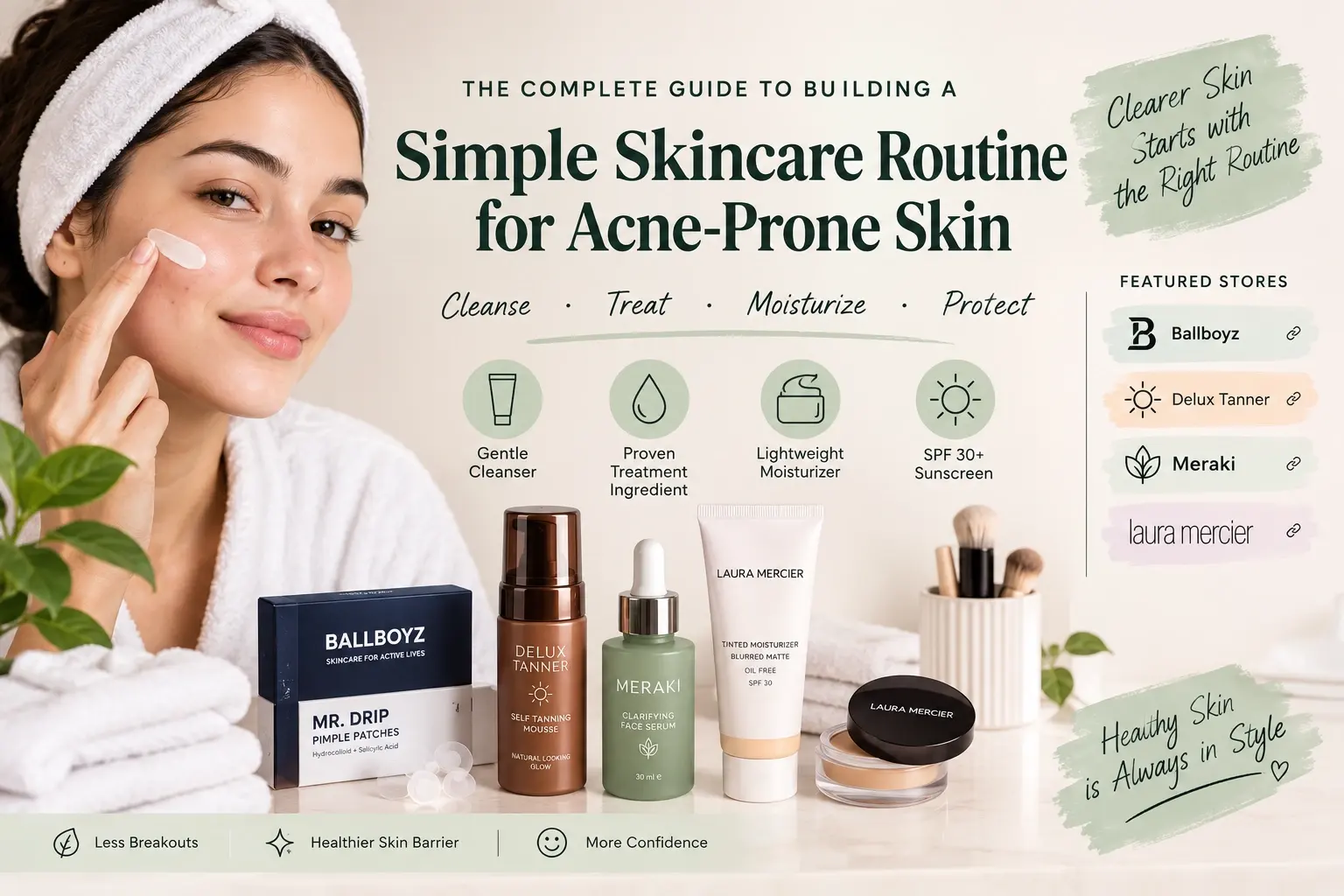
The short answer: a good acne routine can be four steps. Wash gently, apply one proven treatment ingredient, moisturize with something lightweight, and use sunscreen every morning. Everything else is optional, and adding too much too fast is a common reason acne gets worse.
This guide explains what each step does, how to choose an ingredient, how to introduce it without irritation, and when it's time to see a dermatologist instead of buying another product.
What does "acne-prone skin" actually mean?
Acne-prone skin is skin that regularly develops clogged pores, pimples, or inflamed bumps. The American Academy of Dermatology (AAD) describes four contributing factors: too much oil, clogged pores, bacteria, and inflammation.
That matters because it explains why a routine works or doesn't:
- Excess oil and clogged pores: addressed by gentle cleansing and treatment ingredients.
- Bacteria and inflammation: addressed by ingredients like benzoyl peroxide.
- Irritation: a factor you control. Harsh products inflame skin and can make acne look worse.
Acne isn't a hygiene failure. Scrubbing harder rarely helps, as we'll see below.
The 4-step core routine
Morning routine
- Cleanse with your fingertips. Dermatologists recommend a gentle, non-abrasive cleanser applied with fingertips, since washcloths and mesh sponges can irritate skin. Lukewarm water is enough.
- Moisturize. Look for "oil-free" or "non-comedogenic" on the label. Skipping moisturizer can leave skin dry and irritated, which makes treatment ingredients harder to tolerate.
- Apply sunscreen. Use a broad-spectrum SPF 30 or higher. Some acne treatments increase sun sensitivity, so this step matters more, not less.
Night routine
- Cleanse, especially after sweating or wearing makeup.
- Apply your treatment (one ingredient only, to start) to dry skin.
- Moisturize to buffer dryness.
How often should you wash?
Wash up to twice a day and after sweating. The AAD advises gently washing up to twice daily and after sweating. More than that tends to dry and irritate skin without improving acne. If you wear a helmet, cap or headband, rinse off sweat as soon as you can.
Which treatment ingredient should you choose?
Most over-the-counter acne products rely on a handful of ingredients. You don't need all of them. Start with one.
A few practical rules:
- Pick the ingredient that matches your main problem. Mostly inflamed pimples point toward benzoyl peroxide. Mostly clogged pores point toward salicylic acid or a retinoid.
- Lower strengths are often a smart start. Higher concentrations tend to cause more irritation, not necessarily better results.
- Check which products are available in your country. Over-the-counter rules differ, and a pharmacist can help.
How to add active ingredients without irritating your skin
This is where most routines go wrong. The AAD warns that trying new acne treatments too often can irritate your skin and cause breakouts.
- Patch test on a small area, such as along the jaw, for a few days.
- Introduce one product at a time, two or three nights a week.
- Increase slowly to every night only if your skin stays comfortable.
- Wait before judging. Acne products typically need several weeks, and many dermatologists suggest giving a routine 8 to 12 weeks unless it's causing irritation.
- Don't combine multiple actives (for example, a retinoid, benzoyl peroxide, and an exfoliating acid in one night) unless a dermatologist recommends it.
If skin becomes red, stinging, flaky, or tight, scale back. Irritation is a sign to slow down, not to push through.
Dealing with individual pimples (without picking)
Picking increases the chance of scarring and dark marks. Dermatologists advise letting your skin heal naturally, because picking, popping, or squeezing makes skin take longer to clear and raises scar risk.
If the urge to pick is strong, a physical barrier helps. Hydrocolloid pimple patches are small adhesive dots that absorb fluid from surface blemishes and keep your fingers away. They work best on whiteheads and open, weeping spots. They won't do much for deep, painful bumps under the skin.
Ballboyz, a skincare brand aimed at athletes and active people, sells Mr. Drip Pimple Patches, which retailer listings describe as combining hydrocolloid with salicylic acid. If you want a patch that's easy to keep in a gym bag, you can see the Ballboyz pimple patch options on their site. Check the current product page for ingredients and directions, especially if you have sensitive skin.
Ballboyz also makes scrub bars, but they aren't part of this routine. Dermatologists note that scrubbing your skin can make acne worse, so for most acne-prone skin, a gentle cleanser is a better choice than a physical exfoliant.
Makeup, sunscreen and acne
Many people with acne want coverage, and that's reasonable. The goal is to cover without clogging pores or skipping sun protection.
General guidelines:
- Choose oil-free formulas where possible. The AAD recommends using oil-free makeup and skin products.
- Remove makeup every night, before your treatment step.
- Don't rely on a tinted product alone for sun protection. Tinted moisturizers are rarely applied as thickly as sunscreen is tested, so put a dedicated sunscreen underneath if you'll be outdoors for long.
- Patch test new complexion products, and stop if you notice new bumps.
If you want makeup that suits oily or breakout-prone skin, Laura Mercier offers a few options worth knowing about. Its Tinted Moisturizer Blurred Matte Oil Free SPF 30 is positioned for shine control and an improved look of pores. The Secret Camouflage Complexion Perfector is a full-coverage concealer designed for blemishes and discoloration. These are cosmetics, not acne treatments, and the brand doesn't claim they treat acne. Read the ingredient list and test a small area first, especially if you react easily.
Common mistakes that keep acne going
- Over-washing and scrubbing. More friction means more irritation.
- Using harsh, drying products. The AAD suggests choosing gentle, alcohol-free products, since dryness can make acne look worse.
- Starting five new products at once. You won't know which one helped or caused the problem.
- Skipping moisturizer or sunscreen because skin feels oily.
- Touching your face all day. Touching your face can cause acne to flare.
- Using tanning beds. Besides skin cancer risk, tanning damages skin and can worsen acne.
- Switching products every two weeks. Skin needs time.
- Ignoring triggers. Oily hair products on the forehead, sweaty headwear, and some medications can all play a role. Food triggers vary by person, and the evidence is stronger for some patterns than others, so a dermatologist can help you sort that out.
What results should you expect, and when should you see a dermatologist?
Most people see gradual improvement over weeks, not days. Early on, some products cause temporary dryness or mild flaking. Persistent burning, swelling or rash is not normal.
Make an appointment with a board-certified dermatologist if:
- Your acne is deep, painful, or cystic
- It's leaving scars or dark marks
- Over-the-counter products haven't helped after about 2–3 months
- It's affecting your confidence or mental wellbeing
The AAD notes that dermatologists advise seeing one if acne makes you feel shy or embarrassed, products haven't worked, or acne is leaving scars or darkening skin. Prescription options exist, and acne is highly treatable.
Quick checklist: your simple acne routine
- Gentle cleanser, up to twice daily and after sweating
- One treatment ingredient, introduced slowly
- Lightweight, oil-free moisturizer
- Broad-spectrum SPF 30+ every morning
- Hands off your face and pimples
- Makeup removed nightly
- Give changes several weeks before judging
- See a dermatologist if no progress, scarring, or distress
Frequently Asked Questions
What is the best skincare routine for acne-prone skin?
A simple one: gentle cleanser, one proven treatment ingredient at night, oil-free moisturizer, and daily sunscreen. Consistency matters more than product count.
How often should I wash my face if I have acne?
Up to twice a day and after sweating. Washing more often can irritate skin.
Should I moisturize if my skin is oily and has acne?
Yes. A lightweight, oil-free moisturizer helps protect your skin barrier and makes treatment ingredients easier to tolerate.
Which acne ingredient should I start with?
Choose based on your main concern: benzoyl peroxide for inflamed pimples, salicylic acid for blackheads and whiteheads, adapalene for recurring clogged pores. Start with one, at a low frequency.
Can I use salicylic acid and benzoyl peroxide together?
Some people do, but combining them raises dryness and irritation risk. Introduce one at a time, and ask a dermatologist or pharmacist before layering.
Do pimple patches work?
Hydrocolloid patches can help absorb fluid from surface pimples and stop picking. They aren't designed for deep cystic acne.
Is sunscreen safe for acne-prone skin?
Yes, and it's recommended. Choose an oil-free or non-comedogenic broad-spectrum SPF 30+ and test it first.
How long do acne products take to work?
Often 6–12 weeks to judge fairly. Seek advice sooner if you have severe irritation.
Conclusion
A good acne routine is boring on purpose: cleanse gently, treat with one ingredient, moisturize, protect. Add tools like pimple patches or makeup where they fit your life, and be patient. If your skin isn't responding, a dermatologist can often do more in one visit than months of shelf-browsing.